


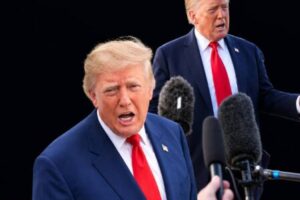





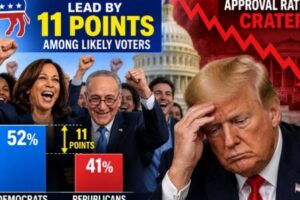


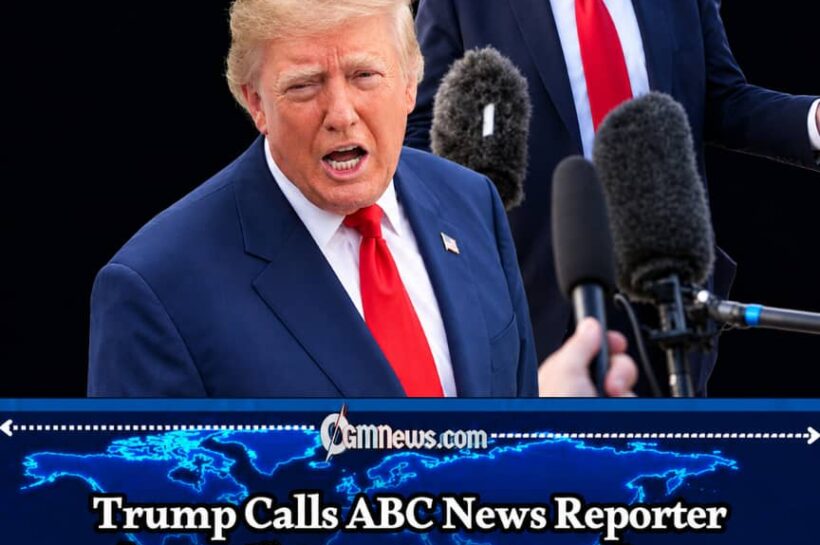









Pentagon Deal has erupted into a national political flashpoint after reports confirmed that the U.S. Air Force has agreed to a $250 million procurement of interceptor drones from a company backed by the sons of the current president, Donald J. Trump. The agreement—still partially undisclosed in scope—has triggered immediate scrutiny across Washington, raising questions about timing, influence, and the increasingly blurred line between defense procurement and political association.
While defense officials maintain that the contract is part of a broader modernization strategy aimed at strengthening aerial interception capabilities, critics argue that the optics alone are enough to fuel controversy. The announcement arrives amid heightened partisan tension, where nearly every major federal contract is now viewed through a political lens, especially when linked to high-profile families.
Pentagon Deal: Defense Procurement Under the Spotlight
The initial reporting on the Pentagon Deal suggests that the Air Force’s interceptor drone purchase was processed through standard procurement channels, with evaluation phases spanning performance testing, cost analysis, and security compliance. Officials emphasize that such contracts are not awarded directly to individuals but through vetted corporate entities operating within defense frameworks.
However, the involvement of a company reportedly backed by Trump’s sons has added a layer of political sensitivity. Defense acquisition programs have historically included large private-sector partnerships, but recent global events and rising geopolitical tensions have intensified scrutiny over who benefits from such contracts and under what conditions.
Within this climate, even routine defense upgrades are being interpreted through a partisan filter, making technical procurement details secondary to political narrative.
Political Fallout and Parallel Investigations
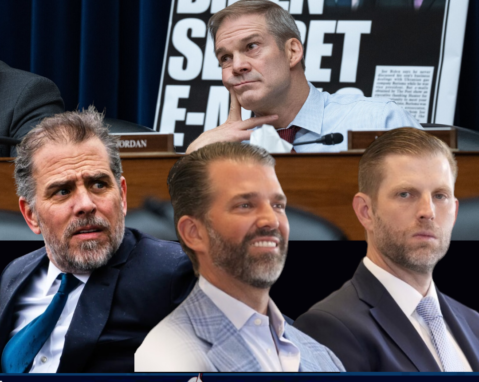
The Pentagon Deal has also reignited broader political disputes in Congress, where some lawmakers have pointed to it as evidence of inconsistent scrutiny standards. Critics argue that while attention is heavily focused on this defense contract, parallel investigations—particularly those involving long-standing controversies such as the Hunter Biden laptop case—have unfolded over years without resolution.
Supporters of the administration counter that defense readiness should not be conflated with political investigations, insisting that procurement decisions are driven by military necessity rather than family affiliations. Still, the timing of the drone deal has ensured it remains at the center of ongoing partisan debate.
Analysts note that the convergence of defense spending, political family associations, and unresolved investigative narratives has created a uniquely combustible environment in Washington, where every new contract risks becoming a proxy battle for broader political grievances.
The unfolding developments around the Pentagon Deal are expected to face continued congressional review, with further disclosures likely shaping how future defense contracts involving politically connected firms are evaluated. For now, the debate shows no sign of cooling, and OGM News will continue tracking every update as it emerges.


The weekly tournaments here keep me coming back because the prize pools are surprisingly generous....