




















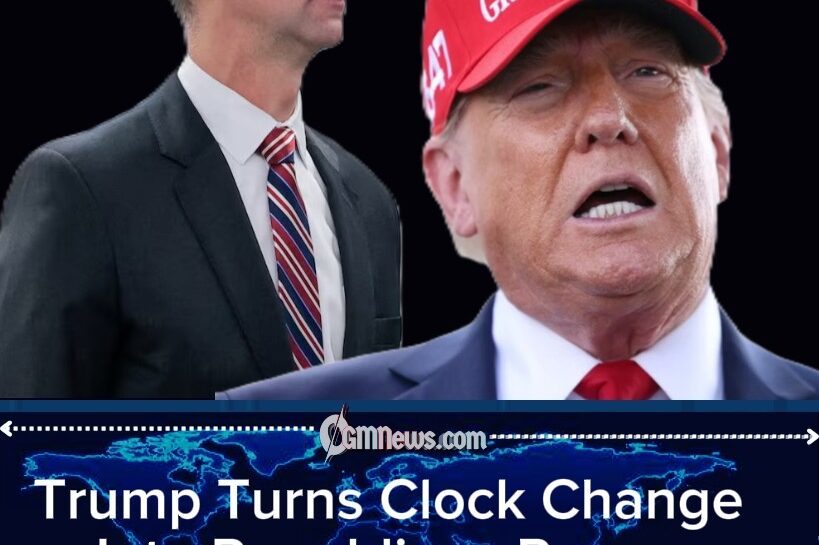
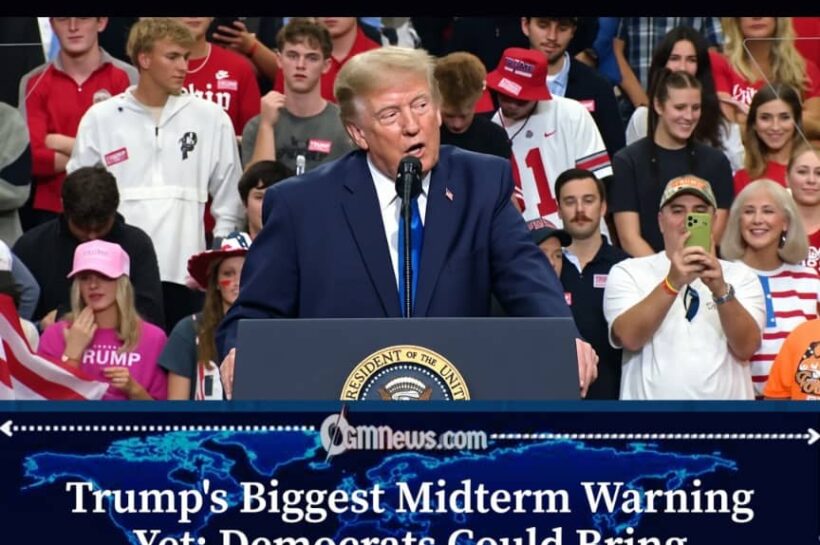



U.S. President Donald Trump, currently serving a second term, has intensified political rhetoric by labeling critics of his Iran policy “treasonous” and accusing Democratic leaders of attempting to destabilize the United States. His remarks, delivered through public statements and social media posts, come as tensions surrounding the Iran conflict continue to shape both foreign policy and domestic debate.
He has framed the situation in stark terms, repeatedly referring to the ongoing confrontation with Iran as a “war” and suggesting that opposition to his administration’s approach undermines national unity. The comments have sparked strong reactions across the political spectrum, raising questions about the boundaries of political discourse during periods of international conflict.
Trump’s Position: Defending Policy and Challenging Critics
President Donald Trump has defended his stance by arguing that criticism of the administration’s handling of the Iran conflict weakens the country’s position. In his view, dissent particularly from political opponents risks sending mixed signals at a time when the United States is engaged in a high-stakes geopolitical confrontation.
According to President Donald Trump, maintaining a unified national front is essential to achieving strategic objectives. He has suggested that opposition rhetoric could embolden adversaries or complicate ongoing negotiations, reinforcing his assertion that such criticism is not merely political disagreement but a matter of national security.
Supporters of President Donald Trump’s approach argue that strong language reflects the seriousness of the situation and underscores the importance of cohesion during times of conflict.
Context: The Iran Conflict and Wartime Framing
The escalation in rhetoric is closely tied to the broader context of U.S. engagement with Iran,Donald Trump has repeatedly characterized the situation as a “war,” a framing that influences both policy decisions and public messaging.
By adopting wartime language, the administration emphasizes urgency and high stakes, shaping how actions and responses are perceived domestically and internationally. This framing also provides context for the characterization of critics, positioning disagreement as potentially detrimental to national interests.
However, analysts note that such framing can blur the line between political debate and national security discourse, complicating efforts to maintain constructive dialogue.
Political Reaction: Strong Pushback from Democrats
Democratic leaders have strongly rejected President Donald Trump’s accusations, arguing that criticism of government policy is a fundamental aspect of democratic governance. They contend that questioning decisions particularly those involving military action is both legitimate and necessary.
Critics have also expressed concern that labeling political opponents as “treasonous” risks undermining democratic norms and escalating partisan tensions. Some lawmakers warn that such rhetoric could discourage open debate and contribute to increased polarization.
The exchange highlights the deep divisions within U.S. politics, where disagreements over foreign policy often intersect with broader ideological differences.
Pattern of Rhetoric: Continuity in Political Messaging
Observers note that Donald Trump’s remarks are consistent with a broader pattern of confrontational rhetoric. Throughout his political career, he has frequently used strong language to characterize opponents and critics, particularly in high-pressure situations.
This communication style is seen by supporters as direct and decisive, while critics view it as polarizing. The current statements reflect a continuation of this approach, adapted to the context of an international conflict.
Analysts suggest that such rhetoric can serve both strategic and political purposes, reinforcing support among allies while framing the narrative in a way that aligns with broader policy goals.
Implications: Domestic and International Consequences
The impact of President Donald Trump’s remarks extends beyond domestic politics. International observers closely monitor U.S. political discourse, particularly during times of conflict, as it can influence perceptions of stability and leadership.
At home, the rhetoric may deepen partisan divides, complicating efforts to build consensus on key issues. Abroad, it may affect diplomatic relations, as allies and adversaries interpret the tone and direction of U.S. policy.
The intersection of domestic messaging and international strategy underscores the complexity of leadership during periods of heightened tension.
Media and Public Response: Debate Over Tone and Substance
Media coverage of the remarks has highlighted both the substance of the President’s claims and the tone in which they were delivered. Analysts and commentators have debated whether such language is appropriate in a democratic society, particularly during times of conflict.
Public reaction has been similarly divided, reflecting broader political alignments. While some view the comments as a necessary assertion of strength, others see them as contributing to an already charged political environment.
The ongoing debate illustrates the challenges of balancing strong leadership messaging with the need for inclusive and constructive discourse.
A Defining Moment in Political Communication
President Donald Trump’s decision to label critics as “treasonous” marks a significant moment in the evolution of political communication during conflict. By framing domestic opposition in national security terms, the administration has elevated the stakes of political debate.
As the Iran situation continues to unfold, the implications of this rhetoric will likely shape both policy discussions and public perception. The challenge moving forward will be to navigate these tensions while preserving the principles of democratic engagement.
[…] […]