








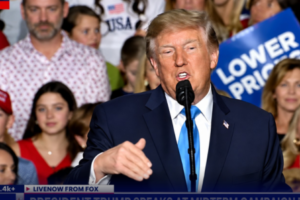




















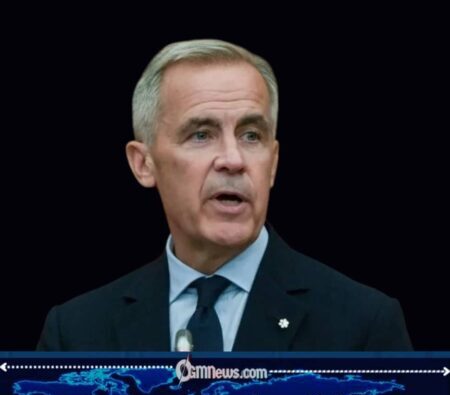
Canadian Prime Minister Mark Carney has suggested that the international order is entering a period of transformation, arguing that it may be “rebuilt out of Europe” rather than centered on the United States. His remarks reflect growing debate among policymakers and analysts about the future of global leadership and the evolving role of Western alliances.
Carney’s comments come amid rising geopolitical tensions, trade disputes, and shifting diplomatic priorities. They also coincide with increasing scrutiny of U.S. foreign policy under President Donald Trump, currently serving a second term, particularly regarding its impact on long-standing international partnerships.
Carney’s Argument: Europe as the Anchor of a New Order
Mark Carney’s assertion that the global system could be rebuilt from Europe reflects a belief that the continent is positioning itself as a stabilizing force in international affairs. European nations have increasingly emphasized multilateral cooperation, rules-based governance, and collective security frameworks.
This perspective aligns with broader discussions within policy circles about Europe’s potential to take on a more prominent leadership role. By highlighting Europe’s institutional strength and diplomatic networks, Carney points to a model of governance that contrasts with more unilateral approaches.
However, his remarks do not suggest the disappearance of U.S. influence but rather a recalibration of leadership roles in a changing global environment.
Strains in Transatlantic Relations
Relations between the United States and its traditional allies have faced challenges in recent years. Differences over trade policies, military engagements, and diplomatic strategies have contributed to a more complex transatlantic relationship.
Under President Donald Trump, the United States has pursued policies aimed at prioritizing national interests, including the use of tariffs and a reassessment of alliance commitments. While supporters argue that these measures strengthen domestic resilience, critics contend they have strained partnerships with European allies.
These tensions provide important context for Carney’s remarks, as they highlight the evolving nature of cooperation between major Western powers.
Debate Over U.S. Leadership of the Free World
Carney’s comments have also fueled ongoing debate about whether the United States continues to serve as the “leader of the free world.” This phrase, long associated with U.S. global leadership, has increasingly been questioned in light of shifting geopolitical dynamics.
Critics of current U.S. policy argue that changes in diplomatic tone and strategy have led allies to reconsider their reliance on Washington. They suggest that leadership is now more distributed, with multiple centers of influence emerging.
Supporters of the United States, however, emphasize that the country remains a dominant force in global security, economic power, and technological innovation, maintaining a central role in international affairs.
Europe’s Expanding Role in Global Governance
The European Union has taken steps to strengthen its role in global governance. Initiatives aimed at enhancing defense cooperation, economic integration, and climate leadership have positioned Europe as an increasingly influential actor on the world stage.
European leaders have also advocated for greater strategic autonomy, seeking to reduce dependence on external powers while maintaining strong alliances. This approach reflects a desire to balance cooperation with independence in a rapidly changing geopolitical landscape.
Carney’s remarks resonate with these developments, suggesting that Europe’s growing capabilities could shape the future of international order.
A Multipolar World: Competing Centers of Influence
Many analysts argue that the global system is evolving toward a multipolar structure, where power is distributed among several major players rather than concentrated in a single nation or region. In this context, the United States, Europe, China, and other actors each play significant roles.
This shift presents both opportunities and challenges. A more balanced distribution of power can encourage collaboration but may also complicate decision-making and increase competition among nations.
Carney’s perspective reflects this broader trend, emphasizing that leadership in the 21st century may be shared rather than singular.
Implications for Global Stability and Cooperation
The question of who leads the international order has significant implications for global stability. Effective leadership can facilitate cooperation on issues such as security, trade, and climate change, while uncertainty can create challenges for coordination.
Carney’s remarks highlight the importance of adaptability in global governance. As nations navigate shifting alliances and priorities, the ability to build consensus and maintain trust will be critical.
The evolving landscape underscores the need for inclusive and flexible approaches to international cooperation, ensuring that diverse perspectives contribute to shared solutions.
A Transforming Global Landscape
Mark Carney’s suggestion that the international order may be rebuilt from Europe captures a moment of transition in global politics. While the United States continues to hold significant influence, the dynamics of leadership are changing, reflecting broader shifts in power and policy.
As debates over leadership roles continue, the focus will likely remain on how nations can work together to address common challenges. The future of the international order may ultimately depend on the ability of multiple actors to collaborate effectively in an increasingly interconnected world.


Casinoabc999? Good Site. The interface is sleek, and there is a lot of stuff to...