









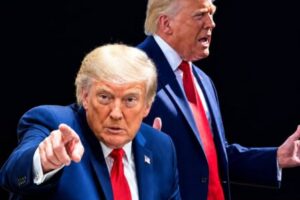


















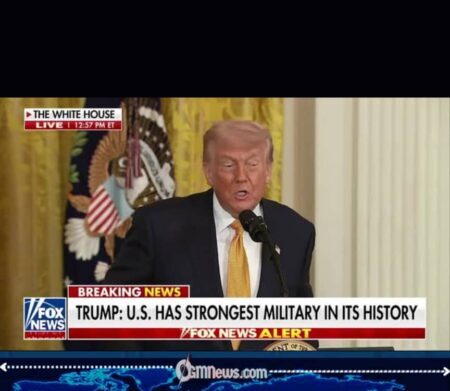
U.S. President Donald Trump, currently serving a second term, has declared that the United States will not allow Iran to obtain a nuclear weapon, even as a sustained naval presence remains in place in the Strait of Hormuz. In remarks that underscore both firmness and conditional openness, President Donald Trump indicated that while negotiations may be possible, any agreement must meet U.S. expectations.
The statement comes at a time of heightened geopolitical tension, with global markets, regional actors, and international observers closely monitoring developments. President Donald Trump’s remarks reflect a broader strategy that combines military deterrence with diplomatic signaling, leaving open the possibility of negotiations while maintaining pressure on Tehran.
Trump’s Policy Position: Zero Tolerance for Nuclear Development
President Donald Trump has consistently emphasized that preventing Iran from acquiring a nuclear weapon is a central pillar of U.S. foreign policy. His recent comments reinforce a position that has shaped Washington’s approach to Tehran, focusing on firm deterrence backed by the threat of economic and military measures.
President Donald Trump’s language suggests a clear threshold: negotiations are acceptable, but only if they result in an outcome that fully addresses U.S. concerns. This approach signals a departure from earlier frameworks that focused on limiting nuclear activity rather than eliminating it entirely.
By reiterating this stance, President Donald Trump aims to project resolve, both to domestic audiences and to international partners concerned about nuclear proliferation.
Naval Presence in the Strait of Hormuz: Strategy and Significance
The continued deployment of U.S. naval forces in the Strait of Hormuz plays a critical role in the administration’s strategy. The waterway is one of the most important global shipping routes, particularly for oil exports, making it a focal point for both economic and security considerations.
President Donald Trump’s administration has framed the naval presence as necessary to protect commercial shipping and ensure freedom of navigation. However, some analysts describe the situation as a form of restricted maritime environment, given the heightened military activity and tensions.
The strategic importance of the strait means that any escalation or disruption could have immediate global consequences, particularly for energy markets and trade flows.
Diplomatic Pathways: Conditional Willingness to Negotiate
Despite the firm rhetoric, President Donald Trump has indicated that diplomatic engagement remains an option. His remarks suggest that Iran may be seeking negotiations, though he emphasized that any deal must be satisfactory to U.S. interests.
This dual approach combining pressure with openness reflects a broader strategy often described as “maximum pressure with conditional diplomacy.” It seeks to compel Iran to negotiate from a position of weakness while maintaining leverage.
Observers note that such a strategy carries both opportunities and risks, as it may encourage negotiations but also increase the potential for miscalculation.
International Reactions: Diverging Views Among Allies
The U.S. approach has drawn mixed reactions from international partners. European leaders, including Emmanuel Macron, have called for de-escalation and a return to diplomatic solutions, particularly in relation to maintaining open shipping lanes.
Allies have expressed concern about the economic impact of prolonged tensions, including rising energy prices and disruptions to global trade. These concerns highlight the broader implications of the situation beyond the immediate regional context.
At the same time, some partners support the goal of preventing nuclear proliferation, even if they differ on the methods used to achieve it.
Iran’s Position: Resistance and Warning of Escalation
Iranian officials have responded critically to U.S. actions, rejecting pressure tactics and warning against further escalation. They argue that increased military presence in the region contributes to instability rather than resolving underlying issues.
Statements from Tehran suggest that while dialogue is not entirely off the table, it cannot occur under conditions perceived as coercive. This stance complicates efforts to find common ground and increases the likelihood of prolonged tension.
The exchange of strong rhetoric on both sides underscores the fragile nature of the current situation.
Global Implications: Energy Security and Strategic Stability
The developments in the Strait of Hormuz carry significant implications for global energy security. As a major conduit for oil shipments, any disruption in the region can influence prices and supply chains worldwide.
Markets have already shown sensitivity to the evolving situation, with investors closely watching for signs of escalation or resolution. The uncertainty surrounding the region adds to broader concerns about economic stability.
Beyond economics, the situation also tests the resilience of international security frameworks and the ability of global powers to manage conflicts without escalation.
Pressure and Diplomacy at a Critical Juncture
President Donald Trump’s renewed commitment to preventing Iran from acquiring a nuclear weapon highlights the high stakes involved in the current geopolitical landscape. By combining military presence with conditional openness to negotiation, the administration is pursuing a strategy aimed at both deterrence and potential agreement.
As tensions persist, the path forward remains uncertain. The balance between pressure and diplomacy will likely determine whether the situation moves toward resolution or further escalation, with consequences that extend far beyond the region.



Logging in is a breeze and the site stability is amazing even during peak hours....