














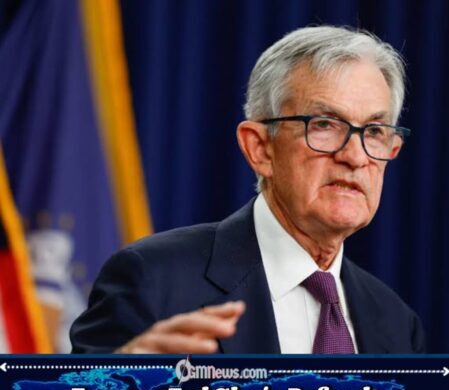
Independence has become the centerpiece of a growing debate over the future of American economic institutions after former Federal Reserve Chair Jerome Powell warned that political interference could damage the central bank’s authority and public trust. Speaking while accepting a prestigious public service award, Powell delivered a pointed defense of institutional autonomy, raising questions about whether one of the world’s most influential financial bodies is facing one of its toughest modern tests. Behind the speeches and headlines lies a deeper question: can economic policy remain insulated from political battles in an increasingly polarized era?
Independence and the Battle Over Monetary Authority
Powell’s remarks focused on the long-standing principle that the Federal Reserve should operate independently from direct political influence. He argued that Congress deliberately structured the institution to protect monetary policy from short-term political pressures, noting that similar safeguards exist across advanced economies. According to Powell, these protections help ensure that decisions on interest rates and inflation are based on economic evidence rather than political convenience.
The former Fed chair warned that removing central bank officials over policy disagreements could create a dangerous precedent. If one administration succeeds in doing so, he suggested, future governments may be encouraged to follow the same path. In a subtle but unmistakable message, Powell emphasized that Independence is not merely a bureaucratic preference but a cornerstone of economic stability. In Washington terms, the message was simple: when politicians start treating interest rates like campaign slogans, economists begin reaching for aspirin.
Credibility Faces a Modern Stress Test
The issue gained additional attention amid ongoing disputes involving Federal Reserve officials and the administration. Recent legal battles concerning Fed Governor Lisa Cook have highlighted the complex legal standards surrounding the removal of central bank governors. Under federal law, presidents generally must demonstrate cause, often interpreted as misconduct, before removing officials from their positions. The Supreme Court’s decision to allow Cook to remain in office while reviewing the case has only intensified scrutiny of institutional protections.
Powell described the current environment as a broader “stress test” affecting multiple institutions. The concern, he argued, is not simply about personnel decisions but about preserving Credibility. Financial markets, businesses and consumers rely heavily on confidence that central bankers act in the public interest rather than in service of political agendas. Analysts note that the Federal Reserve’s reputation has been built over decades through its management of inflation, financial crises and economic downturns. Once Credibility is weakened, restoring it may prove far more difficult than adjusting an interest rate.
The significance of Powell’s remarks was amplified by the setting. The John F. Kennedy Profile in Courage Award has historically recognized public figures who take positions despite potential personal or professional consequences. By using that platform to defend institutional autonomy, Powell placed the debate over the Federal Reserve within a broader discussion about governance, accountability and public trust in democratic systems.
As debates over monetary policy, inflation and presidential authority continue, the twin themes of Independence and Credibility are likely to remain at the center of public discussion. Whether Powell’s warning proves prophetic or precautionary remains to be seen, but the message was clear: trust, once lost, is far harder to rebuild than any economic indicator. OGM News will continue monitoring developments surrounding the Federal Reserve and the evolving relationship between politics and economic governance.

Logging in is a breeze and the site stability is amazing even during peak hours....