



























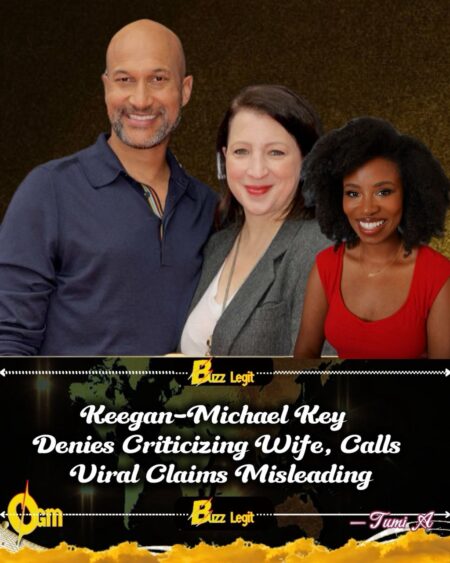
Keegan-Michael Key has publicly pushed back against a viral narrative suggesting he disparaged his wife, Elisa Pugliese, describing the claims as inaccurate and misleading. The controversy emerged after excerpts from a recent interview circulated widely on social media, prompting debate among fans and commentators.
In addressing the situation, Keegan characterized the interpretation of his remarks as a “BS narrative,” emphasizing that the viral reaction does not reflect the full context of his comments. The incident highlights the challenges public figures face in an era where short-form content can shape perception rapidly.
Selective Clips and Misinterpretation Fuel Online Reaction
The controversy appears to have originated from a segment of an interview in which Keegan discussed aspects of relationships and personal experiences. Portions of his remarks were clipped and shared online, leading some viewers to conclude that he was speaking negatively about his spouse.
However, fuller accounts of the interview suggest a more nuanced conversation, with Keegan reflecting broadly rather than directing criticism at his wife. Media observers note that the omission of context in viral clips can significantly alter the meaning of statements, particularly when tone and intent are not fully conveyed.
This pattern reflects a broader trend in digital media, where brief excerpts often gain traction more quickly than complete narratives, sometimes resulting in misunderstandings that require later clarification.
Actor Defends Marriage and Calls for Contextual Understanding
In response to the backlash, Keegan reaffirmed his support for his wife and rejected the notion that he had criticized her. By labeling the claims as a false narrative, he sought to correct public perception and underscore the importance of evaluating statements in their entirety.
Keegan also highlighted the need for audiences to engage with full interviews rather than relying on isolated clips. His response underscores a growing concern among public figures about how edited content can shape narratives that diverge from original intent.
While reactions online remain mixed, Keegan’s clarification has provided additional context for audiences seeking to understand the situation more accurately.



[…] […]