

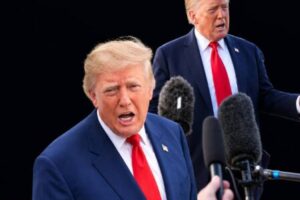

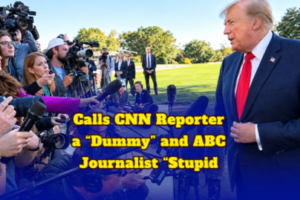



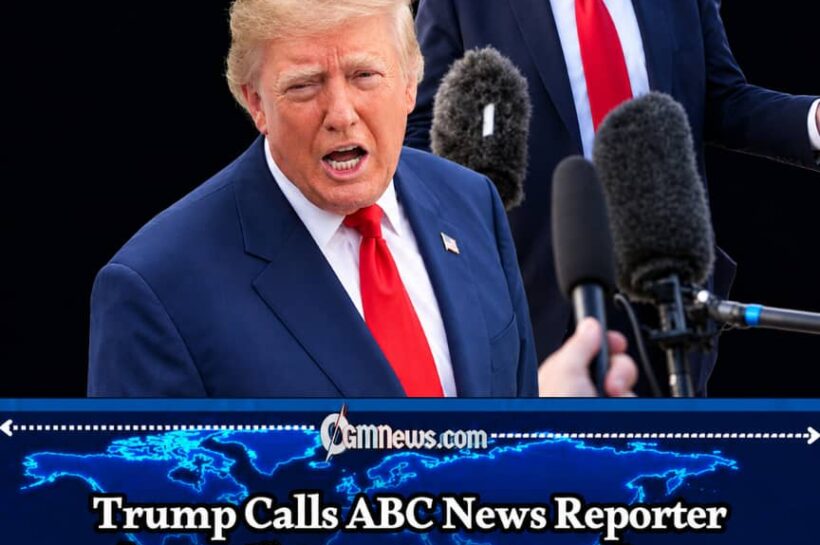




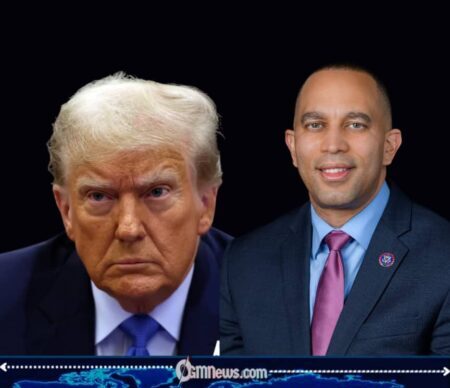
U.S. President Donald Trump, currently serving a second term, has called on House Republicans to take steps to remove Democratic Representative Hakeem Jeffries from office, intensifying an already heated political confrontation in Washington. The remarks, delivered through public statements and social media, came in response to Jeffries’ criticism of the U.S. Supreme Court, which he described as “illegitimate.”
President’s comments have sparked widespread debate over constitutional procedures, political rhetoric, and the boundaries of acceptable discourse in American democracy. The episode reflects broader tensions between the executive branch and congressional leadership, as well as deep divisions over institutional legitimacy and governance.
Trigger for the Dispute: Supreme Court Criticism
The immediate catalyst for President Donald Trump’s call was a series of remarks by Hakeem Jeffries questioning the legitimacy of the Supreme Court following a controversial ruling on electoral and redistricting issues. Jeffries’ comments echoed concerns raised by some Democrats about judicial decisions and their implications for voting rights.
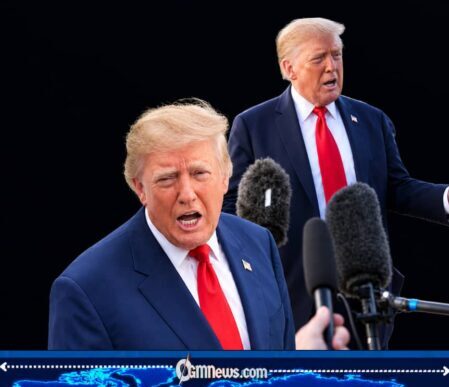
President Donald Trump responded forcefully, arguing that such statements undermine confidence in key institutions. He framed Jeffries’ criticism as unacceptable and called for Republican lawmakers to initiate action against him, suggesting removal from office as a possible outcome.
The exchange underscores the sensitivity surrounding public criticism of the judiciary and highlights how institutional disputes can quickly escalate into broader political conflicts..
Constitutional Reality: Limits on Removing Members of Congress
Despite President Donald Trump’s call for action, constitutional experts note that members of Congress cannot be impeached. Under the U.S. Constitution, impeachment applies to executive and judicial officials, not legislators.
Instead, a member of the House of Representatives can only be removed through expulsion, which requires a two-thirds majority vote in the chamber. This high threshold reflects the framers’ intent to protect elected representatives from politically motivated removal.
As a result, President Donald Trump’s remarks are widely interpreted as a political statement rather than a literal procedural proposal, highlighting the gap between rhetoric and constitutional mechanisms.
Broader Context: Intensifying Political Messaging
The comments directed at Hakeem Jeffries are part of a broader pattern of assertive political messaging by President Donald Trump. In recent weeks, he has used strong language to criticize opponents, defend policy decisions, and shape public narratives around key issues.
Analysts suggest that such rhetoric serves multiple purposes, including energizing political supporters and framing debates in terms favorable to the administration. However, critics argue that it can also contribute to heightened polarization and reduce opportunities for constructive dialogue.
The exchange with Jeffries illustrates how political communication has evolved into a central battleground in contemporary governance.
Democratic Response: Defense of Political Speech
Hakeem Jeffries and other Democratic leaders have defended the right to criticize government institutions, emphasizing that such discourse is a fundamental aspect of democratic governance. They argue that questioning judicial decisions does not equate to undermining the rule of law.
In response to President Donald Trump’s remarks, Democrats have characterized the call for removal as politically motivated and inconsistent with constitutional principles. They contend that robust debate is essential, particularly on issues with significant national implications.
This perspective highlights the ongoing tension between preserving institutional respect and maintaining freedom of political expression.
Institutional Implications: Trust and Governance
The dispute raises broader questions about trust in public institutions and the role of political leaders in shaping that trust. Statements from both sides have the potential to influence public perception of the judiciary, Congress, and the executive branch.
Observers note that sustained conflict over institutional legitimacy can have long-term consequences for governance, including reduced confidence in democratic processes and increased political fragmentation.
At the same time, open debate and accountability are viewed as essential safeguards within a democratic system, underscoring the complexity of balancing criticism with institutional stability.
Political Climate: A Reflection of Deepening Divisions
The clash between President Donald Trump and Hakeem Jeffries reflects deeper divisions within U.S. politics. Issues such as judicial authority, electoral fairness, and the scope of executive power continue to generate strong and often conflicting views.
President Donald Trump has positioned himself as a defender of institutional authority, while critics, including Jeffries, emphasize the need for scrutiny and reform. These competing narratives are likely to shape political discourse in the months ahead.
As the debate continues, the ability of political leaders to navigate disagreement while maintaining institutional integrity will remain a key challenge.
Rhetoric, Reality, and the Future of Political Discourse
President Donald Trump’s call for the removal of Hakeem Jeffries highlights the increasingly confrontational nature of political discourse in the United States. While the constitutional pathway for such action is limited, the statement underscores the intensity of current political conflicts.
The episode serves as a reminder of the importance of understanding both the legal framework governing political institutions and the role of rhetoric in shaping public debate. As tensions persist, the balance between strong political expression and adherence to democratic norms will continue to define the national conversation.

Logging in is a breeze and the site stability is amazing even during peak hours....