



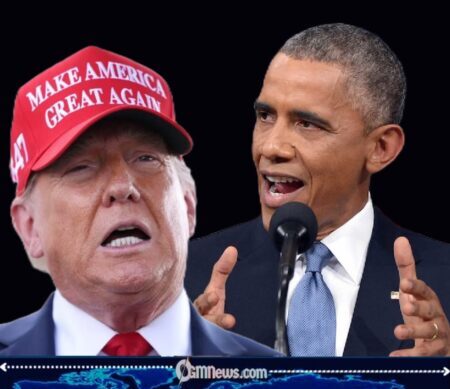
Former U.S. President Barack Obama has indicated that his post-presidential life has not unfolded as quietly as he once envisioned. Despite expressing a desire to step back from frontline politics, Obama now finds himself increasingly drawn into public discourse and strategic political engagement.
According to his remarks, the evolving political climate—shaped significantly by the leadership and style of current U.S. President Donald Trump—has made complete disengagement difficult. Barack Obama suggested that recent developments have compelled him to remain involved, albeit in less visible ways, to help shape the direction of American democracy.
Private Costs: Tensions Within the Obama Household
Barack Obama acknowledged that his continued involvement in political matters has had personal consequences, particularly within his family. He noted that his wife, Michelle Obama, has expressed frustration over the demands that public life still places on their relationship.
The former president described a “genuine tension” in their household, reflecting the challenges of balancing public responsibility with private life. For Michelle Obama, the expectation of a quieter post-White House life has not fully materialized, underscoring the enduring pressures associated with political prominence.
Choosing Influence Over Commentary
While some former leaders transition into outspoken public commentators, Obama has deliberately avoided adopting a daily media presence similar to figures like Jon Stewart. He explained that such a role could undermine his identity as a statesman rather than a pundit.
Instead, Obama has chosen a more strategic approach, working largely behind the scenes. His efforts reportedly include initiatives focused on redistricting and combating gerrymandering—issues that carry significant implications for the balance of power in Congress and the broader electoral system.
Criticism of Political Decorum and Standards
Obama also voiced concern about what he perceives as a decline in traditional political norms. He suggested that standards of decorum, once considered essential to public office, have eroded in recent years.
Without resorting to direct daily criticism, Barack Obama has nonetheless expressed unease about the tone of modern political engagement. His remarks point to a broader चिंता about institutional respect and the expectations placed on those occupying the highest offices in the United States.
Public Frustration and Questions of National Identity
The former president highlighted a sense of unease among many citizens, who, he says, feel disconnected from the current state of national politics. He described a lingering question among the public: whether present realities align with the values Americans believe define their country.
This perceived disconnect has fueled frustration and, in some cases, renewed political engagement. Obama’s continued involvement appears partly motivated by a desire to address these concerns and contribute to restoring confidence in democratic institutions.
The Weight of Leadership Beyond Office
Barack Obama’s experience reflects a broader reality faced by former heads of state: leaving office does not always mean leaving influence behind. In times of political tension, former leaders are often called upon—directly or indirectly—to re-enter the national conversation.
For Barack Obama, this has meant navigating the delicate balance between preserving personal space and fulfilling a sense of civic responsibility. The situation underscores how leadership can extend well beyond formal tenure, especially during periods of heightened political division.
Logging in is a breeze and the site stability is amazing even during peak hours....