
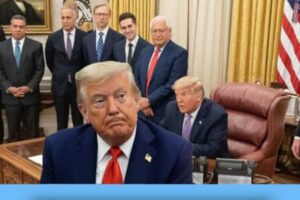


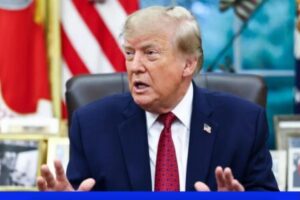





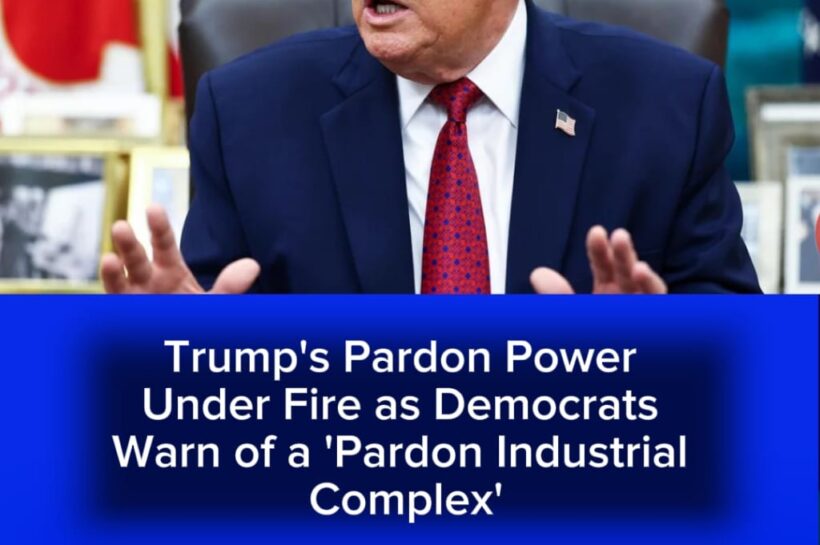






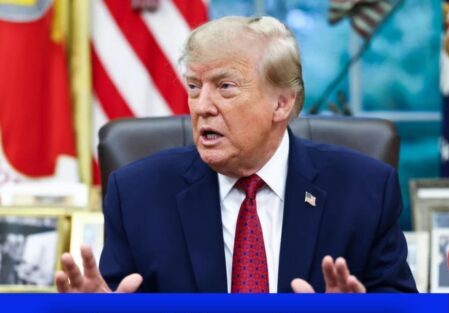
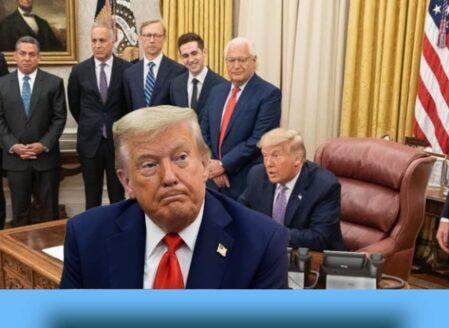
America’s presidential pardon power is facing another political storm, with congressional Democrats seeking to prevent what they describe as a growing marketplace where wealthy individuals and politically connected defendants could enjoy privileged access to presidential clemency. House Democrats Mike Levin and Jason Crow have reportedly introduced the Abuse of the Pardon Prevention Act, targeting possible conflicts of interest, alleged financial influence and questionable arrangements surrounding President Donald Trump’s second-term pardons. The proposal has reignited a fundamental question about whether presidential mercy is being exercised as a constitutional responsibility or becoming another political privilege available to those with the right connections.
The controversy comes as Democrats prepare to use their congressional majorities to scrutinise the administration’s controversial decisions. While the proposed legislation faces significant political obstacles, its introduction signals that Trump’s pardon decisions could become a major subject of congressional investigations, political arguments and public accountability efforts.
Democrats Want to Investigate the Presidential Pardon Business
The proposed legislation is intended to address concerns that presidential pardons could become entangled with financial interests, lobbying activities and personal relationships. Levin, a California Democrat, described the situation as a “pardon industrial complex,” arguing that wealthy defendants could potentially spend enormous sums pursuing clemency through people connected to the president.
According to the supplied investigation, wealthy defendants have hired lawyers and lobbyists with connections to Trump to advance their pardon applications. The report also alleges that approximately 70% of the president’s second-term clemency actions bypassed the Justice Department’s pardon office, rising to 92% when January 6 defendants were included. Those figures, if accurately established, would intensify questions about the administration’s approach to traditional clemency procedures. The Justice Department confirms that the president possesses the constitutional authority to grant federal pardons, although its established pardon office also administers applications and provides information about the clemency process.
The proposed legislation would direct the Justice Department’s inspector general to investigate pardons involving potential conflicts of interest. It would also clarify that bribery prohibitions apply when presidential or vice-presidential clemency is exchanged for something of value. Another provision would require pardon recipients to disclose gifts involving projects associated with the president, including his proposed presidential library or White House ballroom. Democrats also want to prohibit presidential self-pardons, an issue Trump has previously discussed publicly.
In political terms, the proposal presents Democrats with an opportunity to challenge the administration’s clemency decisions without immediately changing the Constitution. However, the bill’s chances of becoming law remain uncertain, particularly because Trump could veto legislation that reaches his desk. The proposal therefore appears likely to serve both as a potential oversight mechanism and as an early warning that Democrats intend to investigate the administration’s use of executive power.
Trump’s White House Rejects Allegations as Controversial Pardons Return to the Spotlight
The White House has rejected suggestions that the president’s pardon decisions are influenced by improper financial arrangements. According to the supplied report, administration officials maintain that anyone spending money to lobby for pardons is wasting their resources and insist that a robust review process exists. White House Counsel Will Scharf defended Trump’s conduct, arguing that the president performs his constitutional duties ethically and that allegations to the contrary are either uninformed or malicious.
The dispute has also drawn attention to individual clemency decisions. Levin reportedly cited Trump’s pardon of Binance founder Changpeng Zhao, who pleaded guilty in 2023 to failing to maintain an effective anti-money-laundering program. The congressman also raised reports involving Alina Habba Mildon and a deal with the family of a Venezuelan billionaire who was pardoned weeks later. Habba Mildon has denied having any role in the pardon, and the allegations should not be treated as proof of wrongdoing. The Justice Department’s public clemency records provide a formal record of presidential grants, while the constitutional authority itself remains vested in the president.
The controversy is particularly sensitive because Trump’s second administration began with sweeping clemency for people convicted in connection with the January 6, 2021, Capitol attack. On January 20, 2025, Trump granted pardons to most individuals convicted of related offences and commuted the sentences of others. That decision established an important precedent for the administration’s approach to presidential clemency and has continued to fuel political disagreements about accountability and executive discretion.
The broader constitutional question is whether presidential clemency can be subjected to additional safeguards without undermining the president’s existing authority. The Constitution grants the president broad power to pardon federal offences, but it does not eliminate congressional authority to investigate possible corruption or establish laws addressing bribery. Democrats are therefore attempting to draw a distinction between the president’s legitimate power to grant mercy and conduct that could potentially involve improper exchanges.
The growing dispute over Trump’s pardon decisions has placed presidential clemency under renewed scrutiny, with Democrats promising investigations and the White House insisting that the process remains ethical and legitimate. The proposed legislation may face a difficult path through Congress, but its introduction signals that the pardon controversy could become a significant political battle over transparency, accountability and the limits of executive power. Whether the allegations ultimately lead to legislative action or remain part of a wider political confrontation, OGM News will continue monitoring developments and bringing readers further updates as the story unfolds.

I love how this site combines sports betting with casino games in one seamless experience....