




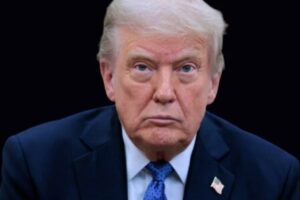





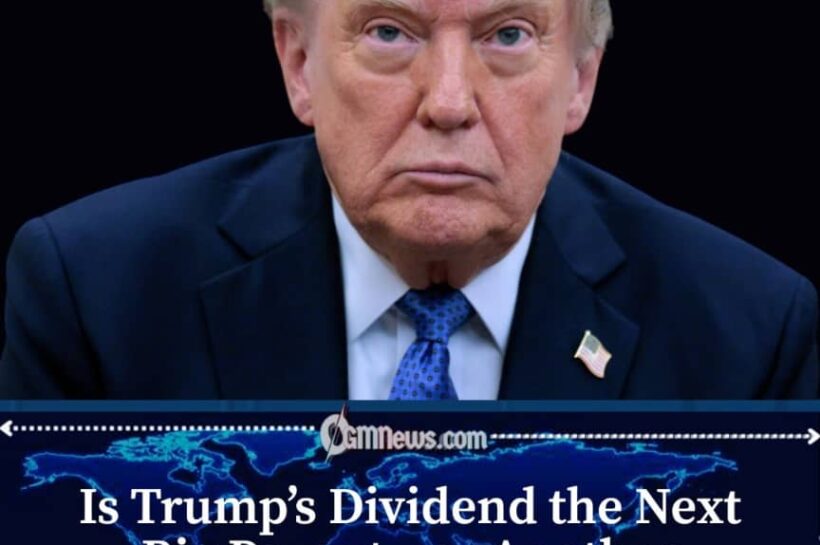














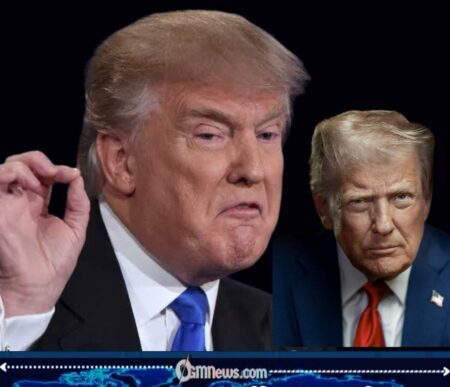
President Donald J. Trump has triggered fresh political and diplomatic debate after publicly agreeing with China’s long-standing claim that America experienced decline during President Joe Biden’s administration — before insisting the United States has now fully rebounded under his own leadership. The remarks, delivered after high-level meetings with Chinese President Xi Jinping, have drawn attention not only because of their political sharpness, but because they came during a moment of cautious diplomacy between two rival global powers still competing for economic and military dominance.
In a lengthy post following the meeting, Trump described America as stronger than ever, citing booming financial markets, record investment figures, renewed industrial confidence, and what he called “the strongest military on earth by far.” He also celebrated the rollback of diversity, equity, and inclusion initiatives, arguing that his administration had reversed policies he believes weakened national institutions. While supporters viewed the message as proof of restored confidence, critics questioned whether the president’s optimistic portrait reflects the economic realities facing many ordinary Americans dealing with inflation, housing pressures, and rising living costs.
Trump Tells China: “America Rebooted Successfully”
Trump’s comments were especially notable because they echoed language long promoted by Beijing. Chinese officials and analysts have repeatedly argued that the West — particularly the United States — has entered a period of decline while China rises economically and politically. Rather than rejecting that narrative entirely, Trump redirected blame toward the Biden administration, portraying his presidency as a dramatic reversal of American weakness.
The president also predicted a stronger relationship with China moving forward, despite ongoing tensions surrounding Taiwan, trade restrictions, artificial intelligence, and military influence across the Indo-Pacific region. Observers noted that Trump’s tone toward Xi appeared warmer than expected, with both leaders emphasizing economic cooperation and stability over direct confrontation. Still, behind the diplomatic smiles lies a relationship shaped by tariffs, technology battles, and growing competition over global influence.
Trump’s China Comments Spark Debate Over America’s Global Power
Additional reporting surrounding the summit suggests the meetings included discussions on investment access, agricultural trade, semiconductor policy, and Middle East security concerns tied to Iran and global shipping routes. Analysts say both governments are attempting to stabilize relations partly to protect fragile global markets already strained by geopolitical uncertainty and slowing economic growth in several regions.
At the same time, Trump’s remarks have reignited political arguments inside the United States over what “American strength” actually means. Supporters point to rising stock values, business optimism, and military expansion as evidence of recovery, while opponents argue that economic gains have not translated equally across working-class communities. Some critics also accused Trump of turning a sensitive diplomatic meeting into a domestic political rally delivered on an international stage. Social media users, meanwhile, transformed the moment into a flood of memes, with some joking that America apparently underwent a “software update” immediately after the change in leadership.
As Washington and Beijing continue balancing rivalry with cooperation, Trump’s statements may signal a broader strategy of combining aggressive political messaging at home with softer diplomatic engagement abroad. Whether that approach leads to stronger relations or deeper suspicion between both superpowers may become clearer in the coming months, as trade negotiations, military positioning, and election politics continue shaping the future of the world’s most important geopolitical relationship.
[…] […]