



















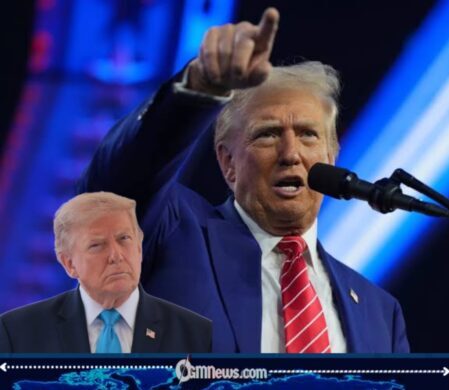
President Donald Trump has once again stepped into the increasingly crowded room of American history, this time asking the Smithsonian Institution to install a 30-foot “Colossus statue” of George Washington outside the National Museum of American History and create a special exhibition honouring the first US president through February 2032. Trump’s latest proposal, delivered on social media while travelling to his golf course in Ireland, has added another chapter to his campaign to reshape how the nation’s cultural institutions present American history. Recent reporting confirms that Trump also wants an 11-foot Washington statue placed inside the museum for Constitution Day, while his administration continues to challenge what it considers overly negative historical narratives.
Trump’s Washington Vision Turns the Smithsonian Into a Political Battlefield
Trump described Washington as “America’s Greatest Hero” and argued that the founding president deserves far greater attention, particularly for the Revolutionary War and the famous Delaware River crossing and victory at Trenton. In classic Trump fashion, the proposal is not merely a request for a portrait on a wall; it comes with a 30-foot monument, a multi-year exhibition and a proposed “Center for American Heroes” to replace the recently ended Center for Restorative History. If approved, visitors could soon find themselves approaching the museum under the watchful gaze of a Washington so enormous that even the gift shop might need to check its ceiling height.
The proposal would also replace José de Rivera’s “Infinity” sculpture, installed outside the museum in 1967, with the towering Washington figure. Trump has already been pressing the Smithsonian over its interpretation of US history, following a 2025 administration report that accused the institution of placing too much emphasis on oppression, social justice and division. Reuters reports that the president’s latest intervention includes criticism of the museum’s treatment of Washington and calls for a greater emphasis on national achievements. The satire almost writes itself: the nation’s museum is now being asked to consider whether history needs a curator—or whether the president has decided to become one.
The Smithsonian’s Independence Faces Another Test
The more serious issue behind the humour is whether the president can actually order the Smithsonian to make the changes he is demanding. The institution operates independently of the executive branch and is overseen by a Board of Regents that includes federal officials, lawmakers and citizen members. Trump has already ordered changes involving Smithsonian displays, but some of the proposed signs criticising the museum had not appeared, illustrating the difference between issuing a presidential instruction and controlling an institution with its own governing structure.
The timing also matters. Smithsonian Secretary Lonnie Bunch announced this week that he will retire at the end of 2026 after seven years in the role, amid increasing political pressure over the institution’s presentation of American history. Bunch has defended the Smithsonian’s independence and its responsibility to present a complex national story rather than simply a celebratory one. His departure comes as the Trump administration’s cultural campaign expands beyond museum exhibits into statues, public art and other national symbols, making the question of who gets to decide what Americans see—and how they see it—particularly significant.
For now, Trump’s proposed Washington Colossus remains a request rather than a completed Smithsonian project, but it has already become another symbol of the administration’s effort to influence America’s cultural memory. Whether George Washington eventually gets a 30-foot welcome committee, an extended exhibition or a new “Center for American Heroes,” the bigger story is the continuing argument over whether national history should primarily celebrate American triumphs or also confront the country’s contradictions. OGM News will continue watching this unusual museum drama, because if the current trend continues, the next historical debate may come with a blueprint, a statue and a presidential social-media announcement attached.


Mexican players will love how well this platform handles local payment methods. Deposits via OXXO...