




























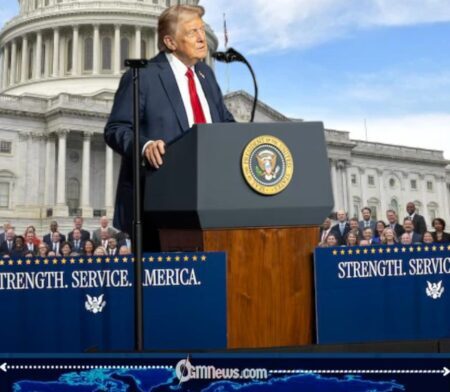
Trump and Iran returned to the center of Washington’s political storm after House Republicans narrowly blocked an effort aimed at limiting President Donald J. Trump’s military actions connected to the escalating Middle East crisis. The dramatic vote exposed sharp divisions within Congress over war powers, executive authority, and the growing fear that the United States could drift deeper into another prolonged regional conflict. While Republican leaders defended the decision as necessary for national security, critics accused lawmakers of giving the administration excessive freedom at a moment when global tensions and economic anxieties are already running dangerously high.
Republicans Choose Trump Loyalty Over Ending Iran Conflict
The Trump administration has maintained a hardline posture toward Iran, arguing that military pressure and strategic deterrence remain essential to protecting American interests and regional allies. Supporters inside Congress insisted that limiting presidential authority during a volatile international standoff could weaken America’s position and embolden hostile actors across the Middle East. The narrow House vote ultimately blocked an effort designed to force stricter congressional oversight on military engagement tied to Iran.
Opponents of the administration strongly disagreed, warning that Congress risks repeating mistakes associated with past Middle East conflicts where military involvement expanded beyond initial expectations. Several lawmakers argued the United States should avoid sliding into another open-ended confrontation without broader national debate or clear authorization. The controversy also intensified public concerns about rising oil prices, economic instability, and whether Washington has fully learned lessons from previous wars that lasted far longer than promised. Even within political circles, some observers joked that Congress now debates foreign policy with the same organization as passengers arguing over airplane seats during turbulence.
House Republicans Block Peace Push While Americans Watch Fuel Prices Rise
The Iran issue arrives at a particularly sensitive moment for global politics and energy markets. Rising tensions in the region have already contributed to renewed concerns about oil supply routes, especially around the Strait of Hormuz, one of the world’s most strategically important shipping channels. Analysts warn that any major escalation involving Iran could trigger serious consequences for fuel prices, inflation, and broader international trade networks.
Additional reporting surrounding the congressional dispute suggests growing unease among some lawmakers regarding the balance between presidential war powers and legislative oversight. Historically, debates over military authorization have intensified whenever administrations expanded operations abroad without explicit congressional approval. Trump’s current Iran strategy has therefore reopened longstanding constitutional arguments inside Washington about who ultimately controls America’s path toward military conflict. Critics say Congress appears increasingly reactive rather than proactive, while supporters argue fast-moving global threats require flexibility from the White House.
For now, the House vote represents a temporary political victory for President Donald J. Trump and his allies, but the larger debate surrounding Iran remains unresolved. Tensions in the Middle East continue influencing global markets, diplomatic relationships, and domestic political calculations inside Washington. Whether this latest congressional battle becomes a turning point or merely another chapter in America’s complicated relationship with Iran will likely depend on how events unfold in the coming weeks. OGM News will continue monitoring developments as lawmakers, allies, and adversaries all attempt to navigate a crisis growing more unpredictable by the day.

Casinoabc999? Good Site. The interface is sleek, and there is a lot of stuff to...