


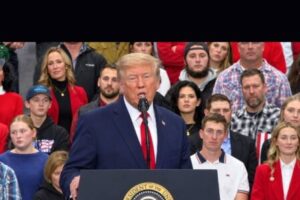
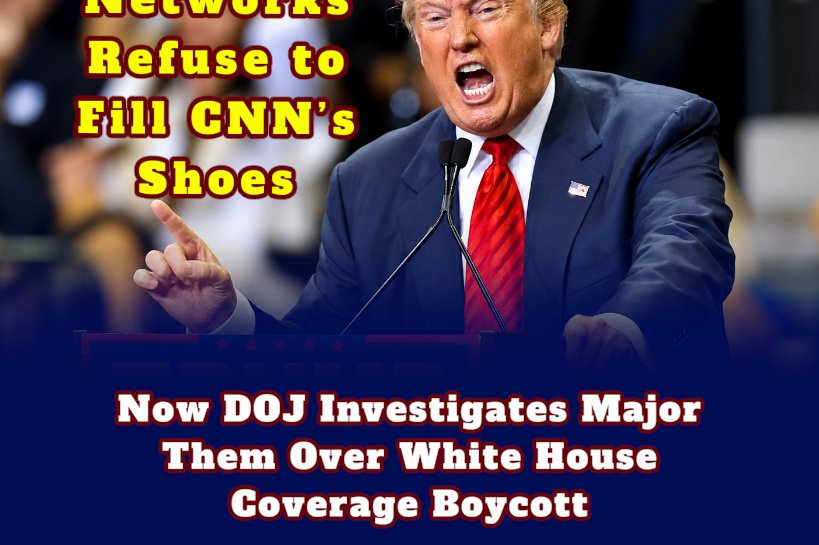






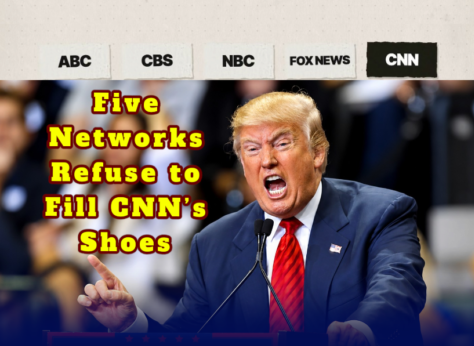
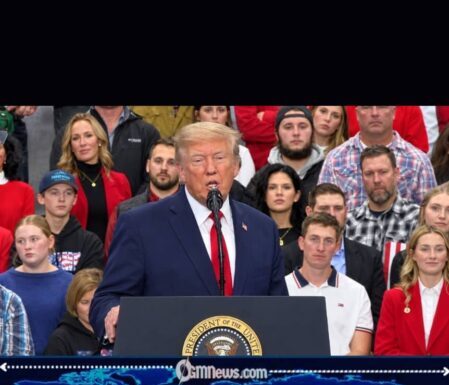
Five Networks Refuse to Fill CNN’s Shoes | OGM News — In Washington, where political drama has become a full-time government service, President Donald J. Trump’s confrontation with the media has taken another extraordinary turn. After the White House barred CNN, alongside MS NOW and Politico, from its grounds in September, five major television networks suspended their shared video coverage of presidential events. Now, the Department of Justice is investigating whether that collective action violated federal antitrust laws. Apparently, when the president blocks a news organization, the cameras may stop rolling — but the lawyers are just getting started.
The White House Blocks CNN, and Five Networks Make The White House Cameras Go Dark
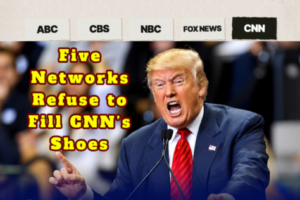
Five Networks Refuse to Fill CNN’s Shoes | OGM News — The networks involved in the dispute were ABC, CBS, CNN, Fox News and NBC. The White House television pool is a cooperative arrangement in which participating broadcasters take turns filming presidential events and distributing the footage to other news organizations. When the administration prevented CNN from carrying out its assigned duties, the other networks declined to continue the pool’s coverage, temporarily leaving major presidential events without the usual shared television footage.
The networks’ position was effectively that a press pool cannot function fairly when one of its members is excluded by the very administration it is assigned to cover. The White House, meanwhile, had its own complaints about media coverage. But the situation quickly became more than a dispute over press credentials: it raised questions about whether the government can restrict access for outlets whose reporting it dislikes. The administration’s decision was challenged in court, and a federal judge subsequently ordered the restoration of access for CNN, MS NOW and Politico while their legal fight continued. That development suggests the courts, at least for now, are not prepared to let the White House settle press-access disputes simply by declaring certain journalists unwelcome.
DOJ Investigates Five Networks: Is This Antitrust Enforcement or Political Payback?
Five Networks Refuse to Fill CNN’s Shoes | OGM News — On October 10, the Justice Department confirmed an investigation into the five networks over their temporary suspension of White House pool coverage. The department said it was examining whether the networks’ coordinated action could violate the Sherman Antitrust Act, a federal law that prohibits certain anticompetitive agreements. DOJ spokesperson Emily Covington argued that group boycotts among commercial competitors can violate antitrust law. The investigation is intended to determine whether the networks crossed that legal line; it is not a finding that they committed a crime.
Here is where the political irony practically writes its own punchline. The government restricted access for news organizations, the broadcasters collectively stopped providing a shared service, and now the government is investigating the broadcasters for potentially coordinating their response. The legal question is whether their conduct amounts to an unlawful commercial boycott, not whether every act of media solidarity is automatically protected. Nevertheless, legal experts have questioned the strength of the government’s antitrust theory, while press-freedom advocates warn that using federal investigative powers against networks involved in a dispute with the president could have a chilling effect on independent journalism. The central concern is straightforward: enforcing competition law is legitimate, but the law must not become a convenient instrument for punishing media organizations that challenge those in power.
Five Networks Refuse to Fill CNN’s Shoes | OGM News — This dispute is bigger than five television networks and one White House press-access battle. It concerns the boundaries between government authority, competition law and the freedom of the press to operate without political retaliation. The Justice Department’s investigation must establish whether the networks’ conduct actually violated the law, while the courts will continue to weigh the administration’s restrictions against constitutional protections. For now, Americans are left watching a remarkable Washington spectacle in which the fight over who gets to film the president has become a fight over who gets investigated next. OGM News will continue following the case and bring readers further updates as new facts and legal developments emerge.
Finding a reliable crypto betting site can be tricky, but this platform makes the whole...