









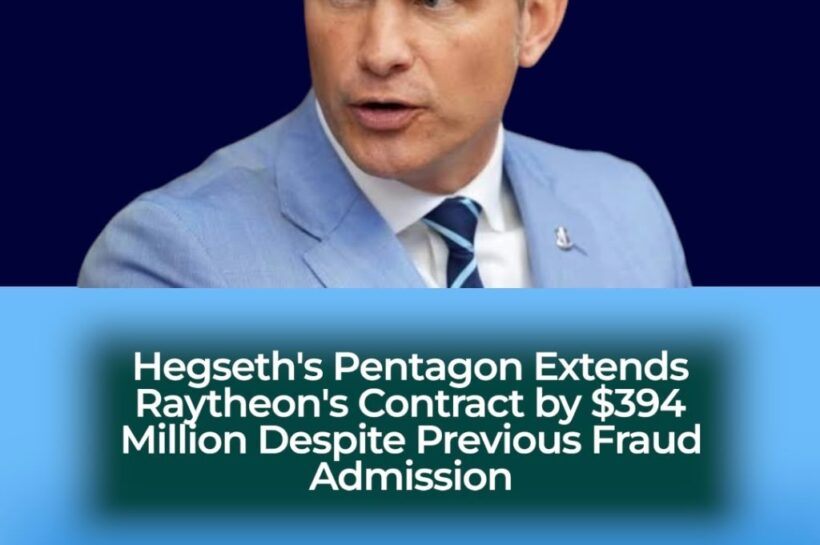




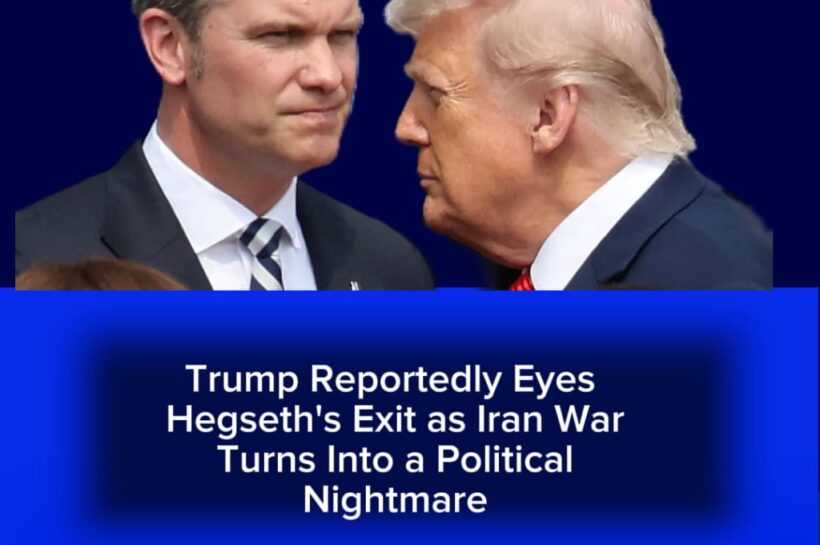









The Pentagon, under President Donald J. Trump’s administration and Defence Secretary Pete Hegseth, has reportedly awarded defence contractor Raytheon a non-competitive contract extension worth up to $394 million, despite the company’s previous admission that it defrauded the U.S. Department of Defense by more than $111 million. The latest development is raising fresh questions about accountability, government procurement and whether a company’s history of defrauding taxpayers is enough to prevent it from receiving another lucrative government contract. Apparently, in the world of defence procurement, a troubled financial history does not necessarily mean the end of the business relationship.
HEGSETH’S PENTAGON AND THE $394 MILLION DECISION
The contract extension, awarded through the Pentagon’s Missile Defense Agency, is reportedly a two-year, non-competitive arrangement allowing Raytheon, a subsidiary of RTX Corporation, to continue maintaining the AN/TPY-2 radar systems through 2028. The agreement is valued at up to $394 million, with approximately $112.3 million already obligated. These radar systems play an important role in America’s missile-defence capabilities, making continuity of maintenance a significant consideration for the Pentagon. Nevertheless, the absence of competitive bidding has placed the award under renewed scrutiny.
For Hegseth’s Pentagon, the decision presents an uncomfortable public-relations challenge. Raytheon’s previous misconduct was not merely an allegation that disappeared into the corridors of Washington. In October 2024, the company admitted to two schemes involving false and misleading cost information during negotiations with the Defence Department. The schemes concerned Patriot missile systems and a radar-maintenance contract, causing the government to pay approximately $111.2 million more than it should have paid. Yet, the contractor has continued to participate in major American defence procurement, leaving taxpayers with an understandable question: how many financial penalties must a company face before its government contracts come under serious reconsideration?
RAYTHEON’S FRAUD HISTORY RETURNS TO HAUNT THE PENTAGON
The 2024 settlement was substantial. The U.S. Department of Justice announced that Raytheon and its parent company, RTX, would pay more than $950 million to resolve investigations involving defective pricing, foreign bribery and export-control violations. The defective-pricing case alone involved a $146.8 million criminal penalty and approximately $111.2 million in compensation to the Department of Defense. Raytheon also agreed to a separate $428 million civil settlement over allegations involving misleading cost information and double billing on government contracts. The company entered into deferred prosecution agreements and accepted independent compliance monitoring. In other words, this was not a minor accounting disagreement that could simply be buried beneath another defence contract.
However, the latest contract decision demonstrates how complicated the relationship between national security and corporate accountability can become. The Pentagon has a legitimate interest in maintaining critical missile-defence infrastructure, and a contractor’s previous misconduct does not automatically make it legally ineligible for every future government contract. Reports indicate that the Navy had previously determined that suspension or debarment was unnecessary, allowing Raytheon to remain eligible for federal business. That distinction matters, but it does little to silence questions about whether the government should apply stricter scrutiny when awarding substantial non-competitive contracts to companies with established histories of misconduct.
For now, Hegseth’s Pentagon has another difficult question to answer: should national security requirements take priority over public concerns about corporate accountability, or should both receive equal attention? Critics may argue that the government cannot convincingly demand financial discipline from taxpayers and contractors while continuing to award substantial contracts to companies that have admitted defrauding the very department they are being paid to serve. Supporters of the decision, meanwhile, may point to the specialised technology, operational continuity and risks associated with disrupting missile-defence maintenance. Either way, the $394 million extension has reopened an important debate about who ultimately benefits when defence contracts are awarded without competition.
OGM News will continue monitoring the story as questions surrounding Hegseth’s Pentagon, Raytheon’s contract extension and government accountability develop. Stay tuned for further updates.

Great selection of live dealer games. The streaming quality is crystal clear and the dealers...