











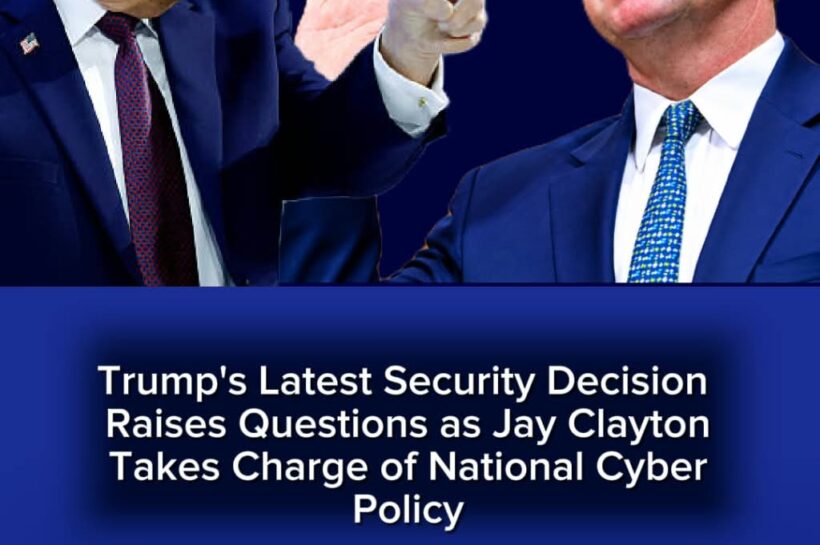

















President Donald Trump has expanded the national security responsibilities of Director of National Intelligence Jay Clayton, assigning him temporary oversight of America’s national cybersecurity policy amid growing concerns about technology disruptions and increasingly sophisticated cyber threats.
According to a report by Axios on Monday, November 23, 2026, Clayton will serve as acting National Cyber Director while Kirsten Davies, the Pentagon’s Chief Information Officer, awaits Senate confirmation to assume the position permanently.
The arrangement places two significant national security responsibilities under one official at a time when America’s digital infrastructure is facing increasing pressure from technological disruptions and emerging artificial intelligence-powered threats.
Trump Reshuffles Cybersecurity Leadership Amid Growing Concerns
The development follows Trump’s November 20 announcement selecting Davies to lead the White House Office of the National Cyber Director, replacing Sean Cairncross.
Davies, who previously served as the Pentagon’s Chief Information Officer, brings extensive experience in technology management and cybersecurity. While awaiting Senate confirmation, she is expected to serve as a senior adviser within the cybersecurity office.
Clayton expressed confidence in Davies’ ability to strengthen America’s cybersecurity framework, describing her experience and capabilities as valuable assets in addressing the country’s increasingly complex digital challenges.
The leadership arrangement is expected to ensure continuity in cybersecurity policy while the confirmation process moves forward.
Technology Outages and AI-Powered Attacks Raise Security Questions
The leadership adjustment comes against the backdrop of widespread technology disruptions affecting businesses, government agencies and essential services across the United States.
Recent incidents have affected major technology platforms, banking services, government networks and air travel operations, raising questions about the resilience of America’s digital infrastructure.
Artificial intelligence has also introduced additional cybersecurity concerns, with increasingly sophisticated technologies creating new opportunities for malicious actors to identify vulnerabilities and launch cyberattacks.
However, the Trump administration has maintained that the recent technology outages were largely associated with system upgrades and technical maintenance rather than coordinated cyberattacks or state-sponsored operations.
Clayton has also warned that Americans should expect further disruptions as organisations modernise ageing technological systems to improve performance and cybersecurity. Trump’s decision to assign Jay Clayton temporary oversight of national cybersecurity policy represents another significant development in his administration’s national security strategy.
With artificial intelligence transforming the cybersecurity landscape and technology disruptions exposing vulnerabilities in critical infrastructure, the United States faces increasing pressure to strengthen its digital defence capabilities.
Although Davies is expected to take over the cybersecurity leadership position following Senate confirmation, Clayton’s temporary dual responsibilities raise questions about coordination, accountability and the effectiveness of concentrating two major national security assignments under one official.
Can Trump’s new cybersecurity arrangement adequately protect America’s digital infrastructure against increasingly sophisticated threats, or is Washington taking a major risk by placing additional responsibilities on its intelligence chief?


I was looking for a reliable spot to unwind and this platform exceeded my expectations....