



























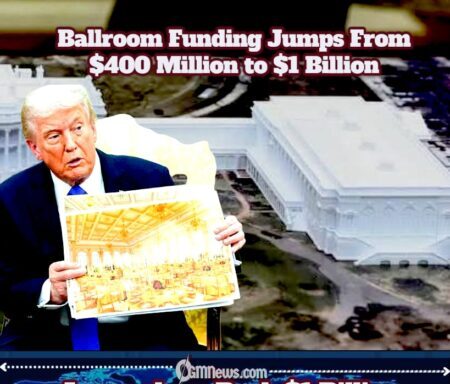
Ballroom Budget has taken center stage in Washington after Senate Republicans approved a staggering $1 billion allocation for a ballroom project tied to Donald J. Trump—a figure that sharply contrasts with earlier claims that the initiative would not rely on taxpayer funding. The sudden escalation from a previously stated $400 million estimate has raised questions not only about cost inflation but also about transparency in federal spending decisions.
The move, embedded within a broader budget bill, has drawn scrutiny from both political opponents and fiscal watchdogs. While large government projects often exceed initial projections, the scale of this increase—and the contradiction with earlier assurances—has fueled a growing sense of skepticism among observers.
The Original Promise and the Rising Ballroom Budget
The initial premise surrounding the ballroom project emphasized private financing, with assurances that public funds would not be required. However, the newly approved budget allocation tells a different story, effectively shifting the financial burden to federal resources. Ballroom Budget concerns now center on how such a significant change occurred without broader public debate.
Supporters within the Senate argue that the increase reflects expanded project requirements, including enhanced security measures, architectural modifications, and rising construction costs. Yet critics counter that these explanations do not fully justify the more than doubling of the original estimate, especially given the earlier commitment to avoid taxpayer involvement.
Broader Context: Spending Priorities and Political Optics
The controversy emerges at a time when federal spending is already under intense scrutiny, with lawmakers facing pressure to address deficits and prioritize essential services. The ballroom allocation has therefore become a focal point in discussions about government priorities and fiscal discipline.
Historically, presidential projects and legacy initiatives have often sparked debate, particularly when public funds are involved. In this case, analysts note that the optics of funding a high-profile, luxury-oriented project could have political consequences, especially as economic concerns remain top of mind for many Americans. The situation also highlights how budget negotiations can introduce significant provisions with limited visibility until after approval.
As the debate continues, Ballroom Budget remains a defining issue in the broader conversation about accountability in government spending. Whether further scrutiny leads to revisions or reinforces existing positions, the controversy signals that even symbolic projects can carry substantial political weight—and financial implications—for years to come.



The weekly tournaments here keep me coming back because the prize pools are surprisingly generous....