



























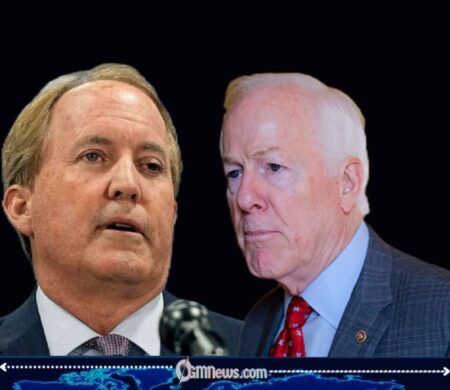
Attorney General Ken Paxton has emerged with a slight edge over U.S. Senator John Cornyn in a closely contested Republican runoff scenario, according to a new survey conducted by the University of Houston Hobby School of Public Affairs. The poll places Paxton at 48% support among likely Republican voters, compared to Cornyn’s 45%, with 7% still undecided.
The results point to a highly competitive race, with neither candidate commanding a decisive lead. As the contest develops, the relatively small margin and the presence of undecided voters suggest that the final outcome remains uncertain and open to late shifts in voter preference.
Ken Paxton’s Narrow Advantage in the Poll
Ken Paxton, currently serving as Texas Attorney General, holds a three-point lead in the survey, a margin that reflects both strength and vulnerability. While he is ahead, the gap is not wide enough to guarantee victory in a runoff environment where turnout and momentum are critical.
Political observers note that such a slim lead often intensifies campaign strategies, as candidates work to solidify their base while also appealing to undecided voters. In this case, Paxton’s position gives him an early advantage but not a secure one.
Cornyn Remains Within Striking Distance
Despite trailing slightly, John Cornyn remains firmly within reach of overtaking Paxton. His 45% support indicates a strong and resilient voter base, particularly among those who favor experience and continuity in federal representation.
Cornyn’s long-standing role in the Senate provides him with institutional credibility, which could become a key factor as the race progresses. Analysts suggest that in a runoff scenario, such attributes may resonate with voters seeking stability.
The Influence of Undecided Voters
The 7% of voters who remain undecided could play a decisive role in determining the outcome of the race. In tightly contested elections, this group often becomes the primary target for campaign messaging and outreach.
Both campaigns are expected to intensify efforts to win over these voters, focusing on policy priorities, endorsements, and voter mobilization strategies. Even a small shift among undecided voters could alter the trajectory of the race significantly.
Party Dynamics and Internal Competition
The contest between Paxton and Cornyn reflects broader dynamics within the Republican Party in Texas. The race highlights differing approaches to leadership, policy emphasis, and political style within the party.
Such internal competition is not uncommon in high-profile races and can serve as an indicator of shifting priorities among party members. The outcome may influence not only representation but also the direction of party strategy in future elections.
Campaign Strategies Moving Forward
As the runoff scenario gains attention, both candidates are likely to sharpen their campaign approaches. For Paxton, maintaining enthusiasm among supporters while expanding appeal to undecided voters will be essential to preserving his lead.
Cornyn, on the other hand, may emphasize his legislative experience and track record to close the gap. Strategic messaging, endorsements, and grassroots engagement are expected to shape the final stages of the contest.
Broader Political Significance
The close margin between the two candidates underscores the competitive nature of Republican politics in Texas. While the race is state-specific, it may also reflect wider trends within the party at the national level.
Observers suggest that the outcome could offer insights into voter preferences and the evolving identity of Republican leadership, particularly as the broader political landscape continues to shift.



The weekly tournaments here keep me coming back because the prize pools are surprisingly generous....