























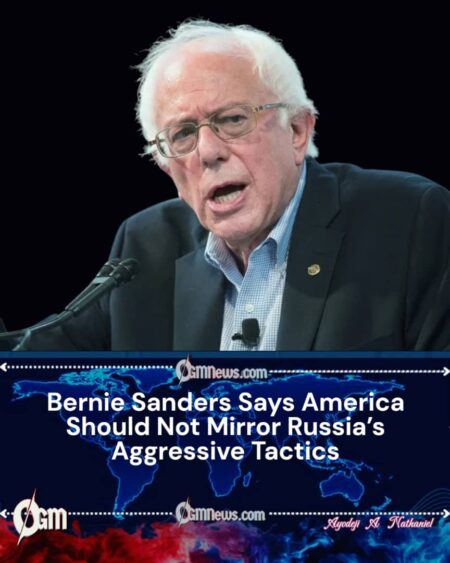
U.S. Senator Bernie Sanders has warned that the United States risks weakening its moral authority to condemn Russia’s invasion of Ukraine if it engages in similar unilateral military actions abroad. Speaking during recent political discussions about U.S. foreign policy, Sanders argued that launching attacks without international backing or congressional authorization could send a troubling message to the world particularly to Russia’s president, Vladimir Putin.
Sanders framed the issue as both a strategic and moral dilemma for Washington. According to the Vermont senator, if the United States behaves in ways that resemble the conduct it criticizes, it becomes harder to argue convincingly that Russia’s invasion violates global norms.
The remarks were directed at policies associated with President Donald Trump, who is currently serving a second term as U.S. president. Sanders suggested that certain approaches to military action and diplomacy could signal tacit acceptance of aggressive behavior between powerful nations.
Concerns Over International Credibility
Sanders’ criticism centers on the idea that international credibility is a critical component of global leadership. When the United States condemns another nation for invading a sovereign state, he argued, it must demonstrate consistency in its own conduct.
If Washington were to launch military operations without international approval or clear legal justification, Sanders said, it could undermine the global consensus that Russia’s invasion of Ukraine violated international law. Such a contradiction, he warned, risks weakening diplomatic efforts to isolate Moscow.
Foreign policy analysts frequently note that global alliances rely not only on military power but also on perceived legitimacy. Sanders’ comments reflect concerns shared by some lawmakers that inconsistencies in U.S. actions could make it harder to build unified responses to international crises.
Debate Over Presidential War Powers
A key element of Sanders’ argument relates to the long-running debate in Washington about presidential war powers. The U.S. The Constitution gives Congress authority to declare war, yet presidents have often initiated military operations without formal congressional approval.
Sanders has repeatedly advocated for stronger enforcement of the War Powers Resolution, which requires presidents to notify Congress when U.S. forces are deployed into hostilities. Critics argue that presidents from both major parties have increasingly bypassed this process.
In Sanders’ view, unilateral military action without congressional authorization risks not only constitutional concerns but also international repercussions. If the United States appears to disregard legal frameworks governing the use of force, he argues, it becomes harder to criticize similar behavior by other countries.
Trump’s Approach to Russia and Ukraine
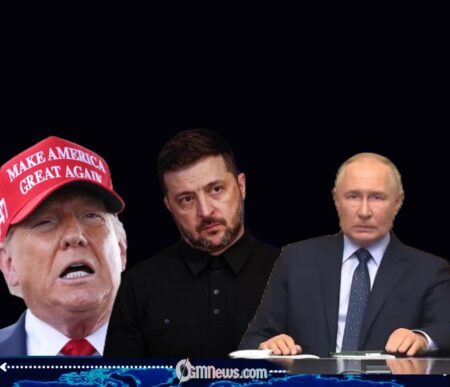
The debate also reflects broader disagreements over President Trump’s approach to Russia and the war in Ukraine. Since returning to office for a second term, Trump has emphasized diplomacy and negotiations as potential paths to ending the conflict.
Supporters of the president say his strategy prioritizes rapid conflict resolution and reducing prolonged military engagement. They argue that unconventional diplomacy may be necessary to bring both sides to the negotiating table.
However, critics like Sanders contend that rhetoric perceived as sympathetic toward Russia could embolden Moscow or complicate Western unity. The disagreement highlights the deep political divide in Washington over how best to respond to the war..
The Broader Geopolitical Context
Russia’s invasion of Ukraine remains one of the most significant geopolitical crises in recent decades. The conflict has reshaped global security alliances, prompted extensive economic sanctions, and triggered renewed debate about NATO’s role in Europe.
Western governments have largely framed the war as a clear violation of international law and Ukraine’s sovereignty. In response, the United States and European allies have provided military and economic assistance to Kyiv while imposing sanctions on Russia.
Sanders’ remarks come amid ongoing efforts by lawmakers and foreign policy experts to define the limits of U.S. power and responsibility in maintaining the international rules-based order.
Implications for U.S. Foreign Policy
The exchange illustrates a broader philosophical divide about how the United States should project power abroad. For Sanders and like-minded lawmakers, consistency between rhetoric and action is essential to maintaining moral authority on the world stage.
Others argue that global security threats sometimes require rapid decisions that may not always align neatly with international consensus or congressional procedure. The debate reflects competing views of realism versus rules-based diplomacy.
As the war in Ukraine continues and global tensions persist, questions about America’s role and how its actions shape international norms are likely to remain central to political discussions in Washington.
The vibes here are amazing and the winning streaks are real. It feels just like...