















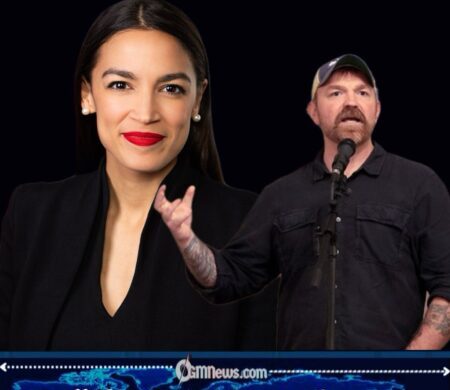
The Platner controversy has erupted into a full-scale political spectacle after Rep. Alexandria Ocasio-Cortez declined to directly address mounting questions surrounding Democratic Senate candidate Graham Platner, triggering fresh debate over accountability, loyalty, and political risk in a tightly watched election cycle.
What began as isolated allegations has now evolved into a national talking point, with reporters pressing multiple political figures for clarity while receiving carefully worded refusals—or no comment at all. In the middle of the storm, Platner continues to deny all allegations, insisting that the claims being circulated are distorted and politically motivated.
ALLEGATIONS, DENIALS, AND THE SILENCE THAT STARTED IT ALL
The Platner controversy first gained momentum following reports of allegations from former romantic partners, who described troubling personal behavior, including claims of verbal abuse and disturbing conversations. Platner has rejected these accounts, maintaining that they misrepresent his past and context.
Additional scrutiny emerged over a tattoo described in reporting as resembling a historically controversial symbol, further intensifying public debate. While Platner has insisted he did not knowingly adopt any extremist symbolism, the issue has become a lightning rod in the ongoing Platner controversy, especially as images and interpretations circulate widely online.
POLITICAL PRESSURE, MEDIA SCRUTINY, AND THE BROADER NATIONAL CONTEXT
The Platner controversy has extended beyond a single campaign, becoming a test case for how political figures respond when pressed about sensitive allegations involving candidates within their broader ideological camp. Rep. Alexandria Ocasio-Cortez’s repeated refusal to comment has fueled additional speculation, even though she has neither endorsed nor condemned Platner.
Political analysts note that in today’s hyper-reactive media environment, silence can be interpreted as strategy, hesitation, or avoidance depending on perspective. President Donald J. Trump, in his current role, has also shaped the broader political climate in which such controversies escalate rapidly into national debates, with social media amplifying every pause, denial, or refusal to answer.
Within this environment, the Platner controversy has become less about a single candidate and more about how modern campaigns navigate reputational risk under constant scrutiny. Supporters argue that accusations should be fully verified before political consequences follow, while critics insist transparency is essential when allegations involve character and conduct.
As pressure builds, the trajectory of the Platner controversy suggests further political reactions may emerge, especially if additional public figures are drawn into the conversation or if campaign responses shift under media intensity.
The coming days are likely to determine whether the Platner controversy fades into campaign noise or becomes a defining moment in how political accountability is interpreted in an era where silence speaks almost as loudly as statements.
Signing up took less than two minutes and I was already exploring the available games....