























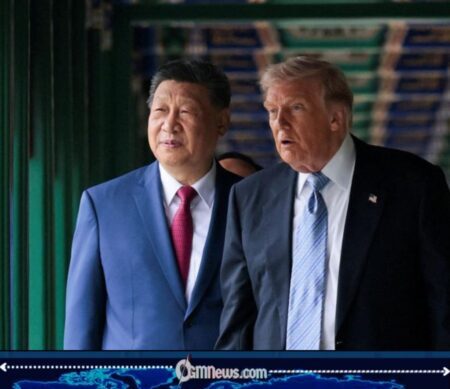
Hormuz Pressure dominated the second day of high-level talks between President Donald J. Trump and Chinese President Xi Jinping in Beijing, where the two leaders presented a rare united front on one of the world’s most dangerous geopolitical flashpoints. Trump announced that both governments agreed Iran cannot be allowed to obtain nuclear weapons and insisted the Strait of Hormuz must remain open to global shipping. The statement immediately fueled speculation about whether Washington and Beijing are preparing coordinated diplomatic pressure on Tehran or attempting to prevent a broader regional crisis before tensions spiral further. Behind the carefully staged diplomatic images and ceremonial handshakes, the summit revealed growing international anxiety over energy security, military escalation, and the fragile balance of power in the Middle East.
Hormuz Pressure Shapes High-Stakes Beijing Discussions
The Hormuz Pressure issue emerged as a central theme during the second day of talks between Trump and Xi, which also covered trade disputes, Taiwan, and broader strategic relations between the United States and China. Speaking after the meeting, President Donald J. Trump stated that both leaders agreed Iran must never possess nuclear weapons and emphasized that international shipping through the Strait of Hormuz should remain uninterrupted. According to White House statements following the summit, Xi also opposed any militarisation of the waterway and rejected efforts to impose tolls on global shipping traffic.
The Strait of Hormuz remains one of the most strategically important waterways in the world because a significant portion of global oil exports passes through the narrow maritime corridor every day. Iranian officials have previously threatened actions affecting passage through the strait during periods of heightened confrontation with Western governments. Those threats have repeatedly triggered fears of rising oil prices, supply disruptions, and military escalation involving regional and international powers. Analysts say the Beijing discussions reflected shared concerns in both Washington and Beijing that instability in the Gulf could damage an already fragile global economy.
Nuclear Warning Reflects Wider Global Security Concerns
The Nuclear Warning delivered during the Beijing summit also highlights how the Iran issue continues to influence wider global diplomacy beyond the Middle East itself. China has traditionally maintained important economic and energy ties with Iran while simultaneously attempting to preserve stable relations with Western markets. The United States, meanwhile, has long viewed Iran’s nuclear ambitions as a major international security threat and has repeatedly warned against actions that could destabilize Gulf shipping routes.
Recent years have seen growing international concern over military incidents near the Strait of Hormuz, including tanker seizures, naval confrontations, and disputes involving sanctions enforcement. Global energy markets remain highly sensitive to developments in the region because disruptions to oil transport can rapidly affect fuel prices and inflation worldwide. Experts note that even temporary instability around Hormuz often produces immediate reactions across financial markets and international trade networks.
Political observers also noted the unusual optics of Washington and Beijing publicly aligning on such a sensitive security issue despite ongoing tensions over trade, Taiwan, and technological competition. While the two governments continue competing for global influence, the Hormuz Pressure discussions demonstrated that some geopolitical risks are considered too dangerous for either side to ignore entirely. The cooperation may be tactical and temporary, but it signals recognition that a larger Middle East crisis could create economic and strategic consequences far beyond the region.
As diplomatic conversations continue, the world will closely watch whether the Nuclear Warning issued in Beijing evolves into coordinated international pressure on Iran or remains largely symbolic. For now, the summit has reinforced one uncomfortable reality of modern geopolitics: even rival superpowers can suddenly find themselves sitting at the same table when global energy routes and nuclear fears threaten international stability.

[…] […]