








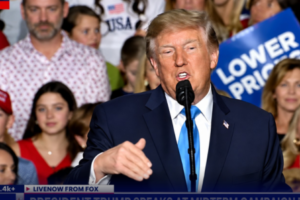

















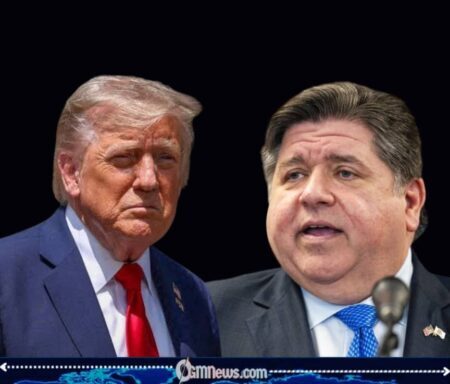
Illinois Governor J. B. Pritzker has ignited a fresh political debate after reportedly stating that President Donald Trump is “mentally unfit” to continue leading the United States and should be removed through the invocation of the 25th Amendment. The remarks, emerging during a period of heightened geopolitical tension, have quickly drawn national attention and intensified partisan divisions.
While the statement reflects a continuation of Pritzker’s long-standing criticism of Trump, it also underscores a broader conversation about leadership, constitutional mechanisms, and the boundaries of political rhetoric in times of crisis.
Pritzker’s Statement and Political Context
Governor J. B. Pritzker has been among the more vocal critics of President Donald Trump, frequently challenging his policies and leadership style. In the latest development, Pritzker’s call for invoking the 25th Amendment represents one of his most direct and consequential criticisms to date.
The Illinois governor’s remarks are rooted in concerns about the president’s recent rhetoric and decision-making, particularly in relation to foreign policy tensions. Political observers note that such statements often emerge during periods of heightened national or international uncertainty, when scrutiny of executive leadership intensifies.
Although the exact wording of the “breaking” claim continues to circulate primarily through digital platforms, it aligns with Pritzker’s previously documented stance questioning Trump’s fitness for office.
Understanding the 25th Amendment
The Twenty-fifth Amendment to the United States Constitution provides a legal framework for removing a sitting president who is deemed unable to discharge the powers and duties of the office. However, its application is both rare and procedurally complex.
To invoke the amendment, the vice president and a majority of the Cabinet must formally declare the president unfit. Should the president contest the claim, Congress must then approve removal by a two-thirds majority in both chambers—an exceptionally high threshold.
Constitutional experts emphasize that the amendment was designed primarily for cases of clear incapacity, such as severe medical emergencies, rather than political disagreements or disputes over leadership style.
A Pattern of ‘Fitness’ Debates in U.S. Politics
The comments by J. B. Pritzker reflect a broader trend in contemporary American politics, where questions of a leader’s mental fitness have become increasingly prominent. President Donald Trump has faced similar criticisms from various political opponents over time.
At the same time, such accusations are not confined to one political party. Analysts point out that debates over competency and temperament have been directed at leaders across the political spectrum, often intensifying during election cycles or international crises.
This evolving pattern has raised concerns among scholars and commentators about the normalization of highly personal critiques in political discourse, potentially overshadowing substantive policy discussions.
Domestic and International Implications
The renewed calls to invoke the Twenty-fifth Amendment to the United States Constitution carry implications beyond domestic politics. International observers often view such debates as indicators of internal political stability and institutional strength within the United States.
At a time when global tensions particularly involving Iran remain elevated, public disagreements among U.S. political leaders may influence diplomatic perceptions. Allies and adversaries alike closely monitor signals of unity or division within American leadership.
Domestically, the remarks could deepen partisan divides, as supporters of President Donald Trump are likely to view the call as politically motivated, while critics may see it as a necessary constitutional safeguard.
Challenges to Implementation and Political Reality
Despite the strong language used by J. B. Pritzker, the practical likelihood of successfully invoking the Twenty-fifth Amendment to the United States Constitution remains low. The process requires not only executive cooperation but also substantial bipartisan support in Congress.
Historically, the amendment has never been used to remove a president against their will. Its stringent requirements reflect a deliberate effort by the framers to ensure that such a measure is reserved for extraordinary circumstances.
As a result, while Pritzker’s comments contribute to ongoing political discourse, they are unlikely to translate into immediate constitutional action without a dramatic shift in political consensus.
The remarks by J. B. Pritzker have added a new dimension to the national conversation about leadership, accountability, and constitutional authority. By calling for the removal of President Donald Trump under the Twenty-fifth Amendment to the United States Constitution, Pritzker has underscored the depth of political divisions in the current climate.
While the feasibility of such a move remains uncertain, the debate itself highlights the challenges of governance during periods of heightened tension, both at home and abroad.

Ae888covenuscasino, okay, I'm curious. Gonna check out this site and try to find some amazing...