



























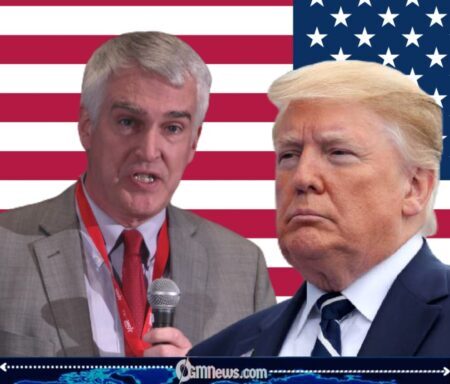
Former CIA analyst Fred Fleitz appeared on “America Right Now” to assess recent foreign policy signals linked to Donald Trump, particularly his reaction to Germany’s decision to pull 5,000 troops from a shared regional arrangement. Fleitz also examined the broader diplomatic complexities surrounding ongoing engagement with Iran, describing the situation as strategically layered and politically sensitive.
Trump’s “Shot Across the Bow” Toward Germany
During the interview, Fleitz interpreted the U.S. response to Germany’s troop withdrawal as a calculated message aimed at reinforcing American expectations within NATO and allied defense commitments. The phrase “shot across the bow,” as used in the discussion, suggests a warning signal rather than an immediate policy escalation.
According to Fleitz, such actions or statements are often intended to prompt reassessment among allies regarding burden-sharing and regional security roles. He emphasized that under Donald Trump’s leadership, signaling through military posture and diplomatic messaging has become a recurring feature of foreign policy communication.
Germany’s Decision and NATO Implications
Germany’s move to reduce troop presence in the arrangement has raised questions about coordination within the alliance framework. Analysts note that any adjustment in force deployment among NATO partners can have ripple effects on strategic balance and operational planning.
Fleitz suggested that the timing of the decision adds complexity to already sensitive negotiations, particularly as European allies continue to evaluate their defense responsibilities. The development has sparked renewed discussion about unity and strategic alignment within NATO under evolving global pressures.
Iran Negotiations and Strategic Complexity
The conversation also turned to ongoing diplomatic challenges involving Iran, which Fleitz described as one of the most difficult foreign policy arenas for the United States. He pointed to long-standing mistrust, regional instability, and competing geopolitical interests as key obstacles.
In his analysis, Fleitz argued that negotiations require balancing pressure with diplomacy, especially given the potential consequences of miscalculation. He noted that Donald Trump’s approach tends to combine assertive messaging with attempts at leverage, which can complicate but also intensify diplomatic engagement.
Broader Foreign Policy Outlook
Fleitz concluded that the intersection of European defense dynamics and Middle Eastern diplomacy reflects a broader test of U.S. strategic coherence. Under Donald Trump, foreign policy is often characterized by direct signaling and rapid shifts in tone, which allies and adversaries alike must interpret carefully.
As global tensions evolve, analysts continue to watch how Washington manages alliance expectations while pursuing negotiations with adversarial states. The situation, according to Fleitz, underscores the importance of consistency in messaging during periods of heightened international uncertainty.


Logging in is a breeze and the site stability is amazing even during peak hours....