




























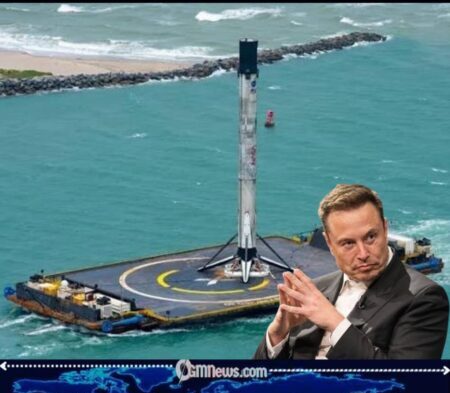
Elon Musk has spent years promoting the idea that humanity must become multiplanetary in order to survive long-term existential threats. His latest statement reinforces that philosophy while dramatically expanding the economic implications surrounding SpaceX’s future. According to Musk’s argument, establishing permanent human settlements beyond Earth could unlock an economic transformation so massive that today’s global financial systems would appear comparatively insignificant. The comment reflects the broader mission behind SpaceX’s development of reusable rockets and the Starship program, which is designed for deep-space travel and potential Mars colonization.
Multiplanetary ambitions have increasingly become central to modern space competition, with governments and private companies investing heavily in lunar exploration, satellite expansion, and advanced rocket systems. Yet Musk’s remarks also expose the widening cultural divide surrounding the future of technology. To supporters, the SpaceX founder represents bold innovation capable of extending humanity’s reach beyond Earth. To critics, however, the rhetoric increasingly resembles a futuristic sales pitch wrapped in billionaire optimism. Online reactions ranged from admiration to sarcasm, with many users joking that Earth residents cannot even agree on internet prices, let alone manage life on another planet.
Elon Musk’s Trillion-Dollar Space Vision Sparks Fears of a Billionaire-Controlled Future
The economic implications behind Musk’s comments have generated intense discussion among analysts and political observers who believe the growing influence of private technology companies could eventually reshape global power structures. Some experts argue that if SpaceX succeeds in establishing permanent settlements on Mars or beyond, the company could gain extraordinary leverage over transportation systems, communications infrastructure, and even future extraterrestrial resources. The idea of one corporation potentially becoming more valuable than Earth’s economy has therefore triggered concern over accountability and governance.
Critics also argue that the race toward becoming multiplanetary risks deepening existing inequality on Earth. Online debates quickly turned toward whether space colonization would become an opportunity accessible only to the wealthy, while ordinary citizens continue facing inflation, housing struggles, and economic uncertainty. Others, however, insist that ambitious technological projects historically create breakthroughs that eventually benefit wider society, pointing to advances in computing, aviation, and satellite technology that once appeared unrealistic or exclusive.
Elon Musk Wants Mars So Bad Even Earth Is Starting to Feel Ignored
SpaceX has already reshaped the commercial space industry through reusable launch systems that significantly reduced the cost of orbital missions. The company’s Falcon rockets, Starlink satellite network, and repeated Starship tests have pushed private aerospace development into territory once dominated entirely by governments. Analysts note that the company’s valuation has risen dramatically over the past decade, fueled by contracts, satellite services, and investor confidence in Musk’s long-term vision. However, experts also caution that transforming Mars into a functioning human settlement remains one of the most difficult technological challenges ever attempted.
SpaceX’s expanding influence has also intensified debates about corporate power in the future of civilization. Critics argue that humanity’s future beyond Earth should not depend heavily on the ambitions of one billionaire entrepreneur, while supporters counter that private-sector innovation is accelerating progress faster than traditional government programs alone. Some policy observers warn that future space colonization could eventually raise difficult questions involving governance, ownership, resources, and inequality beyond Earth itself. Others believe the competition could inspire unprecedented breakthroughs in energy systems, engineering, medicine, and transportation technologies that may also benefit life on Earth.



Ae888covenuscasino, okay, I'm curious. Gonna check out this site and try to find some amazing...