
























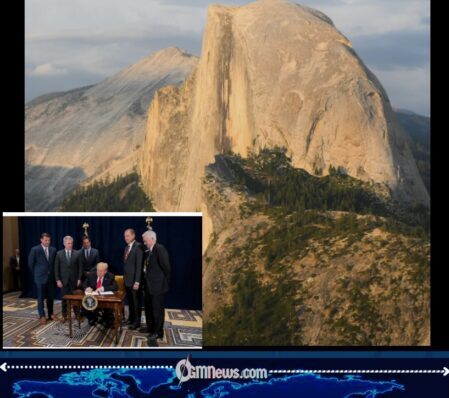
A proposal being considered by the administration of current President Donald J. Trump to facilitate private access through a portion of Yosemite National Park has triggered a political and environmental storm, with critics warning that one of America’s most treasured public landscapes should not become a shortcut for private development. The proposal involves a possible land exchange between the National Park Service and Nevada-based developer Kingsbarn Realty Capital, which owns an 83-acre property near Yosemite and wants improved road access to it. Recent reporting indicates that the administration has been examining the arrangement, although federal officials insist that no final decision has been made.
The Great Yosemite Shortcut
At the center of the controversy is a proposed road that would connect Kingsbarn’s private property to a road inside Yosemite. According to the company’s attorney, Lanny Davis, the developer wants a much shorter route than the existing journey along public roads. The company says the proposed exchange could involve a small strip of park land or an interest in that land, with property of comparable value provided to the federal government elsewhere in California.
That may sound, in strictly bureaucratic language, like a routine land transaction. But Yosemite is not exactly an abandoned parking lot waiting for somebody to draw a new driveway across it. The developer’s 83-acre property is intended for a development that has been described as including homes and retail facilities, making the proposed access road potentially significant to the property’s future value and development prospects. Critics therefore see a much bigger issue hiding beneath the paperwork: whether public conservation land should be rearranged to make private development easier.
Public Park, Private Interest
The controversy is particularly sensitive because Yosemite has a long history of being protected from commercial pressures. The National Park Service records that President Abraham Lincoln signed the Yosemite Grant in 1864, placing Yosemite Valley and the Mariposa Grove under protection for public use, recreation and enjoyment. Congress later designated Yosemite as a national park in 1890.
That history helps explain why conservationists and lawmakers are treating the proposed exchange as much more than a question of where to put a road. Opponents argue that allowing a private developer to obtain an interest in park land, even through a legally structured exchange, could establish a troubling precedent for other protected public lands. Meanwhile, the Interior Department and the developer’s representatives maintain that no improper decision has been made and that any eventual transaction would have to comply with federal law and applicable environmental and public-review requirements.
For now, the Yosemite driveway has not officially become reality and the park has not been declared a luxury suburb with waterfalls. But the controversy is already testing the boundary between public conservation and private development. With lawmakers, conservationists and federal officials watching closely, the proposed land exchange could become a major fight over who gets access to America’s public treasures and on whose terms. Readers of OGM News should watch for further developments, because this Yosemite story may have considerably more twists before the final road or no road is decided.



Its Amazing