





























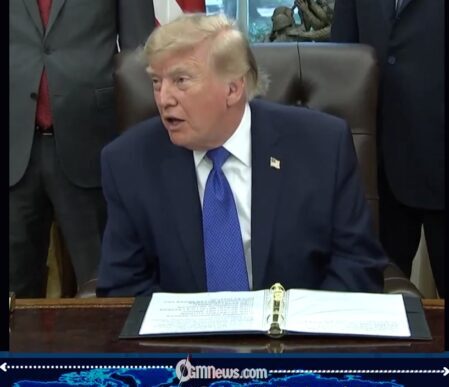
President Donald Trump, the current U.S. president serving a second term, first introduced the proposed White House ballroom as a project that would not place any burden on the American taxpayer. In remarks that have now returned to the center of political debate, Donald Trump said the ballroom would be “fully financed” by private donors and added that there would be “money left over” once construction was complete.
At the time, Donald Trump presented the project as a modern addition to the executive residence that would improve the White House’s ability to host state dinners, diplomatic receptions and other major official gatherings. Supporters of the plan said private contributions would allow the project to move forward without requiring congressional funding.
Those earlier assurances are now receiving renewed attention because lawmakers in Washington are considering whether federal funds should be used for the same project, creating a direct contrast with Donald Trump’s original statement.
Donald Trump’s Earlier Promise Faces New Scrutiny
The renewed controversy began when congressional allies of Donald Trump suggested the ballroom may now require public funding because of expanded security features and additional infrastructure. That development prompted critics to revisit the president’s earlier promise that private donations would cover the entire cost.
Several lawmakers have questioned whether the original donor commitments remain in place or whether the project’s scope has grown far beyond what was initially described. For opponents, the issue is no longer simply about a building but about whether the public was given a complete picture from the beginning.
Because Donald Trump personally emphasized that taxpayers would not pay for the ballroom, the shift has turned his previous remarks into a key point of political dispute as Congress examines the proposal.
A Ballroom That Became More Than a Ceremonial Hall
Originally described as a grand event venue, the proposed ballroom was intended to give the White House a permanent indoor space for large functions that often require off-site locations. Supporters argued that such a facility would strengthen the image of the presidency while improving efficiency for official events.
Over time, however, administration allies said the project evolved into something more complex. Plans reportedly began to include secure underground areas, emergency infrastructure and operational support systems linked to presidential protection.
Those additions changed the way the ballroom was discussed in Washington. What was first described as a privately funded architectural project gradually became part of a larger national security conversation.
Donald Trump’s Supporters Defend the Expansion
Allies of Donald Trump have defended the project by arguing that presidential security needs have changed significantly in recent years. They say a secure event space inside the White House grounds would reduce risks associated with transporting the president to outside venues.
Supporters also argue that the ballroom would not only benefit Donald Trump, but future presidents as well. In their view, the project represents a long-term investment in the functionality and safety of the executive residence.
Some Republicans insist the criticism is politically motivated, saying opponents are focusing too heavily on the cost while ignoring the broader security rationale behind the plan.
Opponents Question Transparency and Cost
Critics, however, have focused on the contradiction between the president’s earlier statements and the current funding debate. They argue that if Donald Trump said private donors had already secured the financing, the public deserves to know why taxpayer dollars are now being discussed.
Democratic lawmakers have also raised concerns about transparency, asking whether the administration has disclosed enough information about donor contributions and project changes. Some have called for a full financial review before Congress considers any funding request.
The dispute has expanded beyond budget concerns and now touches on broader questions about presidential accountability, public trust and the handling of high-profile government projects.
Donald Trump at the Center of a Larger Debate
As the controversy grows, Donald Trump remains central to the national discussion surrounding the ballroom proposal. His original words have become a key reference point in arguments over whether the administration has remained consistent about the project’s financing.
For supporters, the president’s vision reflects modernization and stronger security. For critics, the changing financial narrative has become a symbol of deeper concerns about transparency in government decision-making.
Whatever Congress ultimately decides, the ballroom debate has already become another example of how even a construction project can quickly evolve into a wider political battle when Donald Trump is involved.
Congress Must Decide the Project’s Future
The next stage of the proposal will likely unfold in Congress, where lawmakers must determine whether the ballroom should proceed under the revised funding structure. Committees are expected to review both the financial details and the security justification behind the expansion.
Some legislators may support the project as a practical upgrade to the White House, while others are expected to oppose any use of public funds for what was once promoted as privately financed. The final decision could carry political consequences for both parties.
As that process begins, the controversy surrounding the ballroom shows how one statement from the president can continue to shape debate long after it was first made.


[…] […]