





























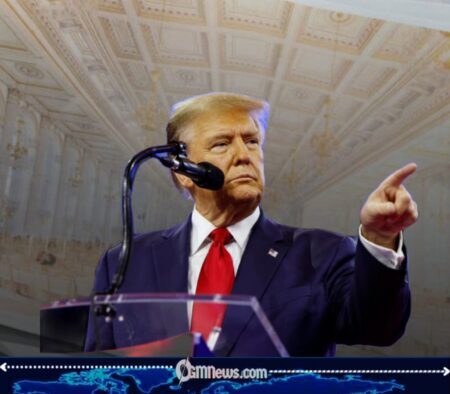
Donald Trump, the current U.S. president serving a second term, has moved to the center of a renewed legal effort to revive construction of a proposed White House ballroom, following a late-night filing by the U.S. Department of Justice. The administration’s request asks a federal judge to lift an earlier order that halted the project, placing Donald Trump’s vision for expanding the White House at the heart of an ongoing legal and public debate.
Donald Trump’s Vision for a White House Ballroom
Donald Trump has long advocated for the construction of a permanent ballroom within the White House complex, presenting it as a practical solution to longstanding logistical challenges. According to the administration, the existing East Room often falls short when hosting large diplomatic gatherings, necessitating temporary arrangements.
Supporters say Donald Trump’s proposal reflects a broader effort to modernize presidential facilities while maintaining their ceremonial importance. The ballroom, as envisioned, would accommodate larger state functions and reduce reliance on temporary structures, which officials argue are less secure and less efficient.
Court Order Halts Donald Trump’s Project
Despite the administration’s push, Trump’s ballroom project was brought to a halt after a federal judge issued an order suspending construction. The decision followed legal challenges from preservation groups and other stakeholders concerned about the potential impact on the historic White House grounds.
The court cited the need for thorough compliance with federal preservation and environmental laws, effectively pausing Donald Trump’s initiative pending further legal review. This intervention marked a significant setback for the administration’s timeline.
Trump’s Administration Responds Through Justice Department
In response to the court’s ruling, Trump’s administration, through the Justice Department, filed a motion late Monday seeking to overturn the halt. The filing argues that all necessary legal procedures were followed and that the stoppage is unwarranted.
Government lawyers emphasized that the delay is affecting the administration’s ability to carry out official functions efficiently. By pressing the court to lift the order, Trump is signaling determination to see the project move forward despite ongoing opposition.
Opposition to Donald Trump’s Ballroom Plan
Critics of Donald Trump’s proposal have remained firm in their resistance, arguing that the project risks undermining the historical integrity of the White House. Preservation advocates insist that any structural changes to the site must undergo rigorous evaluation and public scrutiny.
They also question the transparency of the planning process under Trump’s administration, raising concerns about whether all regulatory steps were properly followed. For opponents, the issue represents a broader debate about stewardship of national heritage.
Public and Political Reactions to Donald Trump’s Proposal
Public response to Trump’s ballroom plan has been divided. Some Americans support the initiative, viewing it as a necessary upgrade that reflects the evolving demands of modern governance.
Others, however, are wary of altering one of the most iconic symbols of the United States. The controversy surrounding Trump’s proposal has sparked discussions not only about architecture but also about the balance between tradition and modernization.
What Lies Ahead for Donald Trump’s Project
The federal court is now expected to review the Justice Department’s request and determine whether Trump’s ballroom project can proceed. Legal experts suggest the outcome will depend on the administration’s ability to demonstrate full compliance with all applicable laws.
If the court rules in favor of the administration, construction could resume quickly. If not, Trump’s plan may face prolonged legal battles, delaying or potentially reshaping the project.
Future Expectations
Trump’s push to build a White House ballroom has evolved into a high-profile legal and public issue, reflecting deeper questions about governance, preservation, and executive authority. As the court prepares to decide on the Justice Department’s request, the future of Trump’s proposal remains uncertain, with implications that extend beyond the project itself to the broader management of America’s most historic institutions.



Logging in is a breeze and the site stability is amazing even during peak hours....