

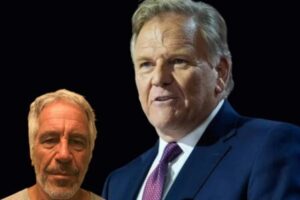





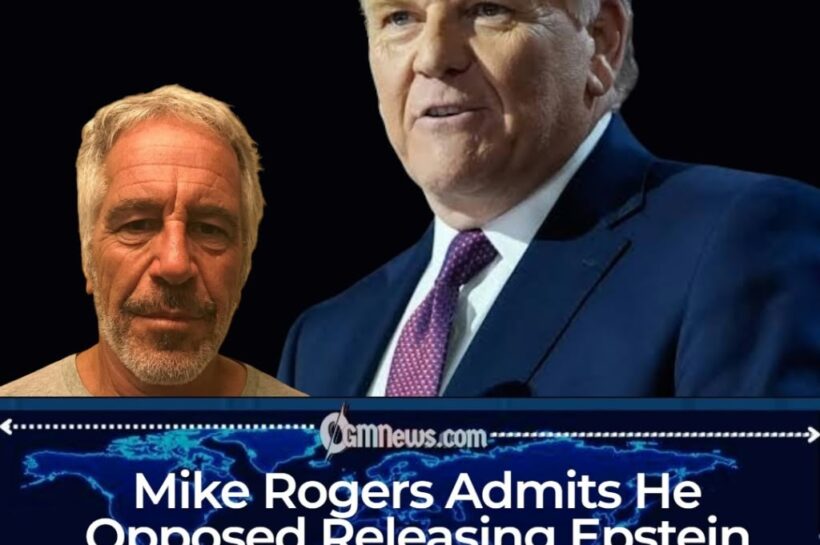
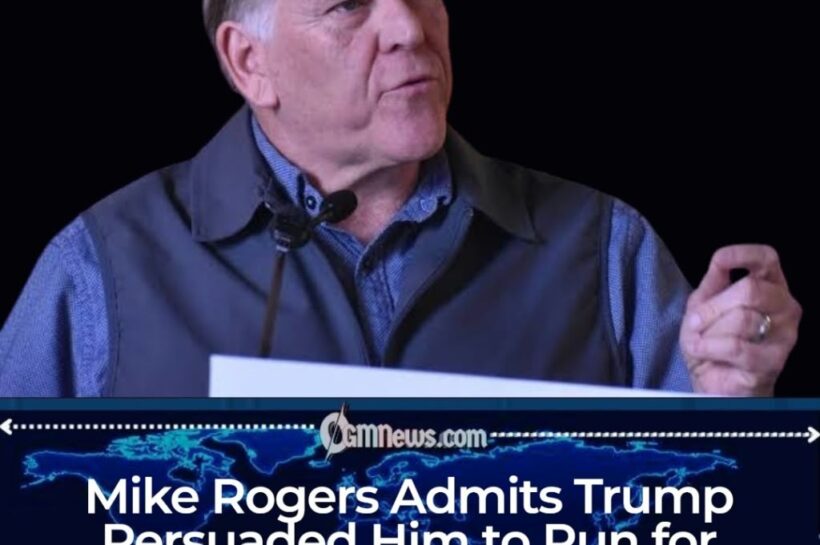





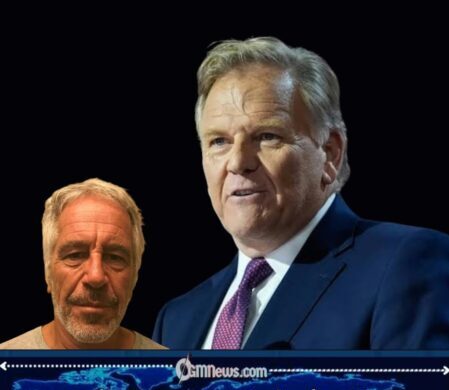
In a political bombshell that has Michigan voters and transparency advocates buzzing, unearthed audio captures Republican U.S. Senate candidate Mike Rogers openly admitting he opposed releasing the unredacted Jeffrey Epstein files. The reason? To protect the careers, reputations, and families of people who simply “got on an airplane and rode with him.” Rogers, a former FBI special agent and House Intelligence Committee chairman now running as President Donald J. Trump’s endorsed candidate in Michigan, framed the concern as shielding innocents from the “court of public opinion” that would “ruin their life for no reason.
” The remarks, resurfacing amid ongoing delays and heavy redactions of the files mandated by the 2025 Epstein Files Transparency Act, underscore deep tensions between public accountability and elite protection in one of the most closely watched Senate races of 2026.
Protecting Plane Passengers While Files Stay Half-Hidden
Mike Rogers made clear in the audio that full disclosure risked collateral damage to associates whose only documented link might be a flight log entry. “You have to protect somebody who got on an airplane and rode with him,” he stated, adding that one would not want to “hurt that person’s career or reputation or family.” He further suggested critics of President Donald J. Trump would “beat this drum all day long” simply because they lack other issues.
The comments land against a backdrop where Congress passed the transparency law nearly unanimously in November 2025—427-1 in the House—with a December 19 deadline that the Justice Department has only partially met, releasing millions of pages while leaving substantial material withheld or blacked out.
The importance of Mike Rogers’ admission cannot be overstated. As a former lawmaker who once oversaw national intelligence and who now seeks a Senate seat, his preference for reputational safeguards over complete sunlight raises questions about whose interests take priority when the names of powerful figures appear in the Epstein records. Survivors and bipartisan lawmakers have long demanded unredacted access precisely to prevent selective protection of the well-connected, yet Rogers’ recorded stance aligns with earlier GOP caution about “innocent people” being ensnared by association alone.
Campaign Trail Echoes and Donor Shadows
Mike Rogers’ position has drawn sharp scrutiny in Michigan, where he is locked in a high-stakes contest after a narrow 2024 loss. The audio arrives as partial Epstein file releases continue into 2026 under the Trump administration, with critics on both sides complaining of excessive redactions that obscure potential co-conspirators while sometimes exposing victim details. Rogers has previously argued on air that names should not be publicized absent evidence of crime, a view now illuminated by his own words about airplane passengers.
Adding layers to the story, reporting has shown that donors whose names appear in the released Epstein materials contributed nearly $4.7 million to Mike Rogers and supporting groups, primarily through a super PAC. No evidence has linked those donors to criminal wrongdoing, yet the overlap amplifies perceptions that protecting “careers and reputations” may conveniently align with political realities. In a race where national security credentials are central to Rogers’ pitch, the audio forces a stark choice: full transparency for victims of the late financier’s trafficking network, or calibrated restraint to spare secondary figures from public judgment.
As the partial releases drag on and Michigan voters weigh their Senate options, the resurfaced comments from Mike Rogers place the tension between elite privacy and public right-to-know squarely in the spotlight. Watch for future updates on this developing story from OGM News as more context around the audio and the incomplete Epstein file disclosures emerges.
Its Amazing