







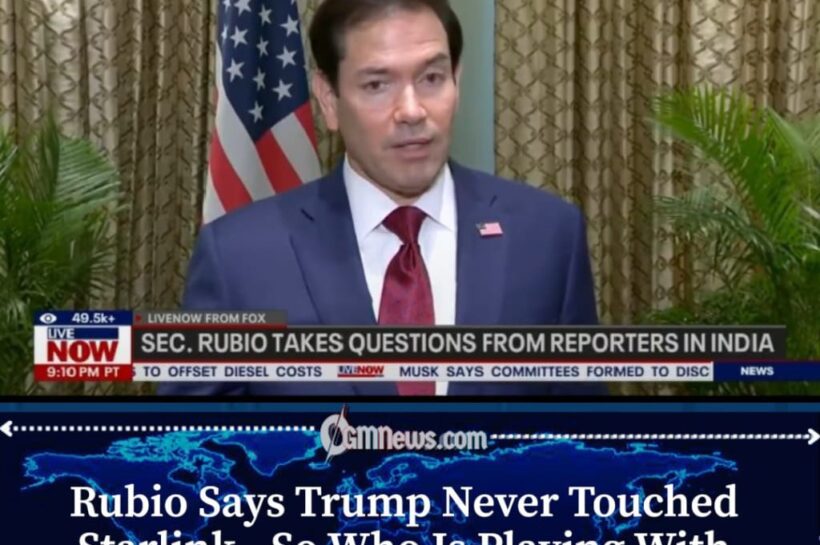












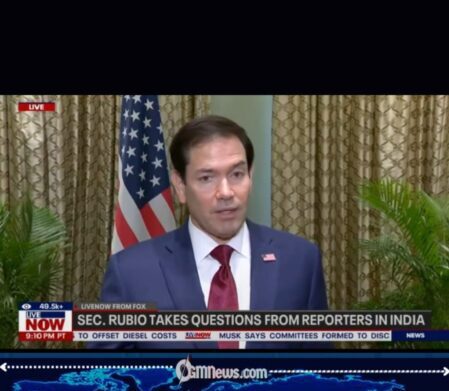
U.S. Secretary of State Marco Rubio has defended the position of President Donald J. Trump’s administration on satellite communications for Ukraine, insisting that Starlink is a private company operating under contractual terms and that neither Trump nor anyone in the U.S. government requested changes to the system. The explanation arrives amid growing questions about Ukraine’s access to satellite technology critical to its military communications and drone operations. In a controversy where everyone appears to have an explanation, the public is still waiting for the full picture.
Private Company, Public Controversy
Rubio’s argument is straightforward: Starlink is a commercial service, and private companies make decisions according to their contracts and operating conditions. His position suggests that Washington cannot simply pick up the phone and dictate how a private technology provider manages its services. In the world of international politics, however, the distinction between private business and national security can become rather uncomfortable when a country at war depends on that technology.
The satire practically writes itself: when the satellite connection becomes a political headache, everyone suddenly remembers the importance of contractual fine print. Yet Starlink is not merely another internet subscription for Ukraine. Its communications capabilities have played an important role in battlefield coordination, making questions about access, restrictions and responsibility far more serious than an ordinary customer-service complaint.
Trump’s Denial Meets Questions About Starlink
President Trump has also denied responsibility for the reported restrictions, while public statements and media reports have presented competing accounts of who was involved. Reuters reported on October 15 that an order to limit Ukraine’s access to SpaceX’s military-grade Starshield service had reportedly originated inside the White House, citing U.S. and Western officials. The report did not identify who issued the order. That account sits uneasily beside Rubio’s categorical claim that Trump and other officials never requested changes.
There is an important distinction here: Starlink is SpaceX’s commercial satellite internet service, while Starshield is a separate, military-oriented system controlled by the U.S. government. Although the technologies are related, treating them as interchangeable risks confusing the central issue. The question is not simply whether a private company can make decisions; it is also whether government-controlled military technology was restricted, who authorised any restriction, and what the consequences were for Ukraine. Until those questions are answered with verifiable evidence, political assurances alone may not end the debate.
For now, Rubio’s remarks offer a clear defence of the administration’s position, but they do not automatically settle the wider dispute. The difference between a denial, a reported order and independently established facts remains crucial. OGM News will continue monitoring the Starlink and Starshield controversy, the responses from Washington and Kyiv, and any evidence that clarifies who made the decisions affecting Ukraine. Readers should watch out for future updates as this satellite dispute continues to test the connection between private technology, government authority and wartime responsibility.

Playing from Quito has never been easier thanks to this amazing platform. The mobile version...