



























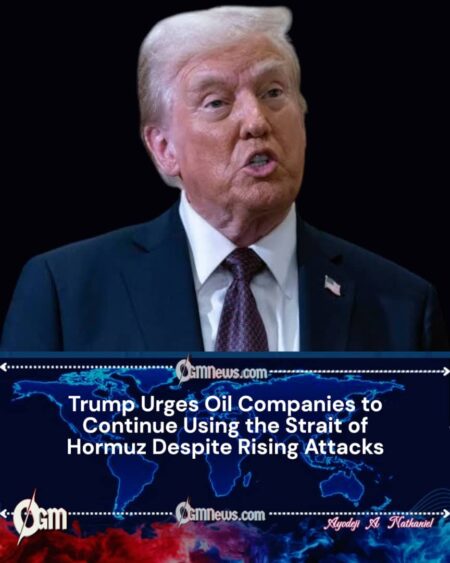
Donald Trump has urged oil companies and commercial shipping operators to continue using the strategically vital Strait of Hormuz, even as attacks on merchant vessels raise fresh concerns about safety in one of the world’s most critical maritime corridors. Speaking to reporters, Trump said he believes companies should continue sending ships through the waterway, emphasizing the importance of maintaining the flow of global energy supplies.
The remarks came shortly after a serious maritime incident involving a Thai cargo vessel in the region, where an explosion left several crew members missing. The development has intensified debate among security analysts, shipping companies, and political leaders about the risks of continuing commercial traffic through the heavily contested strait.
Trump Encourages Continued Use of Vital Oil Route
During an exchange with journalists, President Donald Trump, currently serving a second term in office, was asked whether he had been urging oil executives to keep using the Strait of Hormuz despite escalating tensions in the region. Trump responded that he believed companies should continue operating through the waterway.
The president emphasized that maintaining open shipping lanes is essential for global energy stability. According to Trump, allowing disruptions to halt traffic in the strait could have serious economic consequences for energy markets and international trade.
By encouraging continued use of the route, Donald Trump signaled the United States’ commitment to protecting freedom of navigation in international waters and ensuring that global energy supply chains remain operational.
Thai Cargo Ship Attack Raises Alarm
Concerns about maritime safety intensified following an attack on a Thai-flagged cargo ship traveling through the Strait of Hormuz. The vessel reportedly suffered an explosion in its engine compartment after being struck by projectiles.
Rescue operations managed to evacuate most of the crew, but several sailors were initially reported missing after the blast. The incident highlighted the growing risks faced by commercial vessels operating in the region as military tensions escalates.
Authorities in Oman assisted in rescuing survivors, while maritime security agencies launched investigations into the cause of the attack and the identity of those responsible.
Strategic Importance of the Strait of Hormuz
The Strait of Hormuz is widely considered one of the most important shipping routes in the world. The narrow waterway connects the Persian Gulf to the Gulf of Oman and the Arabian Sea, serving as a key gateway for oil exports from the Middle East.
Energy experts estimate that roughly 20 percent of the world’s oil supply passes through the strait each day. Major exporters including Saudi Arabia, Iraq, Kuwait, and the United Arab Emirates rely heavily on the corridor to transport crude oil to global markets.
Because of its economic importance and geographic vulnerability, the Strait of Hormuz has long been viewed as a potential flashpoint during regional conflicts.
Escalating Security Concerns in the Region
The latest maritime attack is part of a broader pattern of rising tensions in the Persian Gulf region. In recent weeks, several vessels have reported damage from projectiles or explosions while passing through the strait.
Security analysts warn that the combination of military confrontations, political tensions, and strategic competition has significantly increased risks for international shipping. Commercial vessels traveling through the corridor must now navigate heightened threats from drones, missiles, and naval confrontations.
In response to these developments, international maritime authorities have advised shipping companies to exercise extreme caution when operating near the strait.
Economic Implications for Global Markets
Any disruption to the flow of oil through the Strait of Hormuz could have major economic consequences worldwide. Even brief interruptions in shipping traffic can trigger spikes in global energy prices and increase transportation costs.
Insurance companies have already begun raising war-risk premiums for ships entering the region, while some operators have considered rerouting vessels through longer and more expensive routes to avoid the danger zone.
Despite these risks, Donald Trump has continued to stress that maintaining open shipping lanes is crucial for global stability and that allowing threats to shut down the corridor could embolden hostile actors.

[…] […]