



























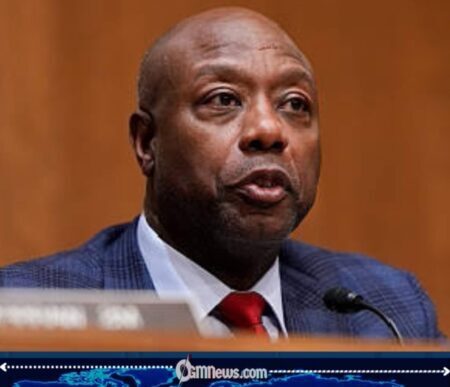
Senator Tim Scott and religious freedom discussions intensified after the South Carolina senator stated that while Americans are free to believe or not believe at all, the nation’s foundation historically and biblically recognizes that rights come from God. His remarks have reignited national conversations about faith, governance, and the philosophical origins of American rights.
Tim Scott emphasized that America’s founding principles are shaped by both historical tradition and religious understanding, suggesting that the country’s moral and political framework cannot be fully separated from spiritual influence. The comments quickly gained traction across political and media platforms, where supporters and critics offered sharply contrasting interpretations.
Supporters of the senator argued that his remarks reflect widely held historical perspectives about the influence of religious thought on early American political philosophy and constitutional development. They further contend that acknowledging these roots does not undermine religious freedom but rather highlights the nation’s intellectual heritage.
Critics, however, cautioned that framing national rights in explicitly religious terms risks blurring the line between church and state, especially in a diverse society with multiple faith traditions and secular viewpoints.
Tim Scott and the Debate Over Religious Freedom
Tim Scott has frequently spoken about faith as a guiding principle in both personal and political life, often referencing its influence on moral values and civic responsibility.
Religious freedom remains a foundational principle in the United States, enshrined in constitutional protections that allow individuals to practice any faith—or none at all—without government interference.
Scholars note that discussions about the origins of rights often involve both Enlightenment philosophy and religious thought, which together shaped early American political structures.
At the same time, ongoing debates persist over how prominently religious ideas should feature in modern public policy discussions.
Faith, Politics, and America’s Identity
Faith continues to play a significant role in American political discourse, particularly among elected officials who appeal to religious constituencies.
Political analysts say references to God, scripture, and moral foundations often resonate strongly with many voters, especially in conservative-leaning regions.
However, civil liberties advocates emphasize that pluralism requires careful balancing to ensure that no single religious tradition is privileged in government decision-making.
For now, Tim Scott’s remarks have added another layer to America’s ongoing debate over faith, freedom, and national identity, highlighting the enduring tension between religious heritage and constitutional secularism. OGM News Nigeria will continue monitoring reactions and developments surrounding this discussion.


[…] […]