











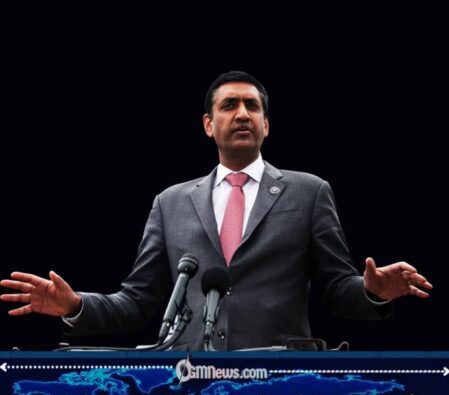
U.S. Representative Ro Khanna has reportedly raised the political temperature in Washington by declaring that, if elected president, he would recognize a Palestinian state and dramatically overhaul America’s relationship with Israel. His proposed approach would include ending U.S. diplomatic cover for Israel while stopping military aid and military sales — a position that could turn one of America’s most sensitive foreign-policy debates into a full presidential campaign battle. Khanna has previously called for U.S. recognition of Palestinian statehood and, in September 2025, led 47 lawmakers in urging President Donald Trump to recognize a Palestinian state.
Ro Khanna Wants Washington to Change the Script
The California Democrat’s latest position fits a pattern of increasingly forceful criticism of U.S. policy toward Israel. In July 2026, Khanna said the next American president should recognize a Palestinian state, establish a U.S. consulate in East Jerusalem and embassy in Ramallah, end aid to Israel and stop military sales that he argues are being used against Palestinians.
In the satirical version of Washington politics, the White House furniture may soon need to be rearranged: the Oval Office could become the place where America’s long-standing Middle East policy receives a presidential “system update.” Khanna’s argument is that Israel should not depend on American taxpayers for military support, while the United States should pursue what he describes as a foreign policy based on peace, justice and Palestinian self-determination.
The Diplomatic Cover Would Also Go Missing
Khanna’s proposed policy would go beyond simply recognizing Palestine. He has argued that Washington should withdraw diplomatic support for Israel at international institutions and stop military sales, particularly where he believes American weapons are contributing to Palestinian suffering. His position represents a significant departure from the traditional bipartisan approach that has supported close U.S.-Israel security ties.
The political joke, however, is that promising to rewrite America’s Middle East policy sounds considerably easier on a campaign stage than actually doing it from the White House. Congress, national-security officials, diplomatic allies and the complex U.S.-Israel relationship would all have something to say before the presidential pen could start flying. Meanwhile, the debate is clearly becoming more politically visible, with recent Democratic voices also challenging continued U.S. military assistance to Israel.
For now, Khanna’s proposal remains a political position rather than a presidential policy, but it signals how dramatically the debate over Palestine, Israel and American military support is changing. With the 2028 political horizon already beginning to influence Washington conversations, OGM News will continue watching whether Khanna’s proposal remains a bold campaign promise or becomes part of a much larger American foreign-policy shift.

mjpKyJqtopJmUkjsHEeNp