























WASHINGTON, D.C. — November 6, 2026
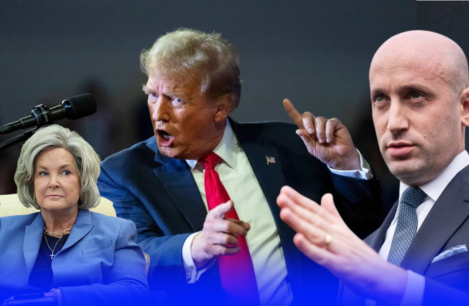
Stephen Miller Takes Over as White House Chief of Staff | OGM News — President Donald J. Trump has responded to his party’s bruising midterm election defeat with a White House shake-up that critics may interpret as a declaration of political defiance rather than an attempt at moderation. Trump announced Friday that Stephen Miller, the hard-line immigration strategist and one of his most loyal advisers, will replace Susie Wiles as White House chief of staff beginning Monday, November 9. Wiles, who helped engineer Trump’s 2024 presidential victory, will move to his political operation. With Republicans having lost control of Congress, the president appears determined to answer electoral rejection not by softening his administration’s approach, but by handing the keys to one of its most uncompromising ideological architects. Apparently, when voters deliver a political warning, the White House’s preferred response is to turn up the volume. AP News+2
From Midterm Defeat to White House Shake-Up: Trump Chooses Confrontation Over Compromise
Stephen Miller Takes Over as White House Chief of Staff | OGM News — The announcement comes just three days after the November 3 midterm elections, which delivered major setbacks to Republicans and dramatically altered the political landscape for Trump’s second term. Rather than signaling an immediate pivot toward bipartisan cooperation, the president has elevated an adviser closely associated with his administration’s aggressive immigration enforcement agenda. Miller, who served as deputy chief of staff for policy and homeland security adviser, has long championed restrictive immigration measures and expansive executive action. His promotion raises an important question: Is the president preparing to negotiate with a newly emboldened opposition, or is he preparing for an even more confrontational second half of his presidency? AP News+1
The political irony is difficult to ignore. In October, as Republicans struggled with unfavorable election forecasts, reports described growing internal tensions and concerns about the administration’s political strategy. Trump himself reportedly questioned campaign spending, candidate selections and other tactical decisions. Yet the president’s first major personnel announcement after the election is not the appointment of a centrist consensus-builder. Instead, it is the promotion of an adviser whose political identity is closely connected to the administration’s most controversial policies. It resembles a football coach losing a championship game and responding by replacing the playbook with a larger megaphone. Whether that strategy restores political momentum or deepens public opposition remains to be seen. Investing.com+1
Susie Wiles Out, Stephen Miller In: The Man Behind Trump’s Immigration Crackdown Gets the Top Job
Stephen Miller Takes Over as White House Chief of Staff | OGM News — Susie Wiles was widely credited with bringing organizational discipline to Trump’s successful 2024 presidential campaign. As the first woman to serve as White House chief of staff, she became a central figure in managing the administration’s operations and political relationships. Her departure is especially striking because Trump had publicly dismissed speculation about replacing her only weeks earlier, insisting in October that there was virtually no possibility of such a change. On Friday, however, he announced that Wiles would leave the chief of staff position and continue working within his political organization, while praising her service. In Washington, apparently, a presidential promise of long-term job security can expire faster than a carton of milk. ABC17NEWS+2
Stephen Miller‘s appointment represents more than an ordinary personnel adjustment. Since Trump’s first presidential campaign in 2016, Miller has been among the most influential advocates of restrictive immigration policy, helping shape the administration’s approach to border security, deportations and immigration enforcement. His elevation to chief of staff places him in a position to coordinate White House priorities, oversee staff operations and influence which policy proposals reach the president. Supporters may regard the decision as a commitment to implementing the agenda Trump promised voters. Critics, however, see the potential for greater centralization of power and a more aggressive approach to immigration and executive authority. If Wiles represented political management, Miller’s appointment suggests that ideological determination may now take an even more prominent seat at the White House table. AP News+1
A Political Warning or a Presidential Power Play? America’s Next Two Years Could Get Rougher
Stephen Miller Takes Over as White House Chief of Staff | OGM News — The appointment also creates a significant governing challenge. With Republicans losing their congressional majority, Trump’s administration faces a less accommodating legislative environment, potentially tougher oversight and increased scrutiny of executive actions. Miller’s reputation as an uncompromising policy strategist could make him an effective coordinator of the president’s priorities, but it could also intensify disputes with lawmakers, federal courts and state governments. The central concern is not simply whether the administration will pursue tougher policies. It is whether the White House will respond to electoral resistance by searching for compromise or relying more heavily on executive authority. The distinction matters because the chief of staff is not merely a presidential scheduler; the position can shape how the entire administration functions.
And then there is the political message being sent to the American public. Midterm elections traditionally offer voters an opportunity to evaluate the governing party’s performance. Trump’s decision to promote Miller immediately after Republican losses could be interpreted as an unwillingness to reconsider the direction of his administration. Still, the timing alone does not establish the president’s motives, and there is no evidence that Stephen Miller‘s appointment automatically guarantees a particular future policy. What it does establish is that Trump has chosen a trusted ideological ally to oversee White House operations at a moment when his administration faces new political constraints. In satirical terms, the voters may have pressed the warning button, but the president appears to have selected the setting marked maximum intensity. Whether that produces political recovery or another collision with public opinion will depend on what the administration actually does next.
Stephen Miller Takes Over as White House Chief of Staff | OGM News — President Trump’s decision to replace Susie Wiles with Stephen Miller marks a consequential turning point in his second administration. Coming immediately after Republicans’ midterm defeat, the appointment suggests that the president remains committed to the advisers and policies that have defined his political movement rather than making an immediate shift toward moderation. Supporters may celebrate the decision as evidence of consistency and determination, while critics will closely watch whether Miller’s expanded authority leads to more aggressive immigration enforcement, executive actions and confrontations with Congress. For millions of Americans, the most important question is not who occupies the chief of staff’s office, but how that person’s influence will affect their rights, communities and everyday lives. OGM News will continue monitoring the White House transition, the political fallout and the policies that emerge under Stephen Miller’s leadership


Great selection of live dealer games. The streaming quality is crystal clear and the dealers...