
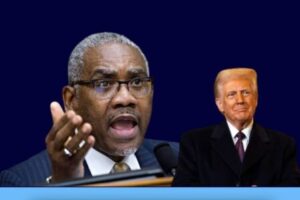




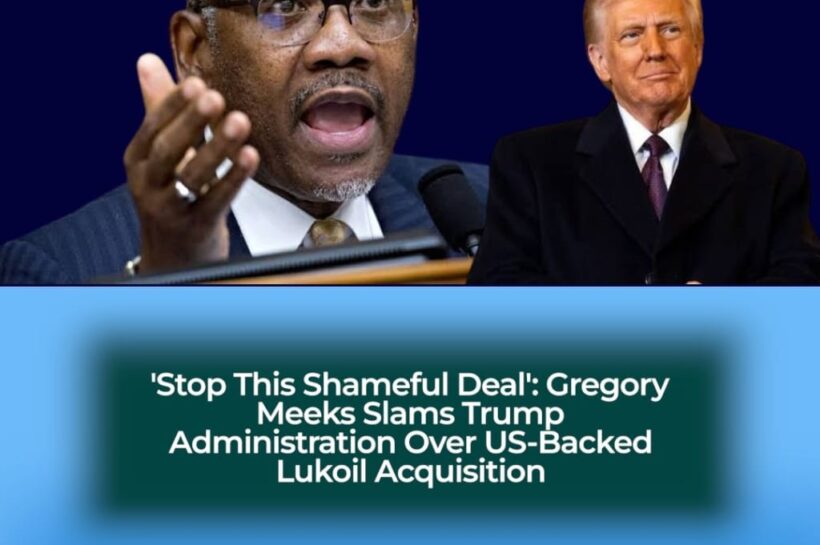






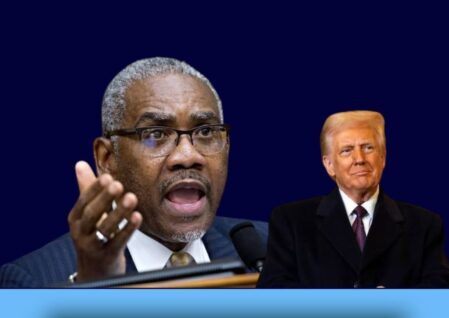
Democratic Congressman Gregory Meeks has launched a fierce attack on the Trump administration over its involvement in a proposed acquisition of the international assets of Russian oil giant Lukoil, questioning why an American government agency is getting involved in a transaction that could benefit Russia while its war against Ukraine continues.
Meeks, the ranking Democrat on the House Foreign Affairs Committee, has called on the administration to immediately abandon what he described as a shameful deal, arguing that the arrangement raises serious questions about accountability, national security and the direction of American foreign policy. Apparently, Washington’s relationship with Moscow has become complicated enough that even buying your way into the situation now requires a congressional explanation.
GREGORY MEEKS QUESTIONS WHY AMERICAN TAXPAYERS SHOULD BE INVOLVED
The controversy follows an agreement announced on November 25, 2026, by a consortium led by American investment firm Eldridge, which includes the United States International Development Finance Corporation (DFC), UAE-based Catena Investment Holding and Xtellus Capital Partners. The consortium has agreed to acquire Lukoil’s international energy assets, with the proposed transaction involving an exchange of restricted Russian securities valued at approximately $10 billion rather than a conventional cash payment. The portfolio includes oil and gas fields, refineries, pipelines and fuel stations across several countries.
Under the proposed arrangement, the DFC would receive an ownership interest on behalf of the United States, potentially giving the American government a share of future profits and representation in the company’s governance. Supporters argue that the transaction could strengthen Western influence over strategic energy infrastructure while preventing Russia from receiving an immediate financial windfall. However, Gregory Meeks is not convinced that the arrangement deserves such a generous interpretation.
In his criticism, Meeks questioned why a government development finance institution established to support economic development abroad was taking an ownership position in the assets of a sanctioned Russian oil company. He also argued that the transaction appears to undermine congressional restrictions on the DFC’s involvement in Russia-related activities. His message was unmistakable: American government institutions should not become financial vehicles for wealthy and politically connected interests while Moscow continues its military campaign against Ukraine.
GREGORY MEEKS DEMANDS ANSWERS AS LUKOIL DEAL FACES SCRUTINY
Meeks’ objection goes beyond the commercial value of the acquisition. He is particularly concerned about the political implications of allowing a government-backed consortium to participate in a transaction involving a company targeted by American sanctions. The deal is also attracting attention because it involves prominent billionaire investor Todd Boehly, whose investment firm Eldridge leads the consortium. Critics have questioned whether the arrangement adequately protects American interests and whether the administration is applying its own sanctions requirements consistently.
The proposed transaction still requires approval from the Treasury Department’s Office of Foreign Assets Control (OFAC), meaning the agreement is not yet a completed acquisition. One particularly contentious feature is the proposed use of a restricted custodial account outside the United States to hold the Russian securities involved in the exchange. While the consortium maintains that the structure avoids direct cash payments to Russia, critics question whether the arrangement sufficiently prevents Lukoil from eventually benefiting financially. That is precisely the kind of detail Gregory Meeks wants the administration to explain rather than expect lawmakers to accept on faith.
Meeks has consequently called for an immediate halt to the transaction, warning that the American people deserve to know why a government agency is taking an ownership stake in the portfolio of a Russian energy company while the war in Ukraine remains unresolved. His criticism also puts pressure on the administration to explain how the arrangement complies with congressional oversight and existing restrictions. For a government that has repeatedly presented its Russia policy as an effort to limit Moscow’s financial and strategic influence, the optics of this deal have certainly provided its critics with fresh ammunition.
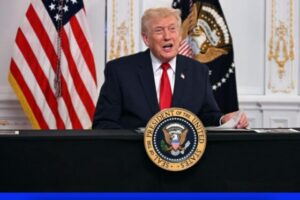
The Lukoil controversy is therefore becoming more than an ordinary business transaction. It is developing into a political and foreign-policy test for the Trump administration, with Gregory Meeks demanding answers before the proposed acquisition receives the necessary regulatory approval. Whether Washington will address his objections or proceed with the arrangement remains to be seen. Stay with OGM News as we follow the unfolding controversy and bring you further updates.
I was looking for a reliable spot to unwind and this platform exceeded my expectations....