























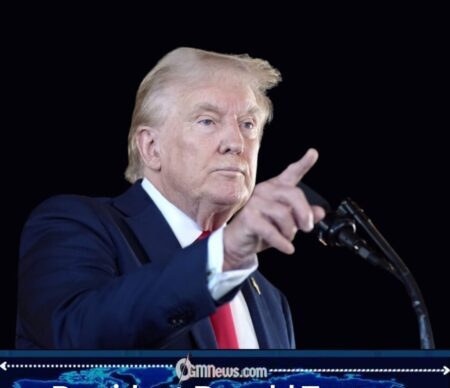
President Donald Trump has issued a forceful warning that the United States could take significantly stronger action if ongoing negotiations fail, reflecting a sharp escalation in tone as diplomatic efforts remain uncertain. His remarks come at a critical moment, where the outcome of discussions could shape regional stability and broader geopolitical dynamics for months or even years to come. The statement underscores the pressure being placed on negotiations, as both sides attempt to navigate complex demands and competing interests.
The language used by President Donald Trump has drawn widespread attention, with analysts interpreting it as part of a strategy aimed at strengthening leverage in high-stakes talks. Strong rhetoric has often been used in diplomacy to signal resolve, but it also carries risks, particularly when tensions are already elevated. Observers note that such statements can influence not only the opposing party but also allies who are closely monitoring developments.
President Donald Trump’s comments highlight the delicate balance between applying pressure and maintaining pathways for dialogue. While forceful messaging can accelerate negotiations in some cases, it may also harden positions, making compromise more difficult. The situation reflects the broader challenges of managing international disputes where both strategic interests and political messaging play crucial roles.
President Donald Trump and Escalation Strategy
President Donald Trump appears to be relying on a strategy that emphasizes strength and deterrence, signaling that failure to reach an agreement could result in serious consequences. This approach is often designed to push negotiations forward by making the cost of inaction appear higher than the cost of compromise. In many cases, such tactics are intended to create urgency and shift the dynamics at the negotiating table.
Supporters of President Donald Trump argue that this form of communication demonstrates clear leadership and a willingness to take decisive action when necessary. They believe that strong language can prevent prolonged uncertainty and encourage faster resolutions. However, critics caution that it may also contribute to rising tensions, especially if interpreted as a sign of imminent escalation.
The effectiveness of this strategy ultimately depends on how it is received by other parties involved. While some may view it as a credible signal of intent, others may respond by reinforcing their own positions, leading to a more prolonged and complicated negotiation process.
Diplomatic Channels Under Pressure
President Donald Trump’s remarks come as diplomatic channels are facing increasing pressure, with negotiations entering a critical phase. The complexity of the issues involved has made progress difficult, requiring careful coordination and sustained engagement from all sides. In such an environment, even small shifts in tone can have significant consequences.
Diplomats often rely on measured communication to maintain trust and facilitate compromise, making strong public statements a potential complicating factor. However, they can also serve as a reminder of the stakes involved, reinforcing the urgency of reaching a resolution.
The current situation illustrates how diplomacy operates under both public scrutiny and strategic maneuvering, where messaging plays a key role alongside formal negotiations.
President Donald Trump and Global Reactions
President Donald Trump’s comments have prompted varied reactions from leaders around the world, with many emphasizing the importance of restraint and continued dialogue. Some governments have expressed concern about the potential for escalation, urging all parties to prioritize peaceful solutions.
At the same time, others have interpreted the remarks as part of a broader negotiating strategy, viewing them as an attempt to strengthen bargaining power rather than a direct indication of imminent action. This divergence in interpretation highlights the complexity of international communication.
Global markets and policy circles are also closely watching developments, as uncertainty in geopolitical relations can have far-reaching effects on economic stability and investor confidence.
Economic and Strategic Implications
President Donald Trump’s warning carries potential implications beyond immediate diplomatic concerns, particularly in areas such as global markets and energy security. Periods of heightened tension often lead to increased volatility, as investors respond to uncertainty and potential risks.
Strategically, the situation may influence alliances and defense planning, as countries reassess their positions in light of evolving developments. The interplay between political statements and strategic calculations is a key factor in shaping outcomes.
These considerations demonstrate how a single statement can resonate across multiple dimensions, affecting not only political discourse but also economic and security landscapes.
Looking Ahead
President Donald Trump is expected to continue emphasizing the importance of reaching an agreement, while maintaining a firm stance on the consequences of failure. The coming weeks are likely to be critical in determining whether negotiations move toward resolution or further tension.
Diplomatic efforts are expected to intensify, with stakeholders seeking to find common ground and avoid escalation. The ability to balance strong messaging with constructive dialogue will be crucial in shaping the outcome.
Ultimately, the situation reflects the ongoing challenge of navigating complex international disputes, where leadership, communication, and strategic decision-making all play essential roles in determining the path forward.
[…] […]