


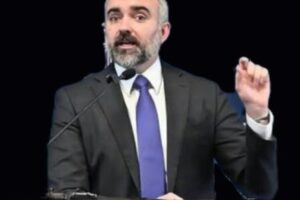












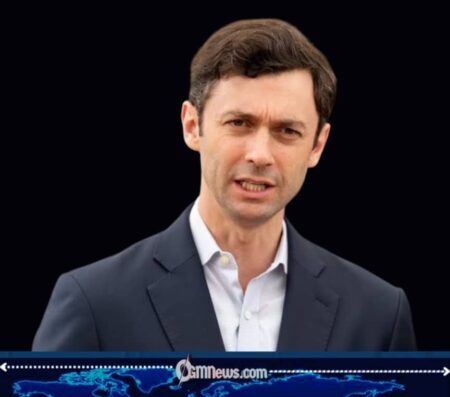
Senator Jon Ossoff has delivered one of his strongest criticisms yet of the American political system, arguing that financial influence has become deeply embedded in the way Washington functions. Speaking at a public event in Georgia, the Democratic senator said the nation’s political machinery now operates in a way that allows wealthy donors and corporate interests to shape decisions behind closed doors.
He described the system in blunt terms, saying American politics has become “coin operated,” where money enters the system and political favors emerge in return. His remarks quickly drew national attention because they moved beyond criticism of individual leaders and instead targeted the structure of power itself in the United States.
The senator also argued that the political environment helped create conditions that enabled President Donald Trump’s return to office. According to Ossoff, the deeper issue is not simply one administration, but a broader system that rewards access, privilege, and financial leverage over public service.
Ossoff’s Direct Attack on Political Financing
At the center of his speech was a forceful criticism of campaign financing in modern American politics. He argued that secret donations, corporate spending, and billionaire contributions have increasingly become central to electoral success, making it harder for ordinary citizens to feel represented in government.
The Georgia senator suggested that both major political parties have, at times, become too dependent on major donors. He said this dependence has weakened public trust in democratic institutions and reinforced the belief that policy decisions often reflect the wishes of financial backers rather than the concerns of voters.
Ossoff’s comments reflected growing concern across the country about the role of money in politics. Public frustration has been rising over the perception that influence in Washington can often be purchased, leaving many Americans questioning whether their voices still carry equal weight.
Trump’s Presidency and the ‘Systemic Rot’ Argument
Although Ossoff sharply criticized President Trump, he framed his argument as larger than one individual. He said Trump did not create the corruption he sees in Washington but instead took advantage of a political culture that had already become vulnerable to manipulation by powerful interests.
According to Ossoff, long-standing weaknesses in campaign finance rules and lobbying regulations opened the door for leaders willing to use those weaknesses for personal or political gain. He argued that those institutional failures made it easier for a president to consolidate influence while presenting himself as an outsider.
The senator’s remarks represented a shift in political messaging. Rather than focusing only on partisan disagreements, Ossoff attempted to place the discussion within a broader national debate about how democracy itself is functioning under the pressure of money and influence.
Growing Voter Frustration Across Party Lines
Political observers say Ossoff’s message may resonate because frustration over money in politics is not limited to one party. Many Americans across the political spectrum have expressed concern that wealthy individuals and corporations hold disproportionate influence in government.
Some voters on the left have long called for stronger campaign finance laws, while some on the right have criticized what they see as entrenched political elites who protect their own interests. Ossoff’s comments touched on a sentiment that many voters share that the government often appears disconnected from ordinary citizens.
That broader frustration has become a defining issue in recent years. Rising distrust in institutions, declining confidence in Congress, and concerns about political transparency have all contributed to a climate where anti-establishment messages continue to gain traction nationwide.
Calls for Reform and Greater Transparency
The senator used his remarks to renew calls for stronger transparency laws and tighter restrictions on political spending. He argued that voters deserve to know who is financing campaigns and what influence those donors may expect in return.
Supporters of reform say measures such as stricter disclosure requirements, limits on outside spending, and expanded ethics rules could help restore confidence in the political process. They argue that public trust cannot be rebuilt unless voters believe elected officials are accountable to the people rather than wealthy benefactors.
Critics, however, caution that campaign finance reform remains politically difficult because both parties have benefited from the current system. As a result, many proposed reforms have struggled to gain the bipartisan support needed to pass Congress.
A Message That Could Shape Future Politics
Ossoff’s remarks may prove politically significant beyond the immediate news cycle. His language signaled an effort to frame corruption and financial influence as central issues that could shape national debate in the coming years.
Some analysts believe his message could appeal to younger voters and independents who feel increasingly alienated by traditional politics. By focusing on systemic reform, Ossoff appears to be positioning himself as part of a broader movement demanding institutional change.
Whether his comments lead to legislative action remains uncertain. However, his speech has already added momentum to a growing conversation about whether American democracy can function effectively while the influence of money continues to expand.
The weekly tournaments here keep me coming back because the prize pools are surprisingly generous....