

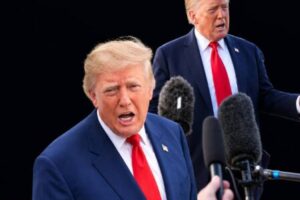












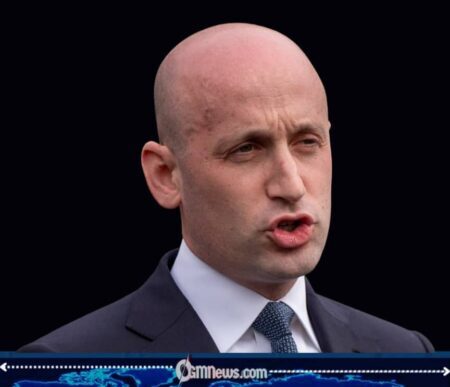
Senior White House adviser Stephen Miller has said that U.S. President Donald Trump remains committed to peace and diplomacy with Iran, while making clear that Washington will not permit Tehran to develop nuclear weapons. Miller’s remarks reflect the administration’s effort to present a dual strategy of negotiation and military preparedness as tensions in the Middle East continue.
The statement comes at a time when international attention remains focused on Iran’s nuclear program and the possibility of renewed talks. While the White House continues to emphasize diplomacy, officials have also signaled that firm action remains an option if negotiations fail.
Miller’s Message: Peace First, But With Conditions
Stephen Miller described President Donald Trump’s approach as one centered on peace, insisting that the administration still prefers a negotiated agreement over direct confrontation. According to Miller, the president believes Iran has a clear choice between cooperation and deeper isolation.
Miller emphasized that any future agreement must include a verifiable commitment from Iran not to pursue nuclear weapons. The administration has framed this condition as non-negotiable, arguing that regional and global security depend on preventing nuclear proliferation.
The remarks are consistent with the White House’s repeated position that diplomacy remains possible only if Iran accepts strict limitations.
Trump’s Position: A Consistent Public Message
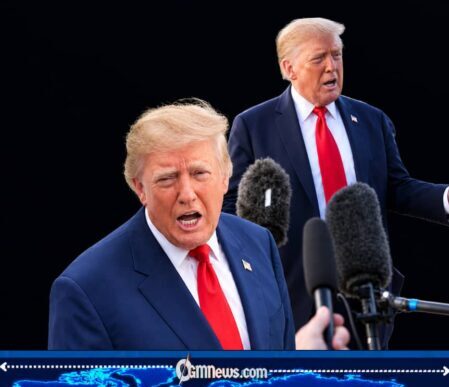
President Donald Trump has repeatedly stated that Iran must not be allowed to obtain nuclear capability. In recent speeches and interviews, he has presented the issue as one of long-term international security rather than short-term political pressure.
The president has often said that peace remains possible, but only if Iran chooses what he describes as the “right path.” This language has become central to the administration’s messaging as it seeks to reassure allies while maintaining pressure on Tehran.
President Donald Trump has also sought to portray his strategy as one that combines restraint with strength, arguing that diplomacy is more effective when backed by credible consequences.
Diplomatic Efforts Continue Behind the Scenes
Despite the public rhetoric, diplomatic contacts between U.S. and Iranian representatives have reportedly continued through intermediaries. Officials from several countries have been involved in facilitating indirect discussions aimed at reducing tensions.
These talks have focused on possible limits to Iran’s nuclear program, regional security arrangements, and economic measures. International observers note that both sides appear to be leaving room for a negotiated settlement.
The White House has used statements from figures such as Stephen Miller to reinforce the idea that diplomacy remains open, even as military readiness continues in the background.
Military Pressure Remains Part of the Strategy
Alongside diplomatic outreach, the United States has continued to strengthen its military posture in the region. Additional naval deployments and defense preparations have been interpreted as a signal that Washington is prepared for multiple outcomes.
Officials argue that visible military readiness supports the diplomatic process by demonstrating seriousness. President Donald Trump has repeatedly maintained that negotiation is most effective when adversaries understand the consequences of failure.
Critics, however, warn that a heavy military presence can increase the risk of miscalculation and complicate ongoing talks.
International Reactions: Support and Concern
Responses from international partners have been mixed. Some U.S. allies support the administration’s insistence that Iran must not obtain nuclear weapons, viewing the issue as a matter of shared security.
Other governments have expressed concern that strong rhetoric could undermine diplomacy. European leaders in particular have encouraged continued negotiations and greater emphasis on de-escalation.
These differing views reflect broader international debate about how to manage nuclear risks without triggering wider instability.
Political Impact at Home and Abroad
Miller’s statement also carries domestic political significance. By stressing peace while maintaining a firm stance, the administration is attempting to reassure voters who support strong national security but remain wary of another prolonged conflict.
President Donald Trump’s supporters see the policy as evidence of disciplined leadership, while critics question whether the balance between diplomacy and pressure can be sustained. The message is designed to show that the administration is pursuing peace without appearing weak.
As negotiations continue, the administration’s handling of Iran may become a defining issue in broader discussions about U.S. foreign policy.
Stephen Miller’s remarks highlight the Trump administration’s effort to present a clear but complex message: peace is preferred, but nuclear weapons for Iran are unacceptable. The White House continues to frame diplomacy and deterrence as complementary rather than contradictory.
Whether this approach leads to a breakthrough or deeper confrontation remains uncertain. For now, President Donald Trump’s second-term foreign policy toward Iran remains anchored in a strategy that seeks to combine negotiation with unmistakable resolve.

Logging in is a breeze and the site stability is amazing even during peak hours....