











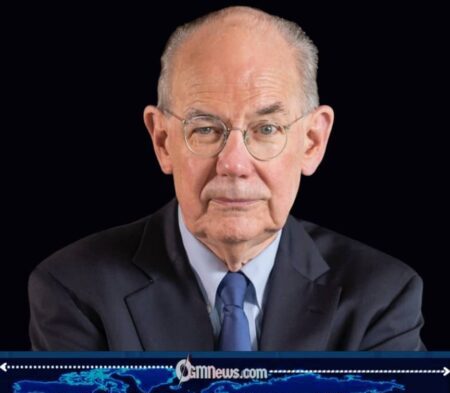
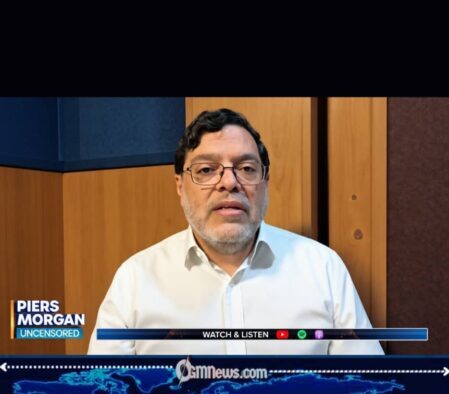
A growing debate among foreign policy experts has intensified following remarks by renowned political scientist John Mearsheimer, who has raised serious concerns about the trajectory of the ongoing U.S.–Iran conflict. His analysis suggests that the United States could face significant strategic challenges, particularly if the war evolves into a prolonged confrontation favoring regional resilience over external power projection.
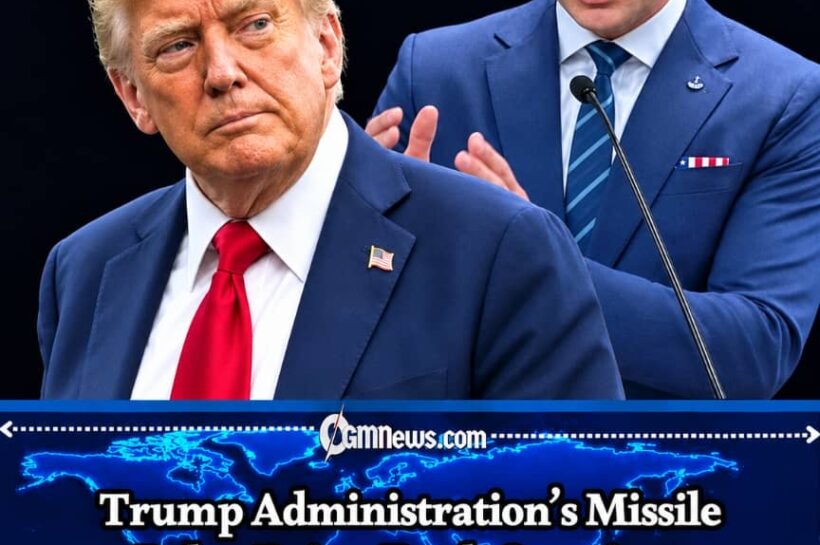
At the center of this unfolding situation is President Donald Trump, currently serving a second term, whose administration is navigating a complex mix of military pressure and diplomatic uncertainty. While some interpretations of Mearsheimer’s remarks circulating online have been exaggerated, his core argument that the U.S. lacks a clear path to decisive victory has been echoed in varying degrees by analysts and international observers.
This report draws on insights from multiple reputable international news outlets to examine the credibility of these concerns, the current state of the conflict, and the potential implications for global stability.
Mearsheimer’s Realist Perspective on the Conflict
Mearsheimer, a leading voice in realist international relations theory, has consistently argued that geography, nationalism, and local military capabilities often favor regional powers in extended conflicts. In the case of Iran, he suggests that these factors significantly complicate U.S. military objectives.
According to interviews and published analyses, Mearsheimer has indicated that it is “difficult to imagine” the United States achieving a meaningful victory under current conditions. His argument is not that defeat is inevitable, but rather that the structural realities of the conflict make success far more difficult than commonly assumed in political rhetoric.
This perspective reflects a broader school of thought that questions the effectiveness of large-scale military interventions in regions where local actors possess both strategic depth and asymmetric capabilities.
Trump Administration’s Strategy Under Scrutiny
President Donald Trump’s administration has adopted a dual-track strategy that combines diplomatic outreach with the threat and occasional use of military force. Officials have emphasized that pressure is necessary to compel Iran to negotiate on terms favorable to U.S. interests.
However, reporting from outlets such as Reuters and The Washington Post indicates that internal deliberations remain divided. Some policymakers advocate for intensified military action to regain strategic initiative, while others caution that escalation could deepen the conflict without guaranteeing success.
Donald Trump’s leadership approach has therefore come under scrutiny, particularly regarding whether the current strategy adequately accounts for the long-term risks identified by analysts like Mearsheimer.
Iran’s Resilience and Strategic Position
Iran’s response to U.S. actions has demonstrated a capacity for sustained resistance, supported by its regional alliances and asymmetric warfare capabilities. Military analysts note that Iran’s use of drones, missile systems, and proxy networks complicates traditional battlefield dynamics.
Additionally, Iran’s geographic position combined with its influence over critical waterways such as the Strait of Hormuz provides it with leverage that extends beyond direct military engagement. This has allowed Tehran to exert pressure on global energy markets and international shipping routes.
These factors reinforce Mearsheimer’s argument that the balance of power in the region may not favor an external actor seeking rapid or decisive outcomes.
Risks of Escalation and Global Consequences
The potential escalation of the conflict carries significant risks, not only for the United States and Iran but also for the broader international community. Analysts warn that expanded military operations could trigger retaliatory strikes on energy infrastructure and key shipping lanes.
Such developments would likely have immediate economic repercussions, including rising oil prices and increased volatility in global financial markets. Countries dependent on Middle Eastern energy exports could face disruptions with far-reaching consequences.
Furthermore, the possibility of a wider regional conflict drawing in additional state and non-state actors remains a central concern among policymakers and international organizations.
Diverging Narratives: Analysis vs. Viral Claims
While Mearsheimer’s analysis has gained attention, it is important to distinguish between verified statements and amplified interpretations circulating on social media. Major news organizations have not confirmed claims that the United States has already suffered a “humiliating defeat” or that President Donald Trump has no option but to concede to Iran’s demands.
Instead, reputable reporting portrays a more nuanced reality: a complex and evolving conflict with uncertain outcomes. Mearsheimer’s warnings are best understood as cautionary assessments rather than definitive predictions.
This divergence highlights the challenges of navigating information in a highly charged geopolitical environment, where expert analysis can sometimes be reframed in more extreme terms.
Outlook: A Conflict Without Clear Resolution
As the conflict continues, the United States faces a series of difficult choices with no guaranteed outcomes. The balance between military action and diplomatic engagement remains delicate, with each option carrying its own risks and uncertainties.
President Donald Trump’s next steps will likely play a role in shaping the trajectory of the war. Whether through renewed negotiations or further escalation, the decisions made in the coming weeks could have lasting implications for U.S. foreign policy and global stability..
For now, analysts including Mearsheimer continue to urge caution, emphasizing that the path forward requires a clear understanding of both the limits of power and the complexities of the region.
Logging in is a breeze and the site stability is amazing even during peak hours....