




























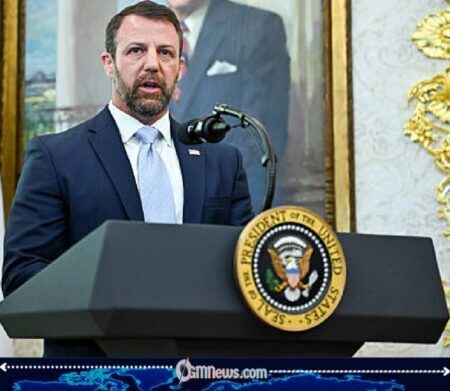
Homeland Security Secretary Markwayne Mullin has initiated the dismantling of a controversial internal management system introduced by his predecessor, Kristi Noem. The action underscores Secretary Markwayne Mullin’s commitment to reforming the Department of Homeland Security (DHS) and improving operational efficiency under the administration of President Donald Trump.
The decision, widely viewed as one of Secretary Markwayne Mullin’s first defining policy steps, reflects a broader effort to recalibrate internal governance structures within DHS. Officials indicate that the move is designed to streamline processes, reduce bureaucratic delays, and restore confidence among agency personnel.
Secretary Markwayne Mullin Reassesses Existing Framework
Upon assuming office, Secretary Mullin ordered a comprehensive review of departmental operations, focusing on the effectiveness of policies implemented under prior leadership. The management controls introduced during Kristi Noem’s tenure quickly emerged as a central point of concern during this evaluation.
These controls, originally designed to enforce accountability and standardize decision-making, included rigid approval hierarchies and extensive reporting requirements. While they aimed to strengthen oversight, Secretary Mullin’s review found that they often slowed critical processes and limited flexibility across various DHS units.
By initiating their rollback, Secretary Markwayne Mullin is signaling a shift toward a more adaptable and responsive administrative model—one that prioritizes operational speed without entirely discarding accountability mechanisms.
Origins of the Controversial Controls
The policies now under review were implemented during a period marked by calls for tighter internal discipline within DHS. Kristi Noem’s leadership emphasized centralized authority, with the goal of reducing inconsistencies across the department’s vast network of agencies.
However, over time, the controls became a source of frustration for many within the department. Staff members reported that the added layers of approval created delays, particularly in time-sensitive operations related to national security and emergency response.
Secretary Mullin’s decision to unwind these measures reflects an acknowledgment of these longstanding concerns, as well as a recognition of the need for a more balanced approach to governance.
Internal Response to Secretary Markwayne Mullin’s Decision
Reactions within DHS have been mixed but largely attentive to the implications of Secretary Markwayne Mullin’s directive. Many employees have expressed cautious optimism, viewing the rollback as an opportunity to improve workflow efficiency and reduce administrative burdens.
At the same time, some officials have raised concerns about the transition process. Without immediate replacement structures, there is a risk of temporary uncertainty in how decisions are made and monitored. Secretary Markwayne Mullin’s leadership team is reportedly working to address these concerns through phased implementation and clear communication.
Employee groups and internal stakeholders have also called on Secretary Markwayne Mullin to maintain transparency, ensuring that reforms are both inclusive and sustainable.
Policy Direction Under Secretary Markwayne Mullin
The move is widely interpreted as an early indicator of Secretary Markwayne Mullin’s broader policy direction. By prioritizing flexibility and decentralization, he appears to be aligning DHS operations with a more agile governance model.
Policy analysts suggest that Secretary Mullin’s approach could influence key areas such as border security, immigration enforcement, and interagency coordination. A reduction in bureaucratic constraints may enable faster responses to emerging threats, though it will require careful management to preserve oversight standards.
Within the context of President Donald Trump’s second-term agenda, Secretary Markwayne Mullin’s reforms may also reflect a wider emphasis on efficiency and streamlined federal operations.
Political and Oversight Considerations
Secretary Markwayne
Mullin’s actions are expected to draw attention from lawmakers and oversight bodies in Washington. Given the scale and importance of DHS, any structural changes are likely to be closely monitored for their impact on national security and administrative accountability.
Some members of Congress may seek further clarification on how Secretary Markwayne Mullin plans to replace or modify the existing controls. Hearings or formal reviews could emerge as part of the legislative branch’s oversight responsibilities.
Despite these concerns, supporters argue that Secretary Mullin’s willingness to address internal inefficiencies demonstrates proactive leadership and a commitment to institutional improvement.
The Road Ahead for Secretary Markwayne Mullin
As the Department of Homeland Security moves forward, Secretary Markwayne Mullin is expected to implement additional reforms aimed at strengthening the agency’s effectiveness. The dismantling of the controversial controls is likely just the beginning of a broader transformation effort.
Future steps may include the introduction of revised accountability frameworks, enhanced training programs, and updated operational guidelines. Secretary Mullin’s ability to balance efficiency with oversight will be critical in determining the long-term success of these initiatives.
Ultimately, this early decision positions Secretary Mullin as a central figure in shaping the next phase of DHS operations—one defined by adaptability, responsiveness, and a renewed focus on mission effectiveness.


[…] […]