
























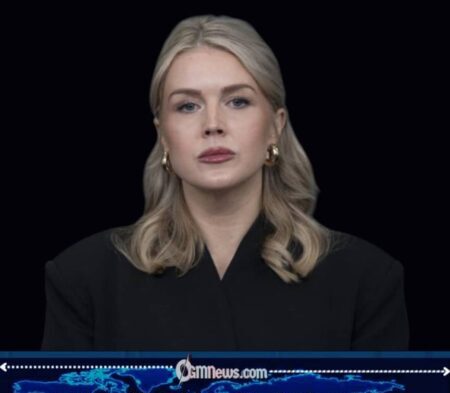
White House Press Secretary Karoline Leavitt has defended recent warnings issued by U.S. President Donald Trump toward Iran, stressing that the administration remains committed to securing a negotiated settlement while maintaining a posture of military readiness. Her remarks came in response to questions about whether the president’s rhetoric could be interpreted as threatening actions that might violate international norms.
Leavitt’s response underscored the administration’s broader strategy pairing diplomatic pressure with a clear demonstration of military capability. As tensions continue to rise, her comments have drawn both support and criticism from analysts, policymakers, and international observers.
Leavitt’s Statement: Emphasizing Strength and Deterrence
During a press briefing, Karoline Leavitt reiterated that Donald Trump has made the U.S. position “quite clear” to Iran that engaging in negotiations remains the preferred path, but failure to do so could prompt a significant response.
She emphasized that the U.S. armed forces possess capabilities “beyond their wildest imagination,” a phrase reflecting the administration’s intent to deter escalation through overwhelming strength. Officials have consistently framed such language as part of a broader effort to compel compliance without immediate resort to force.
Supporters of the administration argue that this approach strengthens the U.S. bargaining position, while critics contend that such rhetoric risks inflaming already fragile tensions.
Trump’s Broader Messaging on Iran
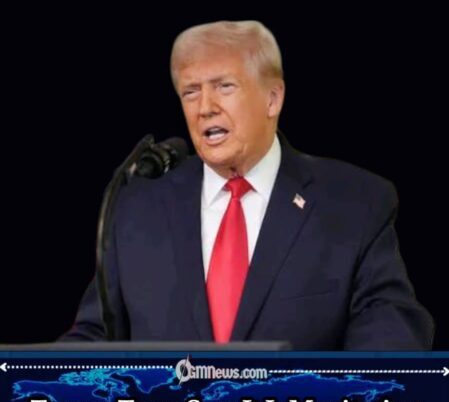
The remarks from Karoline Leavitt align closely with statements made by Donald Trump himself. In recent days, the president has warned that failure by Iran to reach an agreement could result in severe consequences, including potential strikes on strategic infrastructure.
According to reporting from major international outlets, Trump has indicated that key energy facilities could be targeted if diplomatic efforts stall. While these statements are framed as conditional, they have heightened concerns about the possibility of further escalation.
At the same time, the administration continues to signal openness to negotiations, creating a dual-track policy that combines pressure with diplomacy.
Legal and Ethical Debate Intensifies
Questions raised during the briefing about potential “war crimes” reflect a growing debate among legal experts and policymakers. While no formal legal determination has been made, some analysts argue that threats against civilian infrastructure could raise serious concerns under international law.
Others note that the legality of such actions depends heavily on context, including whether targets are considered military or dual-use. This distinction remains a key factor in evaluating the implications of the administration’s rhetoric.
The discussion highlights the complexity of modern conflict, where statements alone can carry significant legal and diplomatic weight even before any action is taken.
Military Posture and Strategic Signaling
The rhetoric from Washington is accompanied by a visible increase in U.S. military presence in the region. Deployments of naval and air assets are intended to reinforce the administration’s message and provide operational readiness if required.
Officials maintain that this buildup is defensive and aimed at preventing further escalation. However, analysts warn that such moves can also be interpreted as preparatory steps toward broader conflict.
For Iran, the combination of rhetoric and military positioning presents a complex strategic challenge, potentially influencing its response in ongoing negotiations.
Diplomatic Uncertainty and Global Reactions
International reactions to the situation have been mixed. Some allies have expressed support for the United States’ firm stance, while others have urged restraint and a renewed focus on diplomacy.
Efforts to mediate the conflict continue, with multiple countries seeking to facilitate dialogue between Washington and Tehran. However, progress has been slow, and the path to de-escalation remains uncertain.
As Donald Trump balances pressure with negotiation, the coming weeks are expected to be critical in determining whether tensions subside or intensify further.
Balancing Power and Diplomacy
The exchange involving Karoline Leavitt highlights the broader dynamics shaping U.S. policy toward Iran. While the administration continues to emphasize its willingness to negotiate, its reliance on strong rhetoric and military signaling reflects the high stakes involved.
The situation illustrates the delicate balance between deterrence and diplomacy in modern geopolitics. As global attention remains fixed on the evolving crisis, the effectiveness of this approach will likely determine the trajectory of the conflict.
[…] […]