













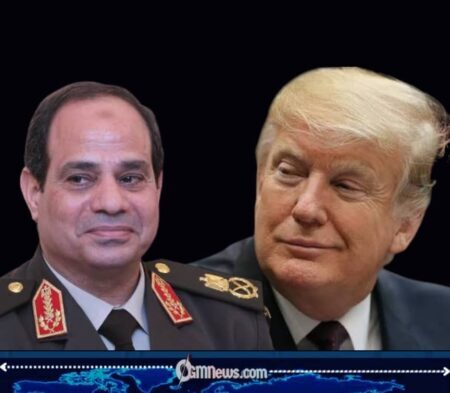
Egypt’s President Abdel Fattah el-Sisi has issued a direct and emotional appeal to U.S. President Donald Trump, urging him to intervene decisively to end the escalating conflict in the Middle East. Framing his message around humanitarian urgency, Sisi called on Trump as a “peace-loving” leader to help bring an end to the war.
The appeal, delivered during a major energy and economic forum in Cairo, reflects growing concern among regional leaders about the human toll and broader global implications of the ongoing crisis. It also underscores Egypt’s renewed diplomatic push to position itself at the center of mediation efforts.
A Direct Diplomatic Appeal in a Time of Crisis
In his remarks, Abdel Fattah el-Sisi addressed Donald Trump in unusually personal terms, emphasizing the United States’ influence over the trajectory of the conflict. He appealed for swift intervention, stating that ending the war would serve not only regional stability but also the broader interests of humanity.
Observers note that such direct language is relatively rare in formal diplomatic settings, highlighting the severity of the situation. By framing his appeal in moral as well as strategic terms, Sisi sought to elevate the urgency of immediate action.
The statement also reflects Egypt’s long-standing reliance on diplomatic engagement as a primary tool for conflict resolution in the region.
Washington’s Role in Shaping the Conflict’s Outcome
Analysts widely agree that the United States remains a central actor in determining how the conflict evolves. Donald Trump, currently serving a second term, has adopted a complex approach that combines pressure with openness to negotiation.
Reports from major outlets such as Reuters indicate that Sisi believes Washington holds the key to de-escalation. He has pointed to previous instances where U.S. intervention contributed to temporary ceasefires, reinforcing his argument that decisive leadership could once again alter the course of events.
At the same time, the U.S. administration has maintained a firm stance on its strategic objectives, balancing diplomatic overtures with continued military readiness.
Economic Risks: Oil Markets and Global Stability Under Threat
Beyond the immediate humanitarian concerns, Abdel Fattah el-Sisi warned of significant economic repercussions if the conflict persists. He highlighted the potential for oil prices to surge dramatically, with projections suggesting levels that could disrupt global markets.
Such a spike would have cascading effects, including increased inflation and economic strain for both developed and developing nations. Energy-dependent economies, in particular, could face severe challenges.
In addition, disruptions to supply chains especially in critical sectors like agriculture could exacerbate food insecurity in vulnerable regions, further amplifying the crisis.
Egypt’s Renewed Role as a Regional Mediator
Egypt has historically played a pivotal role in mediating conflicts in the Middle East, and the current situation is no exception. Abdel Fattah el-Sisi has positioned Cairo as a key intermediary, working alongside other regional actors to facilitate dialogue.
Diplomatic efforts have included backchannel communications and coordination with international partners aimed at reducing tensions. Egypt’s geographic and political positioning allows it to serve as a bridge between opposing sides.
This renewed engagement reflects both strategic necessity and a continuation of Egypt’s broader foreign policy approach centered on stability and negotiation.
Challenges to Peace Efforts and Ongoing Negotiations
Despite ongoing diplomatic initiatives, significant obstacles remain. Negotiations have been marked by deep divisions, with key stakeholders holding firm to their positions.
Reports from international media outlets indicate that proposals for ceasefire agreements and broader peace frameworks have yet to achieve consensus. Disagreements over conditions and timelines continue to hinder progress.
Meanwhile, Donald Trump has urged all parties to engage seriously in talks, signaling both a willingness to pursue diplomacy and readiness to escalate if necessary. This dual approach reflects the complexity of the situation.
A Region at a Crossroads
The appeal by Abdel Fattah el-Sisi comes at a critical juncture for the Middle East. The conflict’s trajectory will likely depend on the interplay between military developments and diplomatic interventions.
As tensions remain high, the international community continues to watch closely, with many leaders echoing calls for restraint and dialogue. The risk of broader escalation remains a central concern.
Ultimately, the success of efforts to end the war may hinge on whether key actors, including Donald Trump, can translate influence into tangible progress toward peace.

Logging in is a breeze and the site stability is amazing even during peak hours....