

















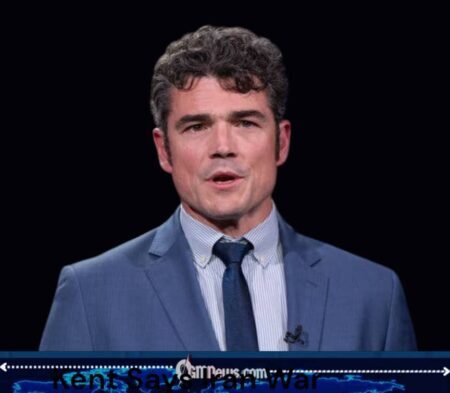
Former counterterrorism official Joe Kent has issued one of the most serious internal critiques yet of the recent conflict with Iran, arguing that the war has revealed the growing limits of American influence in the Middle East. In a series of public remarks following his resignation, He said the conflict has cost American lives, strained regional alliances and exposed strategic weaknesses that may reshape Washington’s foreign policy for years to come.
His comments have resonated across political circles because they challenge not only the conduct of the war but also the broader assumptions behind U.S. engagement in the region. While some officials continue to defend the administration’s actions, Kent has warned that the consequences of the conflict extend far beyond the battlefield and could alter America’s standing with both allies and adversaries.
American Casualties Become a Turning Point
Kent said the deaths of 13 American service members marked a turning point in his view of the war. According to people familiar with his position, he believed those losses should have triggered a deeper reassessment of the military campaign and the decisions that led to it.
In public comments, he said the fallen personnel “did not need to die,” arguing that the conflict expanded without a clear strategic endpoint. His remarks reflected growing concern among some former officials that the United States entered a dangerous escalation without fully accounting for the risks.
The human cost of the conflict has become one of the most politically sensitive aspects of the war. For many observers, Kent’s comments have given voice to concerns already being raised quietly inside Washington.
Concerns Over Israel’s Expanding Role
A major part of Kent’s criticism centers on the role of Israel in shaping regional policy. He warned that Israel may seek to broaden military operations into Lebanon, potentially drawing the United States into a wider confrontation.
He argued that Washington must be willing to place limits on allied actions when American interests are directly affected. He suggested that continued military support should not be automatic if the conflict expands beyond its original scope.
Those remarks have sparked intense debate among foreign policy analysts. Some view his comments as a realistic warning about regional escalation, while others see them as an unusually public challenge to one of America’s closest strategic partnerships.
Gulf Alliances Under Pressure
Kent also raised concerns about the impact of the conflict on relationships with Gulf states that have long been central to U.S. strategy in the Middle East. He argued that some regional partners now question the reliability of American leadership.
According to Kent, the war has weakened confidence among Gulf governments that Washington can effectively manage regional crises. Some countries, he said, are beginning to explore more independent security and economic relationships.
That shift could have consequences beyond diplomacy. Analysts say any weakening of traditional Gulf partnerships may influence energy markets, military cooperation and long-term American influence in the region.
Military Bases Seen as New Vulnerabilities
One of Kent’s most striking warnings involved U.S. military bases in the Middle East. Rather than viewing them as strategic assets, he argued that many installations have become increasingly vulnerable to missile and drone attacks.
He said Iranian strikes during the conflict demonstrated how quickly fixed American positions can become targets in modern warfare. Advances in regional missile technology have reduced the protective advantage of those bases once offered.
His assessment reflects a broader concern inside defense circles that the traditional American military posture in the region may need to be reconsidered as warfare evolves.
No Military Solution, Kent Says
Kent has repeatedly argued that the United States cannot solve its conflict with Iran through military force alone. He said Washington must recognize the limits of armed pressure and pursue a more realistic diplomatic strategy.
According to him, continued escalation risks producing greater instability without delivering a durable outcome. He believes the United States must engage Iran as it currently exists rather than pursuing policies built on permanent confrontation.
His comments stand in contrast to officials who continue to support sustained military pressure. The difference highlights a growing divide over how America should approach one of its most difficult foreign policy challenges.
Political Fallout in Washington
Kent’s remarks have added a new dimension to the political debate in Washington over the war’s long-term consequences. Lawmakers from both parties are now facing questions about whether the conflict has strengthened or weakened American strategic interests.
For critics of the war, his warnings reinforce concerns that the United States may be losing control over regional developments. Supporters of the administration argue that his comments overlook the need to confront security threats decisively.
As the debate continues, his criticism has become part of a broader reassessment of how the United States balances alliances, military power and diplomacy in a rapidly changing Middle East.


The weekly tournaments here keep me coming back because the prize pools are surprisingly generous....