























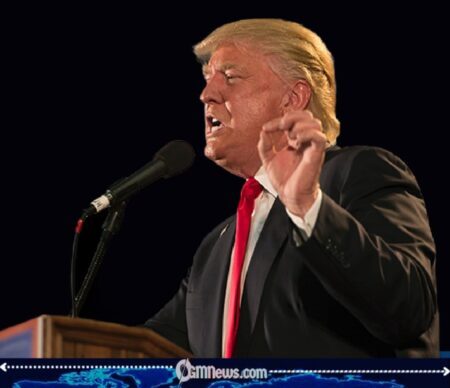
President Donald Trump has once again become the central focus of political discourse following a series of conflicting remarks about ongoing diplomatic engagements. Speaking to reporters, Donald Trump stated that he is “talking to the right people,” projecting confidence in the administration’s communication channels.
Yet, in a striking contrast, Trump had moments earlier remarked that “the leaders are all gone” and that “nobody knows who to talk to.” The sharp inconsistency between these statements has drawn widespread attention, placing Trump at the center of scrutiny over policy clarity.
As a result, Trump’s words have quickly become a defining issue in discussions about U.S. foreign policy communication.
Donald Trump and the Question of Consistency
The contradiction in Trump’s statements has raised concerns about consistency at the highest level of leadership. On one hand, Trump’s assertion suggests that key diplomatic contacts are firmly in place. On the other, his earlier comment implies a breakdown in identifiable leadership among global actors.
Political analysts argue that when Trump delivers mixed signals in such close succession, it can create confusion both within government circles and among international partners. Consistency, they note, is a cornerstone of effective diplomacy.
Supporters of Donald Trump, however, contend that he may be referring to different categories of leadership—formal versus informal—thereby explaining the apparent contradiction.
Donald Trump’s Impact on Foreign Relations
Trump’s remarks carry significant weight in shaping how the United States is perceived globally. When Donald Trump speaks about who the U.S. is engaging with, allies and adversaries alike interpret those signals as indicators of policy direction.
In this case, Donald Trump’s contrasting statements could introduce uncertainty into ongoing diplomatic efforts. Countries relying on clear guidance from Washington may find it challenging to interpret the administration’s stance.
Experts emphasize that Trump’s communication style, often direct and unscripted, has historically influenced the tone and direction of U.S. foreign relations.
Donald Trump Draws Reactions Across Washington
Reactions to Trump’s statements have been swift across political and security circles. Lawmakers have called for greater clarity, urging the administration to provide more consistent messaging regarding its diplomatic strategy.
Security analysts warn that Trump’s conflicting remarks could complicate coordination efforts, particularly in sensitive geopolitical situations. Clear direction from leadership is often essential for aligning military and intelligence operations.
At the same time, some officials have attempted to contextualize Donald Trump’s comments, suggesting that they reflect evolving discussions rather than outright contradictions.
Donald Trump in Media and Public Debate
Trump’s statements have dominated media coverage, with major outlets highlighting the inconsistency and its potential implications. The narrative surrounding Trump has focused heavily on the contrast between his two remarks.
Public reaction has been divided. Some interpret Trump’s approach as strategic ambiguity, allowing flexibility in negotiations. Others view it as a sign of unclear communication at a critical time.
On social media, Donald Trump’s words have been widely analyzed and debated, reinforcing his role as the focal point of the discussion.
Trump and the Challenge of Leadership Communication
Ultimately, the situation underscores the broader challenge facing Trump as a leader navigating complex global dynamics. Effective communication remains essential, particularly when addressing issues involving multiple international stakeholders.
For Trump, maintaining clarity while preserving strategic flexibility is a delicate balance. His statements, closely watched around the world, can shape perceptions and influence diplomatic outcomes.
As events continue to unfold, Trump’s ability to align messaging with policy direction will remain a key factor in assessing the administration’s approach to global engagement.
[…] […]