

























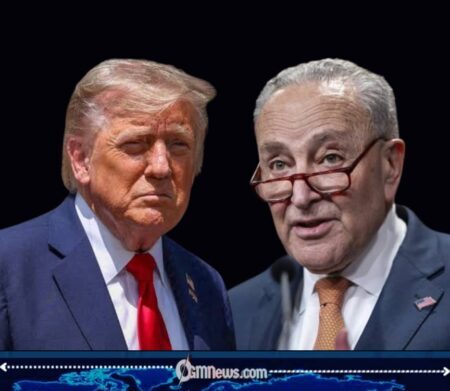
A sharp political confrontation has emerged in Washington after Senate Majority Leader Chuck Schumer accused President Donald Trump—currently serving his second term—of derailing critical negotiations over airport security funding. Schumer alleged that the administration’s insistence on tying Transportation Security Administration (TSA) workers’ pay to controversial voting legislation stalled progress and prolonged disruptions across the country’s airports.
The dispute centers on broader disagreements between Democrats and Republicans over governance, legislative priorities, and the use of essential services as leverage in political negotiations. As the standoff continues, its real-world impact is increasingly felt by federal workers and millions of travelers.
Schumer’s Criticism: “A Political Gamble at Public Expense”
In a series of remarks on the Senate floor, Chuck Schumer sharply criticized President Donald Trump, accusing him of holding TSA funding “hostage” to unrelated political demands. Schumer described the situation as an avoidable crisis, arguing that bipartisan negotiations had been progressing before presidential intervention altered the course of discussions.
Schumer further claimed that the insistence on linking TSA paychecks to voting legislation represented a misjudgment that cost valuable time. According to him, both parties were aware that such a demand would be unacceptable to Democrats, making the impasse predictable and preventable.
The Core Dispute: TSA Funding and the SAVE Act
At the center of the conflict is the administration’s push to include provisions from the proposed SAVE Act a measure focused on tightening voter identification and citizenship requirement within a broader funding bill for the Department of Homeland Security.
Supporters of the proposal argue that election integrity is a fundamental national priority that justifies its inclusion in major legislative packages. However, critics contend that the measure has no direct connection to national security funding and risks restricting voter access, particularly among marginalized groups.
This disagreement has proven difficult to reconcile, with Democrats refusing to support any bill that merges TSA funding with election-related reforms, thereby prolonging the legislative deadlock.
Impact on TSA Workers and Airport Operations
The consequences of the funding dispute have been immediate and tangible. Employees of the Transportation Security Administration have faced delayed or missed paychecks, leading to increased absenteeism and operational strain at major airports across the United States.
Travelers have reported longer wait times and disruptions at security checkpoints, particularly during peak travel periods. Aviation analysts warn that prolonged uncertainty could further strain staffing levels and compromise efficiency, raising broader concerns about the resilience of critical infrastructure during political stalemates.
Trump’s Strategy: Leverage Through Legislative Linkage
President Donald Trump has defended his approach as a necessary use of executive influence to advance key policy priorities. By tying TSA funding to election reform, the administration appears to be leveraging urgent operational needs to secure broader legislative concessions.
In addition to rejecting compromise proposals, Donald Trump has reportedly considered contingency measures, including deploying alternative federal personnel to mitigate staffing shortages at airports. These moves have drawn criticism from opponents, who argue that such strategies risk politicizing essential services.
The administration, however, maintains that election security and national security are interconnected issues that warrant simultaneous consideration.
Deepening Political Divide and Governance Challenges
The standoff underscores the widening divide between Democrats and Republicans on both policy and legislative strategy. While Democrats emphasize the importance of separating essential funding from political negotiations, Republicans increasingly support broader policy linkages as a means of advancing their agenda.
Observers note that this episode reflects a broader trend in Washington, where high-stakes issues are often intertwined, complicating efforts to reach timely agreements. The dispute also raises questions about the long-term implications of such tactics on governance, institutional trust, and public confidence.
As negotiations continue, lawmakers face mounting pressure to reach a resolution that addresses both immediate operational concerns and deeper political disagreements.
Looking Ahead
The clash between Chuck Schumer and President Donald Trump highlights the complexities of modern legislative negotiations, where policy priorities, political strategy, and public services intersect. While both sides remain firmly entrenched in their positions, the ongoing disruptions to TSA operations serve as a reminder of the real-world consequences of political gridlock.
[…] […]