





























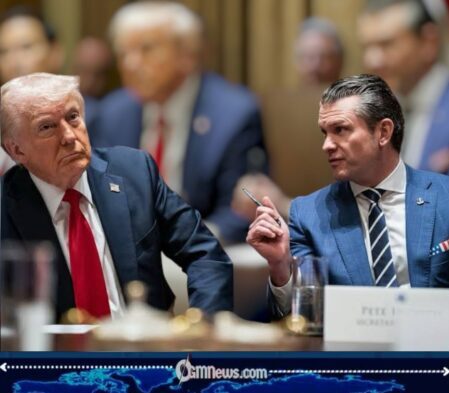
The transgender military ban has reached another dramatic legal checkpoint, with the Trump administration asking the Supreme Court to allow the Pentagon to remove transgender service members while the broader constitutional fight continues. In a petition filed Friday, Solicitor General D. John Sauer argued that the military’s authority to determine who may serve is a matter of exceptional importance, effectively asking the justices to give the administration permission to proceed while the courts continue arguing over whether the policy itself passes constitutional inspection. (The Washington Post)
Trump Administration Asks Supreme Court to Allow Transgender Military Ban
The administration’s latest move follows a June ruling by a divided panel of the U.S. Court of Appeals for the District of Columbia Circuit, which blocked the government from enforcing the policy against a group of transgender service members while their challenge proceeds. The appeals court majority concluded that the policy likely violated constitutional protections and questioned the government’s justification for excluding transgender people from military service. The administration now wants the Supreme Court to reverse that decision, arguing that judges should give substantial deference to military judgments. (Reuters)
The immediate dispute is therefore not simply about whether a transgender person can wear a uniform. It is about whether the Pentagon can begin enforcing a policy that lower courts have found constitutionally suspect before the underlying case reaches a final judgment. The government’s position is that allowing the lower-court restrictions to remain in place improperly interferes with military authority; opponents counter that military authority does not place constitutional rights in a no-entry zone. Somewhere between those two arguments sits the very practical question of whether service members currently doing their jobs should be told that their careers are suddenly awaiting a judicial permission slip.
Transgender Military Service Faces New Supreme Court Battle
President Donald J. Trump signed an executive order soon after returning to office in January 2025 directing the Pentagon to restore restrictions on transgender military service. The administration subsequently implemented a policy that broadly disqualified people with gender dysphoria and those who had attempted to transition, subject to limited provisions described by the government. The policy represented another reversal in a debate that has changed direction repeatedly: open transgender service was adopted in 2016, restrictions returned during Trump’s first administration, President Joe Biden reversed those restrictions in 2021, and the Trump administration reinstated them in 2025. (Supreme Court)
The legal argument is now heading toward the Supreme Court against a backdrop of competing claims about military readiness, executive authority and equal protection. The administration says commanders need broad discretion to determine who is fit to serve and that the courts should not substitute their judgment for military decision-making. Civil-rights advocates argue that the policy singles out transgender people and that claims about military necessity cannot automatically shield discriminatory policies from constitutional review. The June appellate ruling specifically found the policy likely unconstitutional, while a dissenting judge argued for greater judicial deference to military decisions. (Reuters)
For now, the Supreme Court has not ruled that the ban is constitutional, nor has it ordered transgender service members removed. The administration is asking the justices to intervene and permit enforcement as the litigation continues; the Court must first decide how and whether to take up the dispute. If it does, the case could become another major test of the boundary between presidential and military authority and constitutional protections for transgender Americans. Until then, the Pentagon remains caught between an administration asking for the green light, lower-court judges applying the brakes and service members waiting to find out which legal signal will ultimately control their careers.
The transgender military ban has therefore moved from an executive policy fight into a potentially consequential Supreme Court battle, with the next major development likely to come when the justices consider the administration’s request. OGM News will continue watching the court proceedings, the Pentagon’s next steps and any ruling that could determine whether the policy remains a contested order on paper or becomes an enforceable reality for transgender troops.


[…] […]