






















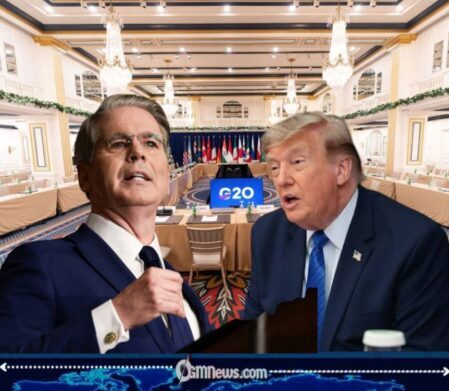
The G20 Finance Summit is heading to Asheville, North Carolina, with an agenda that sounds like a global economic repair manual—with one particularly sharp page devoted to Iran. The Trump administration wants finance ministers and central-bank governors from the world’s major economies to discuss stronger growth, global trade imbalances and sovereign debt while also pressing partners to help cut Iran’s economic lifelines. The meeting, scheduled for August 31 and September 1 and hosted by Treasury Secretary Scott Bessent, arrives as Washington intensifies its sanctions campaign against Tehran. (U.S. Department of the Treasury)
Trump Administration Wants G20 Finance Summit to Boost Growth—and Help Tighten the Economic Noose on Iran
The G20 Finance Summit is being presented by Washington as an opportunity to put economic growth back at the centre of international discussions. Treasury officials say the United States wants countries to pursue policies that encourage productivity, innovation and investment rather than relying on practices that create excess production and capacity in global markets. The administration has also identified modernising financial regulation, improving debt transparency and strengthening cross-border payments as priorities. (U.S. Department of the Treasury)
There is, however, a familiar diplomatic complication: when nearly every major economy enters a room carrying its own definition of “fair” trade, agreement can become considerably harder than the opening PowerPoint presentation suggests. Washington is particularly concerned about global trade imbalances and policies it believes disadvantage American workers and companies. The United States has signalled that it wants the G20 to concentrate on competition based on productivity and innovation, rather than economic models that send large quantities of goods into international markets. (Internazionale)
G20 Finance Summit Risks Becoming Washington’s Economic Pressure Chamber for Iran
Iran is expected to give the meeting an additional geopolitical edge. A senior Treasury official said Washington intends to press G20 members to cut off economic channels supporting Tehran. That effort follows the Trump administration’s latest sanctions campaign, including measures announced by Bessent against Iran-linked entities and warnings that countries maintaining economic relationships with Tehran could face secondary sanctions. (AP News)
The pressure comes as Iran continues to face severe economic strain, while some major trading partners have shown reluctance to abandon their relationships with Tehran. China remains an important buyer of Iranian oil and a major trading partner, while countries such as Turkey and Pakistan have continued balancing their relationships with both Iran and Washington. That means the G20 discussion could become less about everyone agreeing to the same policy and more about discovering how far America’s financial influence can persuade countries to follow its lead. (AP News)
The G20 Finance Summit therefore arrives with an unusually crowded economic suitcase: growth, trade imbalances, sovereign debt, supply-chain resilience and Iran sanctions are all competing for attention. Washington wants the gathering to demonstrate that international economic cooperation can serve what it considers fairer and more productive markets, but the competing interests of the world’s largest economies could make consensus difficult. For now, the most important question may not be whether the delegates agree—but how much agreement Washington can actually take home from Asheville. OGM News will continue watching the negotiations and reporting on what emerges from the meeting.

[…] […]