




























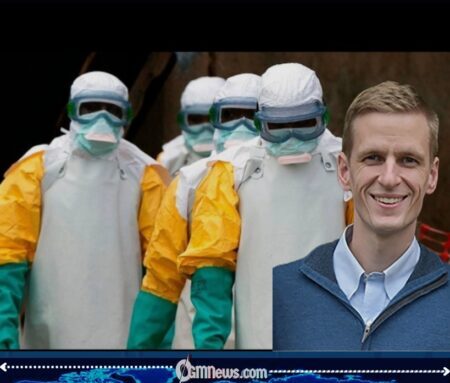
An Ebola evacuation operation involving an American medical missionary in the Democratic Republic of Congo has intensified global attention on a growing outbreak tied to the deadly Bundibugyo strain of the virus. US health authorities confirmed that the American developed symptoms over the weekend after exposure during medical work in Congo, prompting immediate plans to transport the patient to Germany for advanced treatment and isolation. While officials insist the public risk remains low, the Ebola development has revived memories of previous international health emergencies and exposed renewed anxieties about global outbreak readiness.
Ebola Evacuation Sparks Questions About Global Health Preparedness
The Ebola patient was reportedly working alongside a Christian medical missionary group operating in northeastern Congo, where healthcare workers have been battling a worsening outbreak. US officials confirmed the infected American was exposed while treating patients connected to the crisis before later testing positive. Several additional Americans believed to have had high-risk exposure are also being evacuated or monitored as part of emergency containment measures.
The CDC stated that Germany was selected because of its experience handling highly infectious diseases and because transportation times were shorter than alternative destinations. Officials also stressed that the immediate risk to the American public remains low, though enhanced travel screenings and temporary entry restrictions involving parts of Central and East Africa have already been introduced. The speed of the evacuation has drawn attention online, where critics questioned why international responses often appear more urgent when Western nationals become infected abroad.
Outbreak in DR Congo Raises Global Health Concerns Again
The Ebola outbreak in Congo and neighboring Uganda involves the rare Bundibugyo strain, a version of the virus that currently has no specifically approved vaccine or targeted treatment. Health agencies reported hundreds of suspected infections and dozens of deaths, including among healthcare workers, while the World Health Organization has already declared the situation an international public health emergency. Experts warn that healthcare settings remain one of the most dangerous transmission points during outbreaks because of direct exposure to bodily fluids and limited protective resources in remote areas.
The Democratic Republic of Congo has faced multiple Ebola outbreaks since the virus was first identified in the region in 1976, making the country one of the world’s most experienced battlegrounds against the disease. However, ongoing conflict, limited infrastructure, and public distrust of health interventions continue to complicate containment efforts. Online discussions following the American evacuation reflected both fear and frustration, with some users sarcastically noting that humanity seems permanently trapped in a cycle of “learning lessons” from every new outbreak without fully preparing for the next one.
As the Ebola situation develops, global health agencies are expected to increase surveillance, monitor exposed individuals, and coordinate additional international support for Congo and Uganda. OGM News will continue following the evacuation response, the condition of the infected American, and whether the outbreak triggers broader international containment measures in the weeks ahead.



https://shorturl.fm/5TtQZ