



















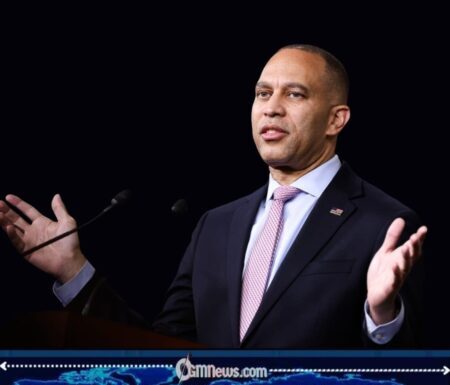
The Economy became the center of another fierce political confrontation after Democratic leader Hakeem Jeffries accused President Donald Trump and Republicans of ignoring the financial struggles of ordinary Americans. Jeffries’ explosive criticism painted a picture of a nation where rising living costs, consumer frustration, and political division continue to collide. While supporters praised the comments as a blunt acknowledgment of public hardship, critics accused Democrats of exaggerating economic fears for political advantage.
The remarks rapidly spread across political circles and social media platforms, where Americans debated whether the Economy is truly improving or simply being described differently by competing political parties. The controversy reflects a wider national argument about inflation, wages, taxes, and whether government leaders are genuinely responding to the financial realities facing millions of households.
Trump Economy Called a “Disaster” in Explosive Capitol Hill Attack
Hakeem Jeffries intensified the political debate by claiming Republicans “don’t give a damn” about the personal finances of American citizens, framing the Economy as a crisis affecting working families across the country. His comments arrived during a period where many Americans continue expressing frustration over food prices, housing costs, insurance bills, and economic uncertainty despite official claims of broader market stability.
Donald Trump’s allies responded by defending Republican economic policies, arguing that job growth, business investment, and market confidence remain important indicators of recovery. Republican lawmakers also accused Democrats of attempting to create panic by focusing heavily on inflation and consumer anxiety while overlooking broader economic performance. The Economy argument has therefore evolved into a battle between statistical optimism and everyday financial experience.
Republicans Under Fire as Americans Struggle With Bills and Inflation
Republicans have increasingly emphasized long-term economic growth strategies, tax policies, and deregulation efforts as evidence that the administration’s approach is working. However, critics argue that such messaging often struggles to connect with citizens more concerned about immediate costs like groceries, transportation, and healthcare. Political strategists believe this disconnect explains why emotionally charged statements from figures like Hakeem Jeffries continue gaining traction online.
The Economy debate also reflects a deeper political reality inside Washington, where both major parties are attempting to shape public perception ahead of future elections. Recent public discussions surrounding inflation trends, consumer confidence, and household debt have added fuel to partisan clashes. Some analysts note that while economic indicators may show mixed results, public perception often depends more on what people feel in their wallets than what appears in government reports.
Hakeem Jeffries: Politicians Say Economy Is Strong, Wallets Politely Disagree
As the Economy conversation continues dominating political discourse, both Republicans and Democrats appear determined to frame themselves as defenders of struggling Americans. OGM News understands that future battles over inflation, taxation, and wages could become even more intense as voters increasingly demand practical solutions instead of carefully rehearsed talking points.
[…] […]