






















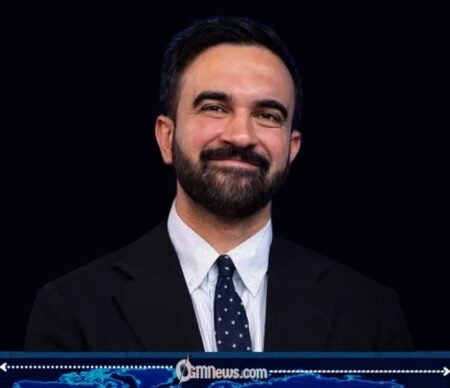
Government became the center of another fierce political debate after Zohran Mamdani publicly challenged one of Ronald Reagan’s most famous anti-government quotes, arguing that the true fear facing modern Americans is not state intervention, but the inability of working-class citizens to afford food after a full day of labor. The statement immediately sparked widespread reactions online and across political circles, with supporters describing it as a blunt reflection of modern economic hardship while critics viewed it as a defense of expanding government power.
The comments arrive during a period of continuing frustration over living costs in major American cities, particularly New York, where housing prices, transportation expenses, and grocery bills remain significant burdens for many residents. Mamdani’s framing places economic survival at the center of political responsibility, arguing that government should actively intervene to lower costs and protect ordinary families from financial instability. His message directly contrasts Reagan-era conservative principles that warned against excessive government involvement in economic life.
The clash is particularly symbolic because Reagan’s famous statement about government intervention has long served as a cornerstone of conservative political philosophy in the United States. Mamdani’s response effectively reframes the debate for a new economic generation, especially younger workers who increasingly view affordability and wage stagnation as immediate crises rather than abstract policy discussions. For many struggling residents, the conversation is less ideological and more practical: whether full-time employment still guarantees a reasonable standard of living.
At the same time, critics argue that aggressive government involvement in controlling prices or expanding public spending can contribute to long-term economic complications, including inflation, market distortions, or increased taxpayer burdens. Some opponents accused Mamdani of simplifying complex economic challenges into emotionally charged political messaging. Yet even critics acknowledge that rising living costs have become one of the defining political pressures facing urban governments nationwide.
Government: Economic Pressure and Political Reality
Working-class frustration has increasingly shaped political discourse across the United States as voters continue expressing concerns over affordability despite broader claims of economic resilience. Inflation may have slowed from previous peaks, but many households continue reporting financial stress tied to food prices, rent increases, healthcare costs, and childcare expenses. The emotional power of Mamdani’s statement appears to stem from its direct connection to those daily struggles rather than from traditional ideological arguments about government size alone.
Economic analysts have repeatedly noted that while unemployment figures and market indicators can suggest stability, public perception often depends more heavily on personal spending experiences. A family facing rising grocery costs each week may not feel reassured by broader economic statistics. This disconnect between official economic narratives and household realities has become a growing challenge for political leaders at both state and federal levels, including the administration of President Donald Trump.
Government policy responses to affordability crises have also become politically divisive worldwide. Some policymakers advocate direct intervention through subsidies, rent protections, or expanded welfare programs, while others argue for tax reforms, deregulation, and market-driven solutions instead. Mamdani’s remarks therefore resonate beyond New York politics, reflecting a larger global debate about the responsibilities governments hold during periods of economic pressure and widening inequality.
The controversy additionally highlights how modern political messaging increasingly relies on emotionally relatable experiences. In previous decades, debates over government intervention often centered on abstract discussions of ideology and fiscal theory. Today, the debate is increasingly framed around survival, dignity, and whether ordinary workers believe the economy still rewards labor fairly. That emotional shift may explain why a single sentence about food affordability generated such widespread public reaction.
Government and working-class concerns are expected to remain central political themes as economic anxieties continue influencing elections, policy battles, and public trust in institutions. Whether Mamdani’s remarks become a lasting political rallying cry or simply another viral moment, the underlying issue he raised remains unresolved: millions of workers continue asking why full-time labor no longer guarantees financial security in one of the world’s wealthiest nations. OGM News will continue monitoring how political leaders respond to growing demands for economic relief and whether those promises translate into measurable changes for struggling households.
[…] […]