
















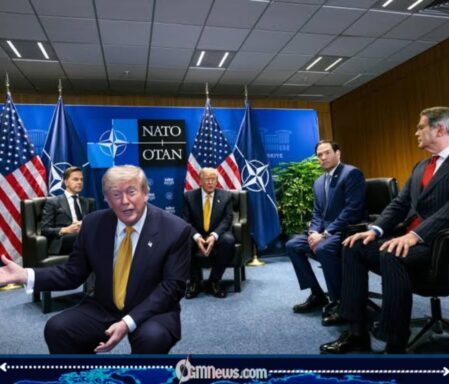
President Donald Trump, currently serving a second term as U.S. president, said his administration is reviewing whether to reduce the number of American troops stationed in Germany. The announcement comes during heightened tensions with Berlin and broader disagreements within the North Atlantic Treaty Organization over the ongoing conflict involving Iran.
The possible move has renewed debate over the strategic role of U.S. forces in Europe, the future of transatlantic defense cooperation, and Washington’s military posture abroad. Germany hosts one of the largest American troop contingents outside the United States and serves as a central logistics hub for operations across Europe, Africa, and the Middle East.
Trump Announces Review of Troop Levels
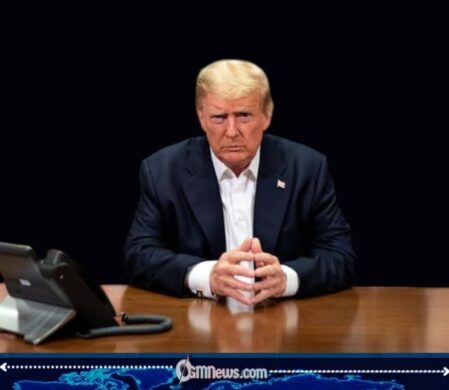
In a post on Truth Social, President Trump said the United States is “studying and reviewing” a possible reduction of troops in Germany, adding that a decision could be made in the near future. Trump did not specify how many troops might be withdrawn or whether any redeployment plans had been finalized.
The statement followed reports that the Trump administration was considering measures against some NATO members viewed as insufficiently supportive of U.S. policy during the Iran conflict. The troop review is being interpreted by analysts as both a military and diplomatic signal to European allies.
Germany’s Strategic Importance to Washington
Germany remains one of the most important overseas bases for the U.S. military. More than 36,000 active-duty American troops are stationed there, alongside reservists and civilian personnel. Only Japan hosts a larger U.S. troop presence overseas.
The country is home to key command centers, including U.S. European Command and Africa Command. Ramstein Air Base is widely regarded as a crucial air and logistics hub that supports American operations in multiple regions.
Clash With Chancellor Merz
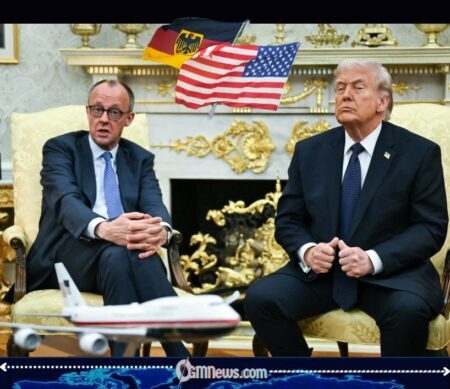
Relations between Washington and Berlin appear to have worsened after German Chancellor Friedrich Merz criticized U.S. handling of the Iran crisis, saying the Americans lacked a clear strategy and were being embarrassed in negotiations with Tehran.
President Trump responded sharply, accusing Merz of misunderstanding the situation and criticizing Germany’s broader performance. Despite the exchange, Merz later told reporters he remained on workable terms with the U.S. leader.
NATO Tensions Return to the Forefront
President Trump has long pressed NATO members to increase defense spending and reduce reliance on the United States. His criticism of the alliance predates the current Iran dispute and was a major theme during both his first and second terms.
Although U.S. law limits a president’s ability to withdraw unilaterally from NATO without congressional approval, adjusting troop deployments remains a powerful tool that could reshape alliance dynamics without formally leaving the bloc.
Echoes of the 2020 Troop Withdrawal Plan
This is not the first time President Trump has targeted the U.S. presence in Germany. In 2020, during his first term, he announced plans to withdraw thousands of troops after accusing Berlin of failing to meet defense commitments. That proposal faced bipartisan criticism and was later reversed.
More recent force adjustments in Europe have been described by U.S. officials as part of normal military balancing rather than a retreat from the continent. However, the latest announcement revives uncertainty over long-term American commitments in Europe.
Economic and Security Implications
Any large-scale reduction could have operational consequences for U.S. missions and symbolic consequences for European security planning. Germany’s bases play a major role in rapid deployment, intelligence coordination, and crisis response.
At the same time, Europe is dealing with economic pressure linked to disruptions in Middle Eastern energy flows. A fresh military dispute between Washington and its allies could add further strain to already sensitive geopolitical conditions.
What Comes Next
No official timeline or Pentagon implementation order has been released. Defense analysts expect consultations with Congress, military commanders, and allied governments before any final action is taken.
For now, the announcement underscores the fragile state of U.S.-European relations at a time when multiple international crises are testing alliance unity.
https://shorturl.fm/5TtQZ