




















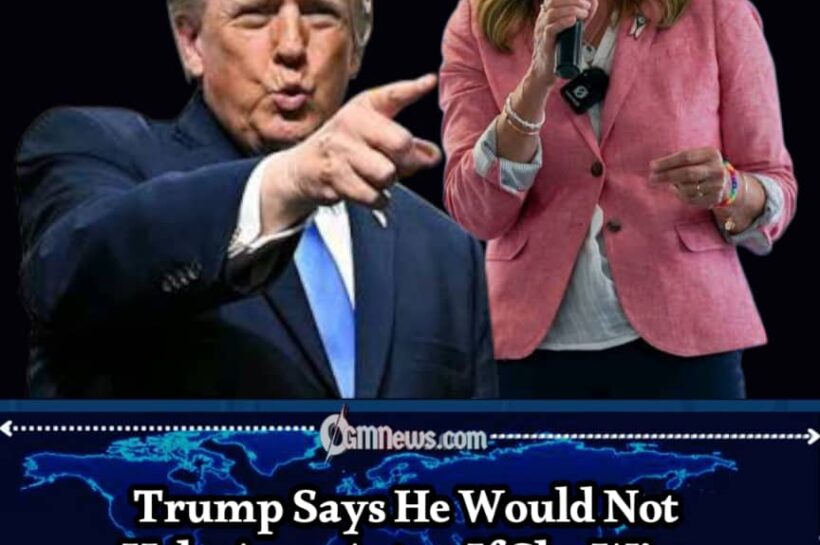



President Donald Trump has stated that the United States remains open to negotiations with Iran but currently has no one to engage, saying “there’s nobody to talk to” following a wave of strikes that have disrupted Iran’s leadership structure.
Donald Trump’s remarks reflect growing uncertainty surrounding Iran’s political and military command, as multiple reports indicate that key figures have been removed from positions of authority. According to Donald Trump, the absence of identifiable leadership has made it difficult to initiate or sustain diplomatic efforts.
The statement from Donald Trump highlights a central dilemma in the ongoing conflict: how to pursue negotiations when there is no clear counterpart capable of representing the state.
Donald Trump’s Remarks Follow Leadership Losses in Iran
The comments by Donald Trump come amid reports of significant losses among senior Iranian officials, including military and security leaders. Analysts say these developments have weakened established command structures within the country.
Such disruptions have made it increasingly difficult to determine who holds decision-making authority in Iran. As a result, communication between governments has become more complicated, limiting opportunities for negotiation.
Donald Trump has suggested that successive attempts by Iran to reorganize leadership have been unsuccessful, further contributing to the current uncertainty.
Breakdown of Diplomatic Channels
The absence of a clear leadership structure has led to a breakdown in traditional diplomatic channels between Washington and Tehran. In previous periods of tension, indirect talks and backchannel communications had helped manage crises.
However, current conditions have rendered such mechanisms less effective. Without recognized representatives, even informal discussions face significant obstacles.
Donald Trump’s position underscores the importance of stable governance structures in facilitating diplomacy, particularly during periods of conflict.
Military Strategy and Policy Direction
The United States Government, under President Donald Trump, continues to apply military pressure as part of its broader strategy in the region. This approach aims to weaken adversarial capabilities while maintaining the option for future negotiations.
At the same time, the targeting of leadership figures has raised questions among analysts about its long-term implications. While such actions may disrupt immediate operations, they can also complicate efforts to establish a negotiating partner.
Donald Trump has reiterated that the United States would be willing to engage diplomatically if a credible leadership structure emerges in Iran.
Regional and Global Implications
The situation in Iran has significant implications for regional stability and global markets. Countries across the Middle East are closely monitoring developments, as instability in Iran could influence broader security dynamics.
Energy markets have also responded to the uncertainty, given Iran’s role in global oil supply. Disruptions within the country could contribute to fluctuations in prices and supply chains.
Observers note that the current crisis could either lead to a rapid consolidation of leadership within Iran or prolong instability, each scenario carrying different consequences.
Outlook for Diplomacy and Conflict Resolution
Looking ahead, the prospects for diplomacy remain uncertain. The emergence of new leadership in Iran could reopen pathways for dialogue, while continued instability may delay negotiations.
Donald Trump has emphasized that the United States remains open to talks under appropriate conditions, signaling that diplomacy has not been ruled out despite current challenges.
For now, Donald Trump’s remarks underscore the complexities of managing international conflict in the absence of clear leadership structures, as policymakers navigate a rapidly evolving geopolitical landscape.
[…] […]